

5 Disadvantages Of OLED TVs You Need To Know About
OLEDs has been one of the greatest developments in consumer display technology, especially for hardcore cinephiles and gamers wanting to experience the best visuals. These TVs offer perfect colors, heightened contrast, and true blacks that LCDs and LEDs simply cannot recreate. From a purely visual perspective, there's not much to complain about. Unfortunately, even paying a premium price doesn't guarantee a faultless product, and there are a lot of reasons why an OLED TV might not be worth it for you.
There's the issue of burn-in — one that's almost become synonymous with OLEDs — but there are also other, lesser-known disadvantages common to OLED TVs that we aim to examine. And while An OLED TV could still be worth it if you value picture quality above all else, it's best to keep the following concerns in mind when shopping for a new model.
Lower longevity compared to other display types
A good TV should last you at least a decade, a metric OLED TVs are known to fall short on. The technology is similar to thin edge-lit TVs in that — while certainly more luxurious than the normal TV – longevity and lifespan aren't strong points for OLED displays. They're susceptible to a lot of potential degradation factors, including heat, frequency of use, and humidity.
It's not like OLED TVs are absolutely guaranteed to give out after a few years of service, though. If you've got a good TV and take proper care of it, some estimates say an OLED display can last you anywhere from four to ten years before it starts showing signs of decaying picture quality. If you plan on frequently using it, though, an OLED can start showing issues like burn-in just a couple of years after you first get it.
Burn-in is still an issue
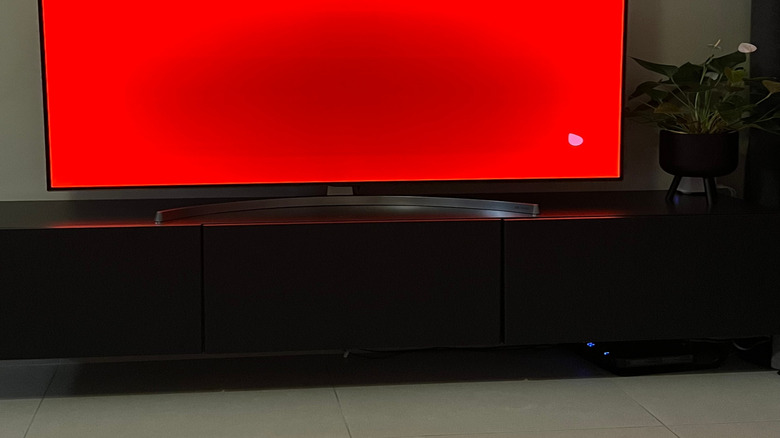
The main issue plaguing OLED TVs ever since the technology first proliferated has been burn-in. While there are certainly ways to prevent OLED burn-in to an extent, it's almost a given that you'll start seeing signs of it as time drags on.
The burn-in issue surrounding OLED TVs is caused by the uneven degradation of organic pixels. This is primarily (but not exclusively) an issue in OLED displays because OLED-type TVs use isolated organic diodes that function independently. In order to show you the "true blacks," the TV turns off specific pixels while keeping others turned on. If the same pixels are turned on for longer periods of time — something that happens when the TV is stuck showing static visuals like a sports scoreboard or a news ticker – they can become strained and give out.
Fortunately, newer OLED TVs — at least the more expensive ones – have improved on this concern with innovations like pixel refreshing. Still, burn-in is more a matter of when than if in OLEDs, which makes it one of the biggest reasons why you'd opt for another type of TV.
Text readability on worse resolutions
While OLED TVs have their fair share of issues, the one reason you'd want to get them is the display quality. So what if you have to change to a newer TV sooner than expected — or have to worry about burn-in all the time — so long as the TV looks good, right? Well, there are certain cases where OLEDs can look worse than even extremely low-end competitors. If you're someone who watches a lot of text-heavy content, such as movies with subtitles or detailed news reports, one of the biggest disadvantages of getting an OLED TV might be text clarity. This concern is often referred to as text fringing.
One main selling point of OLEDs is that each pixel is its own diode. This helps with contrast and visual/color acuity, but it also means that text can often look fringed at the sides when the pixel subgrids don't precisely match up with the text on your screen.
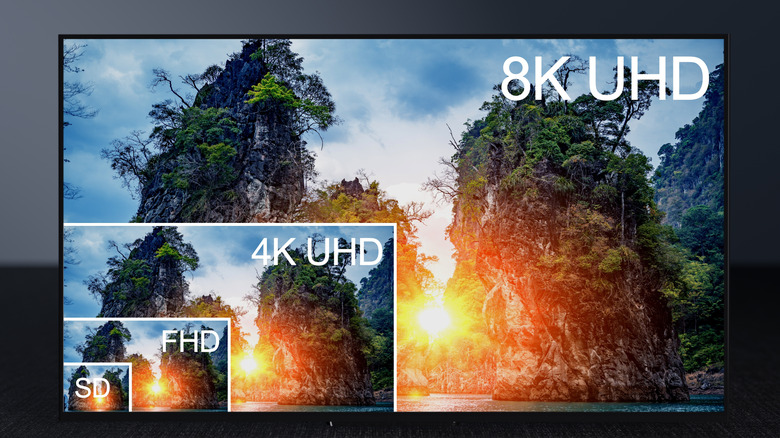
This issue isn't the same across OLED generations, and some people are more sensitive to it than others. Even then, newer models with better resolutions and bigger sizes often mitigate the issue to where it's insignificant for most people. If a lack of text clarity is a big issue to you, users recommend staying away from resolutions less than 4K, or display sizes below 30 inches.
High purchase and repair costs
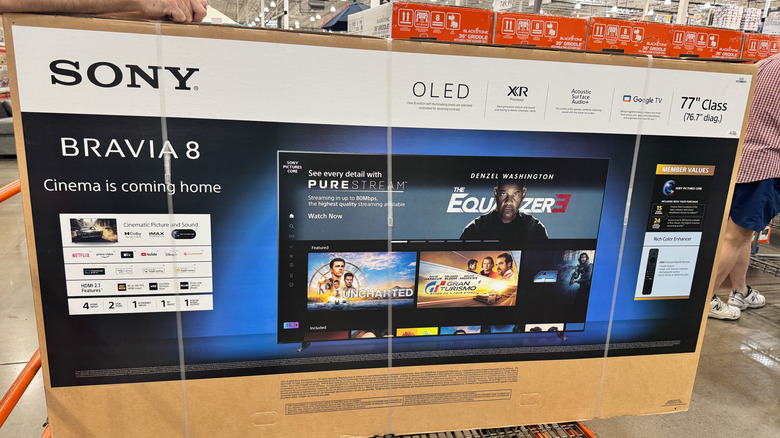
It's not uncommon for OLEDs to be among the priciest TVs on the market, but if you're someone looking for premium visuals, a premium price comes with the territory. However, if you're on a budget, spending such a high amount just for an OLED display might not be worth it. If you're considering a 55-inch Samsung S95F OLED, you can expect to spend $1,899 on it (on sale at Best Buy as of this writing). If you get a non-OLED TV of the same size with largely similar specs, such as the Samsung QN90E Mini LED QLED, you can get it just for $1,199 (also on sale). This means that opting for the non-OLED TV allows you to upgrade to a significantly larger screen at a lower price point, with the 75-inch QN90E being $1,799 (regular price, as of this writing).
This isn't a one-time difference in expenses either. The reason OLEDs are so expensive isn't just because of the hype; it comes about as a result of the actual cost of manufacturing the technology. Additionally, should you start running into issues with your TV, getting an OLED TV repaired — frequently requiring a full panel replacement — will likely cost significantly more than what you'd need to spend on fixing an equivalent LED-based set.
Issues with brightness and outdoor use
One of the biggest disadvantages that OLED TVs face when compared to other types has been their issues with brightness. OLEDs are excellent at displaying darker values, but this makes them worse at showing brighter ones. This issue becomes worse if you have your TV in a place that's bright or has sunlight pouring in, or if your set is operating in an outdoor setting. The brightness isn't as big of an issue in modern OLEDs, but most older models can't compete with other display types in how bright they get.
In addition to the lower brightness, users have also reported issues with glare, especially if your OLED is placed somewhere where sunlight is a continual and major factor. This glare, and the duller brightness common to older units, make OLED displays a questionable choice for outdoor viewing.
There are other reasons OLED TVs make a bad fit for outdoor installation. They're more prone to heat than other displays, so even mild sunlight can very quickly permanently damage them. Similarly, the organic diodes are very susceptible to humidity. If you live in a humid place and don't have an A/C — or are keeping your TV outside – the diodes may start chemically degrading in short order.