

Why Using A VPN Isn't As Safe As You Think
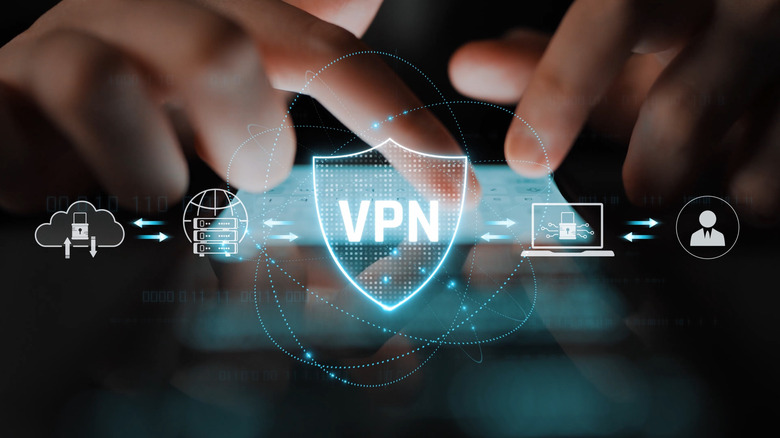
For years, we've seen numerous articles claiming that you should always use a VPN (virtual private network), explaining the many benefits these online security tools offer — like one of the ways to protect your smart home and more. While using a VPN is definitely recommended to help protect your online privacy, it isn't the end-all, be-all tool many make it out to be. In fact, if you don't do your research in choosing the right VPN service, you could not only be opening yourself up to slower web performance but also to another can of worms when it comes to online privacy.
See, it has become common for people to recommend VPN services as a way to not only protect your online data, but also as a way to get around certain regional blocks — a trend especially useful for accessing shows and movies on Netflix and other online services in regions where they might be locked out. In fact, we've seen a surge in Americans switching to VPNs over the past year, thanks to ongoing age-verification laws. But is it really safe to do so?
At their most basic level, VPNs are meant to protect your online data by routing it through a private service that masks your IP, effectively hiding your internet activity from anyone that might be watching, like your internet service provider (ISP). Sounds like a dream on paper, right? But nothing is ever that simple, and even if it promises additional security, a VPN simply shifts your trust from your ISP to a private provider, leaving your data vulnerable to the company's internal handling and unpatched technical flaws like TunnelVision.
Not all VPNs are actually secure
There are many bad actors out there looking for any way to take advantage of people. One of the best ways to do that is to appeal to people's sense of security and privacy, especially in our day and age, when online privacy has become such a loud talking point. And while using a VPN can help protect your online privacy, it really comes down to choosing the right VPN service.
The reason is that not all VPNs work as advertised, and even if you plan to go with a top-rated VPN, some recommend avoiding consumer VPNs altogether because you don't actually control how the service handles your data. And while there are options out there that claim to offer full end-to-end encryption – two great options include Proton VPN and Windscribe, both of which are often considered the best free VPNs on iPhone and highly recommended VPNs on Android — not all VPNs hold themselves to the same standard and even if they claim they don't collect your data, some security experts caution that there is no way to know this for sure.
That means you are trusting the business to be up front about how it uses your data. This is why it is important to do research, check in on a VPN and the credentials of the company behind it, and not just blindly download the first top VPN you see on your devices. In fact, this is exactly why some people actually recommend running your own VPN instead of trusting a consumer option.
Other security issues
In addition to ensuring the VPN you've chosen is operated by a reputable company, there are security considerations you should be aware of when using a VPN. That's because over the years, we have seen issues crop up like the TunnelVision vulnerability. This is essentially a vulnerability in the tunneling encryption system used by VPNs, which has existed since the early days of consumer internet browsing in 2002. Essentially, when exploited, this vulnerability would allow bad actors to redirect your online traffic through their system, allowing them to read, drop, or even modify the traffic, while letting you believe that you've maintained your connection as expected. There are ways around issues like the TunnelVision vulnerability, and there haven't been any open reports of bad actors utilizing it yet, that we are aware of, but it's still worth knowing about if you plan to use a VPN.
Ultimately, using a VPN can be a great way to improve your online security and help provide some additional peace of mind. However, as with anything you do online, it is important not to assume that using a VPN will protect you from everything malicious out there. There are certainly ways for those companies to take advantage of your data, and while many claim not to, security experts say users should still be careful about how they use the internet and treat VPNs as a networking tool rather than a security tool.