

4 Big Changes Coming To Steam In 2026
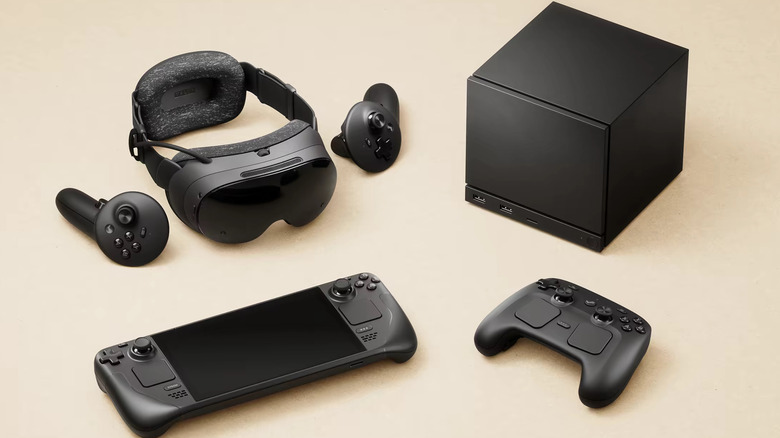
Any large company has its fair share of controversial decisions that its fans call out, but despite being the biggest gaming platform in the world today, Valve just continues to make the right decisions for Steam and doesn't leave much to be desired. The year 2025 was a profitable one for this product line, and 2026 is looking to be even more eventful.
Even before the year began, Valve teased a new series of devices planned for 2026 in its "Steam Hardware Announcement" video. These include Valve's new PC-console hybrid, a new V.R. headset with Foveated Streaming, and a brand-new Steam controller featuring dual touchpads. It's not all good news, though; Steam is also stopping support for older Windows systems that still rely on 32-bit architecture — something that won't affect most of us but is still a big change for some.
1. No more support for 32-bit Windows 10
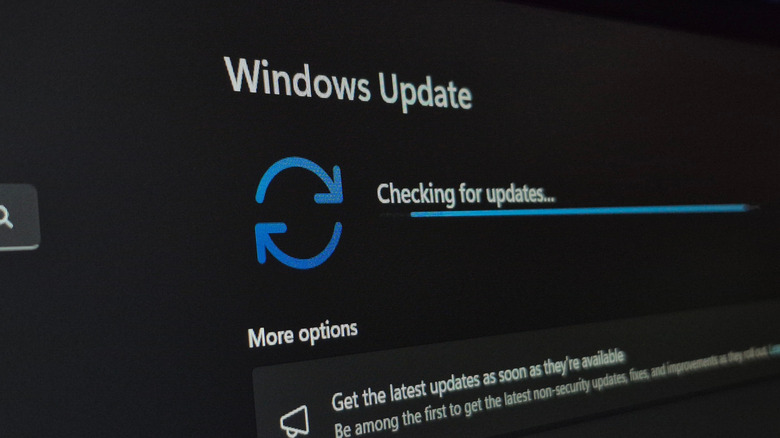
Among the first items on Valve's list of 2026 updates was stopping support for 32-bit systems. The company already doesn't support older versions of Windows, but it's now applying the same rules to Windows 10. This change has already taken place, and since January 1, those running these systems no longer have access to any Steam support.
This is hardly a shock, though, as people have steadily moved away from 32-bit x86 systems, especially for gaming. According to Steam's 2025 Hardware Survey, only 0.01% of all Steam users operate on a 32-bit system, a pretty insignificant number. Even then, Valve states that users will keep access to any installed content in the near future, though further updates are no longer possible. Games made for 32-bit systems will also be unaffected, and you can continue playing them on your 64-bit Windows system as usual. The change itself isn't all that strange, but paired with other live-service game servers also closing support for older hardware this year — such as Genshin Impact stopping PS4 support in April and Apex Legends dropping support for Nintendo Switch 1 in August — this presents a worrying trend for gamers unwilling or unable to upgrade to newer-gen hardware.
2. The Steam Controller
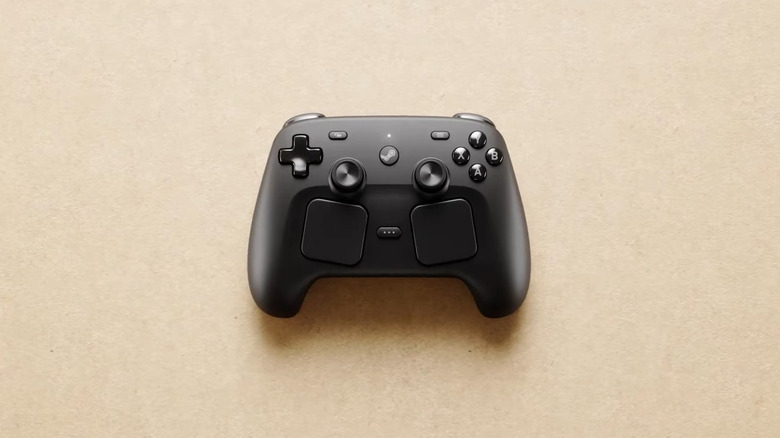
The Steam Controller might just become most people's first choice for pretty much every kind of game. It's thicker than most others and uses this extra space to include two square touchpads right below its analog sticks — a feature borrowed from Valve's highly successful Steam Deck.
This controller improves on everything the old version got wrong and keeps what it did right. The larger size might take some getting used to, but it makes good use of the extra space, as the touchpads are an amazing addition. These offer a higher degree of precision that gamers value in FPS titles, but you can also use the controller for simple puzzle games if you prefer a cursor experience over an analog input. The touchpads also allow you to navigate your desktop with just your controller without having to switch to your mouse — a very convenient upside. Unlike the previous Steam controller, though, you're not forced into touch-only playing; if you don't want to use the touchpad for something, you still have two analog sticks.
This controller also has very accurate gyro control for high-precision aiming. An added feature only activates this gyro when specific conditions are met, such as when you're holding the controller with one hand or pressing a specific button, making accidental movement less frequent. As for connectivity options, you can use this controller via Bluetooth, wirelessly with a dedicated magnetic puck, or when plugged in with a USB. Overall, this strikes us as a great controller with no obvious drawbacks.
3. The Steam Machine
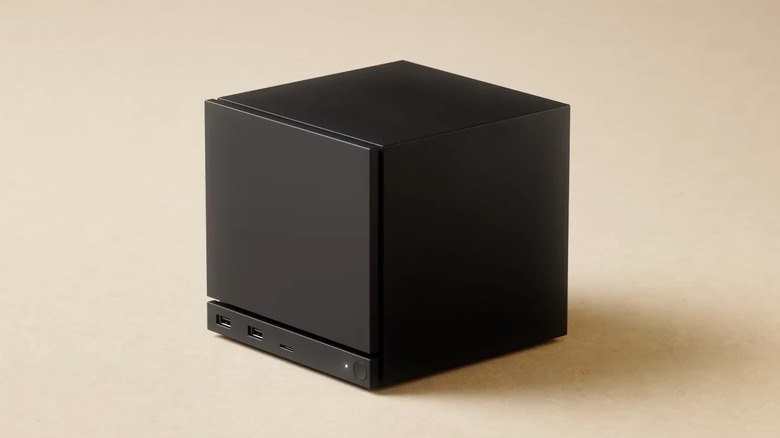
Arguably the biggest reveal of Valve's hardware announcement was the Steam Machine, a compact yet powerful console-PC hybrid that's significantly smaller than any other console on the market at just 6 cubic inches. Valve has emphasized that it's just as much a PC as it is a console. It has the same Linux-based SteamOS as the Steam Deck, an operating system created specifically for gaming. It's also supposed to be six times as powerful as the Steam Deck, which already handles heavy gaming fairly well (though there are more powerful handhelds around), so Valve's new console hopefully won't encounter any issues, even when running the most intensive AAA titles.
As for its specifications, the Steam Machine has a semi-custom AMD Zen 4 6C / 12T CPU and a semi-custom AMD RDNA3 28CUs GPU. These are generally considered mid-range specs for a PC and can't natively compete with high-end models, so this console's value highly depends on how much it'll cost.
Compared to other consoles like the PlayStation 5 and Xbox Series S, the CPU specs are of a newer generation, which means they're generally faster and more optimized, despite not being as powerful on paper. The GPU, on the other hand, is much weaker than those in the aforementioned consoles. According to Valve, the Steam Machine can handle 4K gaming at 60FPS without any issues when using FSR. Natively, the Steam Machine should still be able to run 1080p or 1440p, but it won't be competing with any $1,500 PC. Even so, it's a mini-PC with the convenience of a console that you can plug in and use without any of the typical PC hassle.
4. The Steam Frame
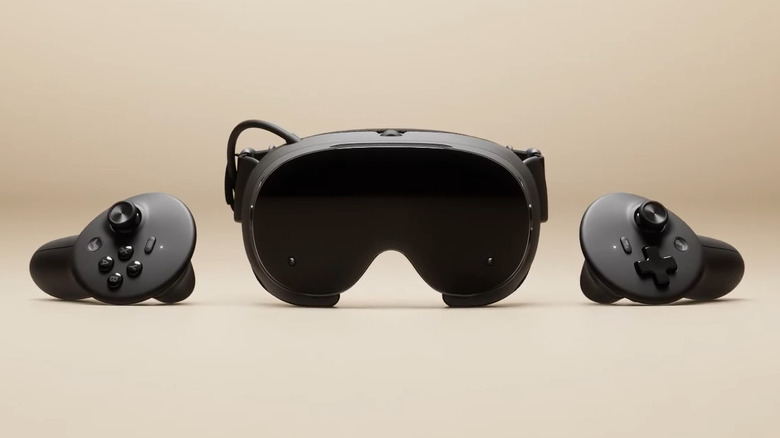
For V.R. fanatics who adore the Valve Index, the Steam Frame will be the thing to look forward to this year. This V.R. headset geared toward gaming operates on the same SteamOS as other Steam hardware and can handle both V.R. and non-V.R. titles with ease. This includes games made for Windows, Linux, and even Android.
The Steam Frame comes with a high-speed dongle that connects wirelessly to your devices, giving it a faster connection that doesn't interfere with your WiFi's bandwidth. It also features accurate eye-tracking, unlike its competitors. Additionally, the Steam Frame uses a new technology which Valve calls Foveated Streaming. This uses the Frame's precise eye-tracking to show you better resolution where your eyes are focused but reduces peripheral image quality. Reportedly, this provides a tenfold improvement in image quality and effective bandwidth, making the Steam Frame faster and more efficient. It also functions without any external PC or home station. It has a fully functioning ARM computer inside, so you can play games on it even with no external connection.
The Steam Frame does have its downsides, though. Its resolution isn't as great as some other V.R. headsets on the market, including Apple's Vision Pro. It has a lower base resolution (still impressive, just not 3K) and relies on LCD rather than OLED. Users looking for full-body tracking might also encounter issues, as the Steam Frame's internal cameras don't allow for the same versatility as a home station. Lastly, the base Steam Frame doesn't come with controllers made to emulate fingertips, another feature that many V.R. fans love.