

The 9 Cheapest Ways To Turn Your Basement Into A Home Theater
We may receive a commission on purchases made from links.
To most people, the idea of building a home theater sounds like an exciting but somewhat expensive venture. It's a luxury for sure, but it needn't be an expensive one — and it's something you can upgrade over time as and when funds allow. If you already have a disused basement that's dying for a makeover, you're halfway there already — the rest is just searching for bargains and a bit of decorating.
There are other intangible benefits to having a home theater rather than a regular big screen TV: it makes viewing anything a more intentional family event, rather than simply sitting down and vegging out in front of whatever is on (four hours in front of the TV a day is slowly killing you). It's not just for TV and movies, either: as long as you're not picky about super high frame rates, your home theater can be an incredible upgrade for gaming, too.
The good news is that you can start building a home theater on the cheap — and here's how.
Secondhand projector
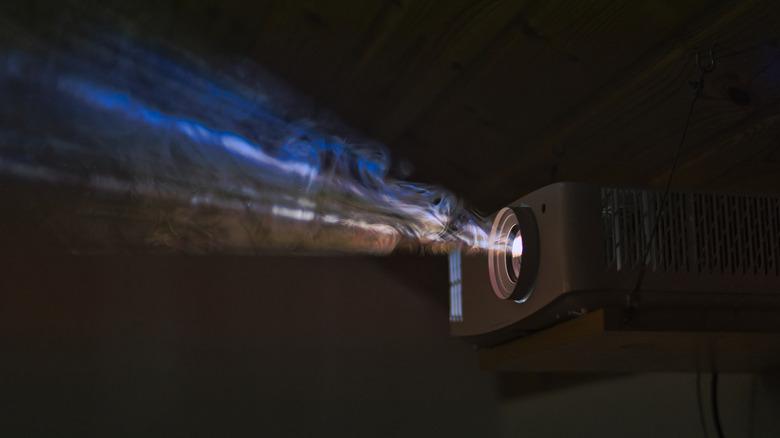
First and foremost is a projector. A big screen TV is nice (and there are definitely some cheaper TVs that show you don't always need OLED for a home theater), but the size of screen you can get from a projector is far bigger than any TV. And when it comes to a home theater, bigger is better. A projected image also offers a more cinematic feel, and in a basement environment, you can eliminate most of the issues normally associated with daytime projection, like ambient light ruining the image.
Ultra Short Throw (UST) 4K HDR laser projectors that get you a 200-inch image from barely a foot away from the wall are incredible, but most of the content you'll find for cheap — whether that's Blu-ray discs or streaming — still comes in HD only. While Ultra Short Throw projectors are a necessity when space is at a premium, in the typical basement you should be able to get away with a longer-throw projector; that is, the projector needs to be placed far away (the throw distance) from the surface it projects onto. So you can easily get away with an older, possibly even secondhand home theater projector. The Optoma HD series is a great choice, either new on Amazon ($600) or by scouring eBay. Be careful though: "budget" projectors are a minefield of false advertising, so be sure to thoroughly check reviews before buying to avoid being scammed.
Sound system
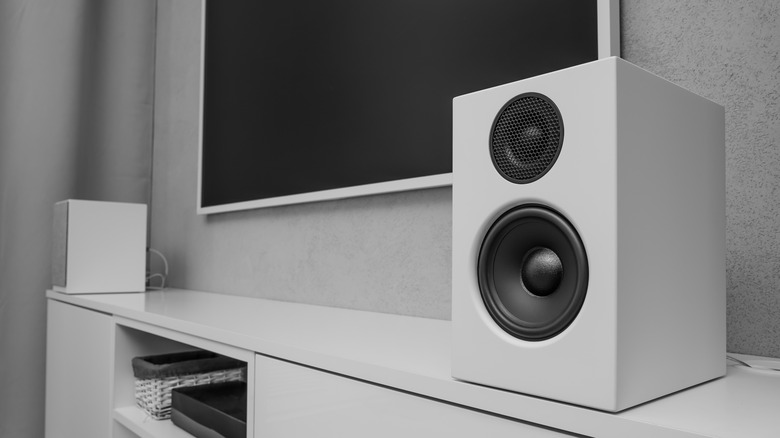
Projectors offer a massive image, but fail miserably when it comes to sound. So you need some speakers. While there are some incredible 9.1 and 7.1 home theater systems that are perfect for cinephiles, it's a case of diminishing returns. But that doesn't mean you should get the cheapest surround set you can find. A decent stereo pair of speakers will be better than a budget 5.1 surround system, and paired with an AV receiver (an amplifier combined with an input switcher) it'll allow you to upgrade later by just adding additional speakers — a subwoofer first, then a center channel, then rear. Facebook Marketplace is your best bet for a bargain here.
You might be thinking: why not a soundbar? There are some incredible soundbars out there, even audiophile-approved. But those are pricey, and again, a decent set of stereo speakers is always going to be better than any "virtual surround" offered by an equivalently priced soundbar. But the other reason is upgradeability: it's easy to add speakers to a stereo pair, but not so easy to upgrade a soundbar without replacing it entirely.
Painted screen
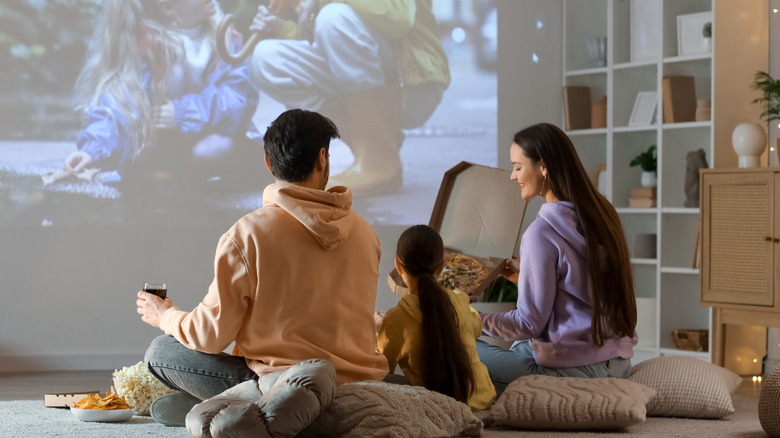
You don't need to spend thousands on a fancy floor-rising Ambient Light Rejection (ALR) screen. Sure, they give the best quality image, but you can get 95% of the way there with a bit of paint and a flat wall. If you're painting the walls anyway, a fresh coat of white paint is perfectly acceptable to project on as long as you can control the levels of ambient light — and more importantly, it means you can afford to paint a far bigger screen than if you had to buy the equivalent projection screen. Size matters when it comes to projection.
The type of paint does matter, though. There are entire forums dedicated to the art of choosing the right projection paint, but don't go overboard in the details. In my experience, silk emulsion is the worst, with the shiny surface creating clear reflective hotspots. Matt emulsion is okay, but even better are chalk-based paints, which provide a very dull surface that reflects only where you want it to. While some prefer a grey screen for deeper blacks and less ambient light, in a basement environment where you probably have little if any natural light, white should be fine. And if you're not happy with the result, it's cheap enough that you can always repaint.
Carpet and rugs to dampen sound
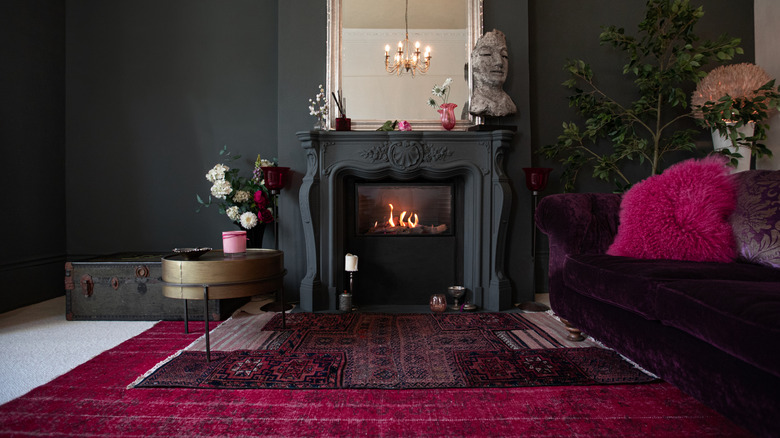
Concrete is great at soundproofing precisely because it's so good at reflecting it, with about 97% of the sound waves hitting it being sent right back to you. But that reflection is what makes the audio sound terrible, as it keeps bouncing around your home theater until it hits something that will absorb the sound instead.
The only solution is to soften everything; soft furnishings absorb sound, which is why an empty room echoes when you first move in. For a bare concrete floor, the quickest way to deaden those reflections is to carpet it with some rubber underlay. But if you don't want to fully carpet the basement, you can opt for a more bohemian approach of throwing down offcuts and cheap rugs on any exposed part of the floor — it's usually easy to find someone in your local Facebook or Craigslist giving them away.
Dark walls and furnishing
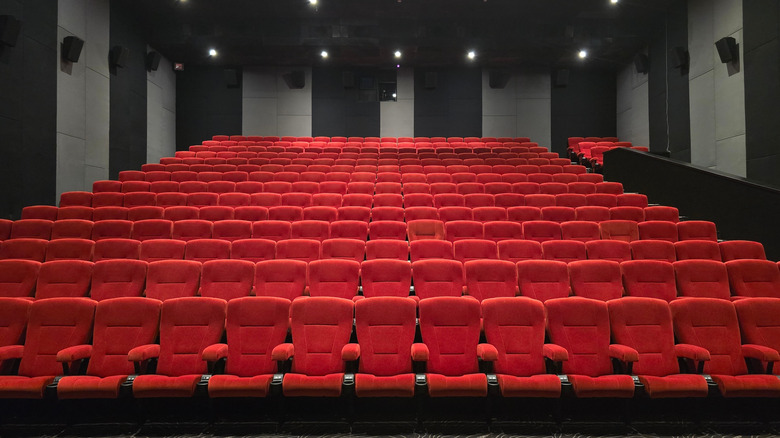
The dark colors of a cinema aren't purely for aesthetics. While there is an element of red being associated with a luxurious feeling, it's also the first color to "disappear" when the light dims. And just like sound reflecting off concrete, bright colors will reflect the light back and be a distraction in your periphery. Dark colors absorb the stray light from the screen, reducing the ambient light levels and ensuring the only moving light you'll see is from the movie itself. If you've opted to paint your projection surface rather than invest in an ALR screen, this is essential to keep the image clear and maximizse contrast.
Black or dark grey is best for walls, and helps even more to give it that movie theater feeling — while paint is cheap, it's definitely a commitment. Again, just like the projection surface, you'll want to avoid glossy paints. Even a glossy black will produce a sharp, specular reflection.
Acoustic dampening on the walls
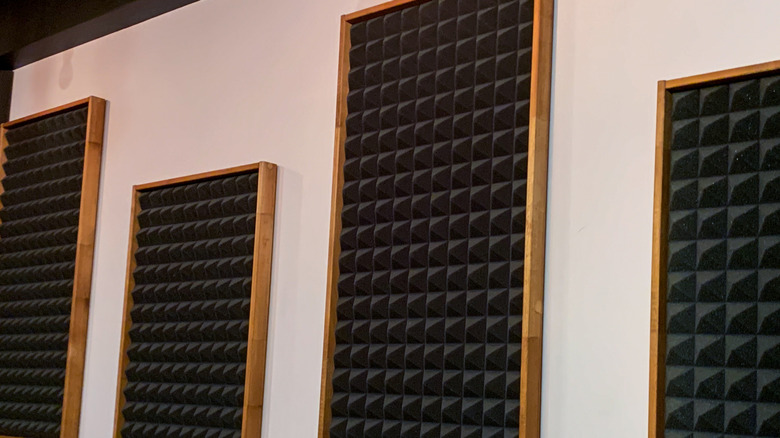
Applying the same principle as carpets and rugs on a concrete floor, some form of acoustic dampening on your walls will noticeably improve sound quality. It'll absorb stray sound waves, cutting down echoes, reverberations, and reflections — which all muddy the dialogue. But it's also a handy shortcut if you're not quite ready to commit to painting the walls dark yet.
The easiest way you can achieve this is with heavy curtains (from $85 for 180 inches wide), which give you both the look of dark walls and offer some level of sound absorption without a big commitment. As a bonus, they're blackout curtains, so if you do have a small window to the outside world, they should stop any light from entering.
A step up from heavy curtains, you can DIY acoustic panels using stretchy black fabric stapled to a basic timber frame and stuffed with insulation material inside — but these wouldn't usually cover the entire wall, so you may still want to paint them dark first.
Ambient lighting with LED strips
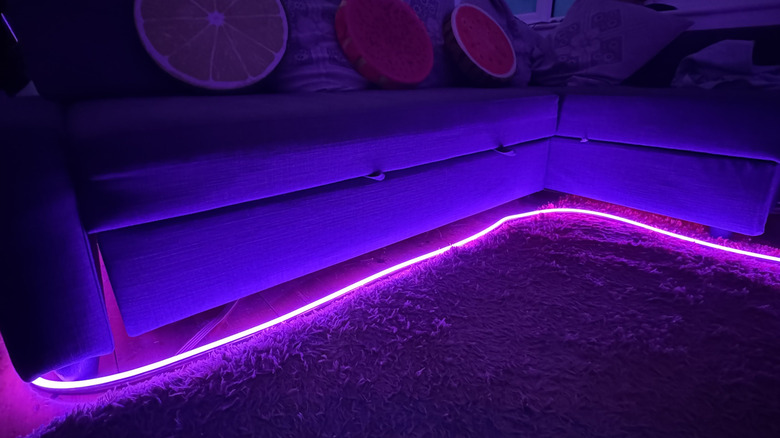
Some inexpensive LED strips under the seating can add to the ambience — and let people safely go to the loo — without ruining the immersion like overhead lighting can. It also doesn't need complex rewiring. For a more statement piece, something like a Govee Neon Rope Light (from $50) is worth considering and needn't be as hidden.
If you want to get really fancy, products like the Govee AI Sync Box ($240) can even dynamically synchronize your LED lighting with on-screen content — often called bias lighting or an "Ambilight" because of the original Philips TVs that included the feature. However, opinions are divided on whether this is immersive or just annoying. Ambilights are great when used with a TV rather than a projector, but for LEDs that are under your seat and out of direct view, reactive lighting could work well for any setup. At the very least, get some RGB lights that you can manually control, and set the color accordingly, like a deep, dusty yellow for "Dune" or neon green for "The Matrix."
Cheap seating
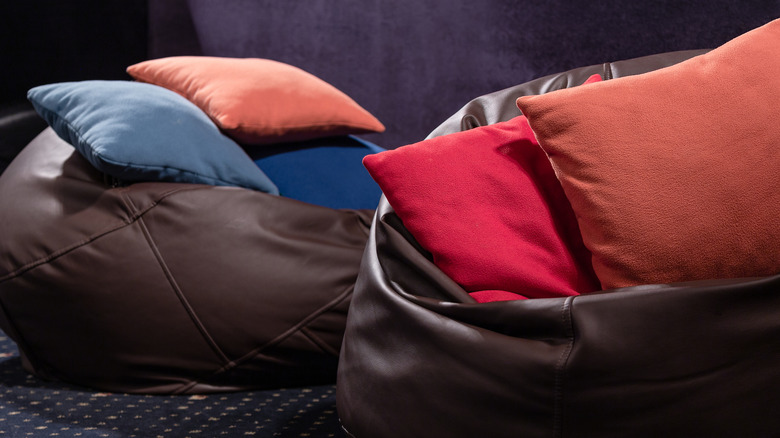
Actual movie theater seating can be insanely expensive ($2,000 for this four-seater), and frankly awkward. It's bulky, heavy, and difficult to resell if you want to convert your basement after watching that sex-positive Netflix home renovation series (dark walls work well for that, too, I hear). We're just saying: don't tie yourself down too much to the movie theater concept.
Bean bags can be just as comfortable as proper theater seating, and if you can find a bargain in a yard sale but you're not too keen on the design, you can buy replacement covers for less than $20. If you're not keen on a raised pallet sofa or tiered platform, bean bags will also make a great first row that people behind can see over, but are easy enough to sling out of the way when not needed.
Inflatable sofas are also a good option for kids or unexpected guests, like this double-seater for under $50.
DIY concession stand
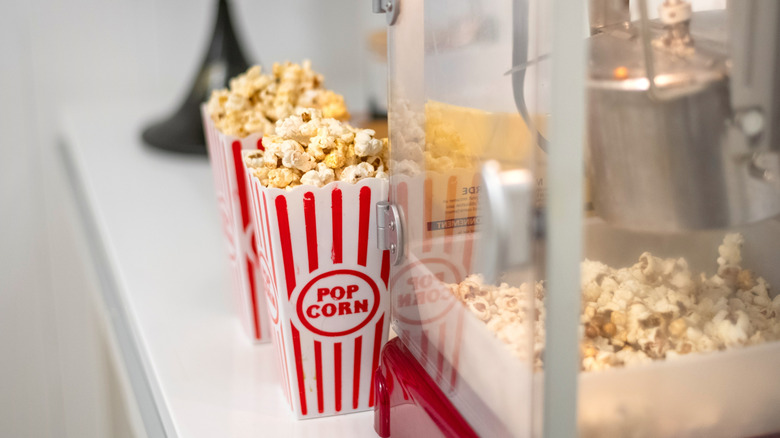
For some people, the best part about going to the movies is the popcorn – even if they are paying through their nose for the privilege. Luckily this one is fairly easy to replicate at home with a side table full of concessions — stock up on sweets and cans of pop, too. You could even get your kids to run the stand; don't blame me if they start price gouging you, though!
You can grab a tiny popcorn maker for as little as $25 on Amazon, but it's also the sort of thing that pops up often on Facebook Marketplace, so if you can set up a local alert and wait for a bargain, you'll be able to complete the authentic experience on the cheap. You'll also want to pick up some Flavacol seasoning (one of our Amazon picks under $10 that actually work!) — that's the little-known secret ingredient that gives movie theater popcorn its distinctive flavor and yellow color.