

5 Pros And Cons Of Buying A Used OLED TV
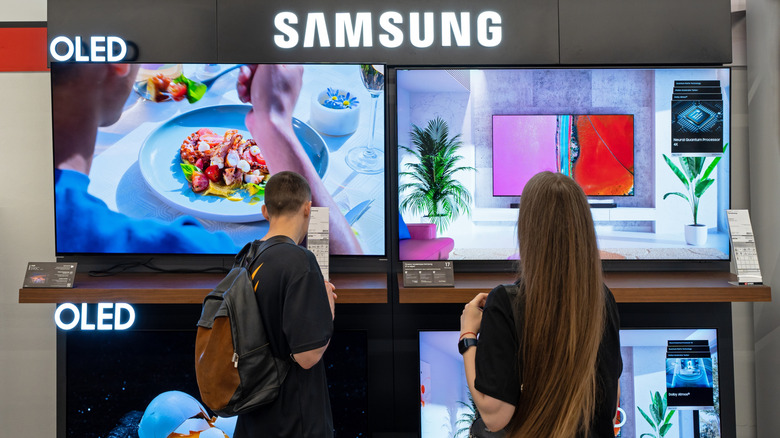
Knowing the pros and cons of buying a used OLED TV is essential before you hand over your hard-earned cash. The shift to OLED panels established them as the gold standard for television, since they can offer good black levels and contrast, something that LED screens cannot match. However, in order to get these features, these TVs also come with a premium price tag that puts them out of the budget for many customers, but also creates a market for second-hand models that are tempting for many who wish for a high-end model, but can't afford a brand-new one.
However, the discount that you get for buying a second-hand OLED TV may not be worth the gamble. Unlike buying a device with an LCD panel, which is more durable, OLED technology also comes with some vulnerabilities that can pose big cons when considering buying one already used. There are concerns about burn-in, where static elements like news tickers or even an interface from a game can leave ghostly shadows on the screen. Moreover, OLED panels can lose their color accuracy over time.
Knowing the specific usage history of an OLED TV is important to avoid a damaged panel that can end up being more expensive than buying a new one. However, even with these risks, there are still many reasons for you to search for a second-hand OLED screen, since these models are still better than most mid-range LED screens that you can have for the same price.
Burn-in is the biggest risk of buying a used OLED TV
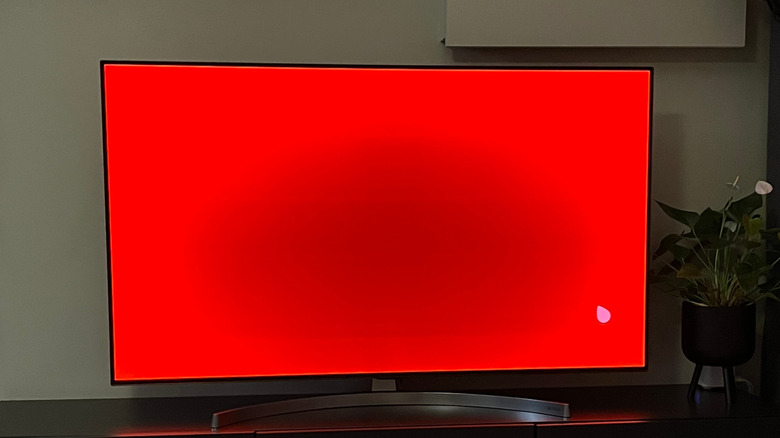
Burn-in is a kind of problem that affects most of the OLED panels, whether you are buying one new or on the second-hand market, but older models are more likely to be affected by it. That occurs because organic pixels tend to degrade unevenly when displaying bright and static images for many hours in a row, causing specific areas to develop permanent image retention on the screen.
So if you're interested in a used OLED TV, it's important to know that when buying one, you'll also inherit the watching habits from the old owner. This means if the panel was primarily used to watch sports or play the same game for many hours in a row, the chance of the screen already being affected by a permanent burn-in is higher, and if so, the only repair possible is replacing the entire screen.
This problem is even worse in earlier generations of OLED panels, since they lacked the advanced pixel-shifting tech and heat management that you can find in modern models, making them more likely to have these defects. So before handing over any cash, it's important to inspect the screen using solid color slides in order to reveal any hidden shadows or images burned into the display and if you find anything, the better thing to do is to walk away, since burn-in is a problem that only gets worse over time.
You likely won't get a warranty or return policy
Another concern when buying a second-hand model is the lack of a warranty, so if a problem appears after purchasing one from Facebook Marketplace or Craigslist, support from the seller is unlikely. Unlike an "open box" model found at retailers, which may include a limited return window and store-backed coverage in case of failures, the sale of a used OLED TV is typically finalized the moment payment is made.
In cases where the OLED TV still has the manufacturer's warranty available, it's also important to know that it is sometimes tied to the original owner and may not be transferable to a new one. So the model that you purchase from the second-hand market may be only one or two years old and have some time left on the warranty to be used, but the brand may refuse to honor it if the claimant's name doesn't match the original purchase, and without it, the coverage can become useless.
So if you're buying a used OLED TV, this is a risk worth considering before paying for it. If the panel, power supply, or another component fails after the purchase, repair costs will likely come out of pocket and can sometimes rival the price of a new model, and replacement parts also aren't guaranteed to be available, being another disadvantage of having an OLED display.
Transporting an unboxed OLED TV is a logistical nightmare
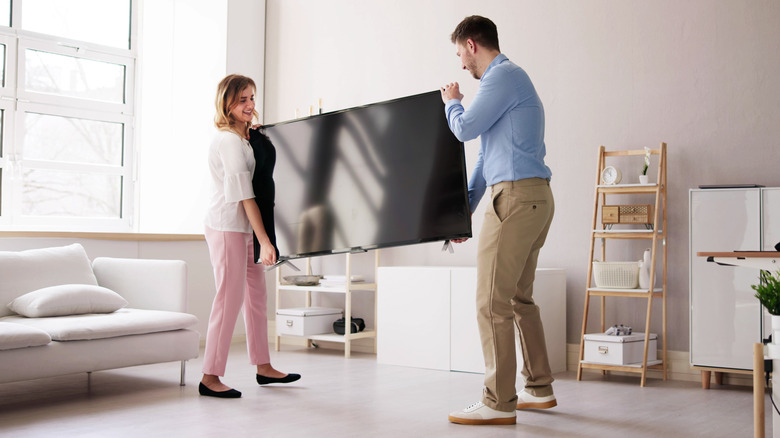
While this may be a problem that you'll likely have only once when buying a used OLED TV, it's one of the easiest ways to turn what seems like a "good deal" into a headache. Transporting an OLED TV can be hard, especially because these kinds of panels are extremely thin and fragile, so even a small mistake, such as a hard bump on the doorway or pressure from a seatbelt can cause damage. Without the original foam and box, the panel has almost no protection to be transported safely.
Also, OLED TVs are large and difficult to handle safely by only one person. It typically needs not only two or more people but also a spacious vehicle, and also to be kept upright the entire time, without touching other items to avoid the chance of damage. If you're picking the TV from a stranger's house, you also can't assume they'll have the original box or any kind of proper package available, which means that the responsibility for moving the TV falls onto the buyer.
The worst part is that any damage during transport is on you, since the seller can simply say the TV was working when you tested it, and with a used sale, there's rarely a return policy to fall back on in case of any problems. So a careless move on the way home can leave you with a TV that's expensive or even impossible to repair.
Buying a used OLED TV saves a significant amount of money
One of the biggest pros of buying a used OLED TV is the price that you will pay for it. Since manufacturers are releasing new models almost every year, it helps to lower the price of older models, especially those already bought by someone else. This means that, if you don't care about the model being the latest one, you can often get a premium OLED TV, but for a fraction of the original price.
If these OLED displays are well cared for, they can last a long time in your home, and the good part of all this is that you won't pay a premium price. For most users, a two- or three-year-old model can have the same quality offered by the newer OLED TVs for movies, series, and gaming. However, with the savings from paying less for the TV, you can also buy a wall mount or a soundbar to replace your TV's audio.
So if the TV is still in good condition and you know how the previous owner used the display, it's a risk worth taking to have a better image quality at home. For many users, the first time that you watch a movie or play a game on these screens is enough to understand the differences in OLED technology, making the experience and price worth it to someone upgrading from an older TV to an OLED one.
Older OLED models still outperform new mid-range LED TVs
Another major argument for buying a used OLED TV is that, even after a few years, the display technology still outperforms most new mid-range LED/LCD models that you can find in stores. That's because a well-maintained OLED from 2019, 2020, or 2021 can still deliver deeper blacks and more precise light control, since self-emissive pixels can turn completely off, producing a better image quality that you won't find at mid-level in the LED TV category.
By comparison, these kinds of LED TVs rely on backlighting systems and since the light source sits behind the panel, bright objects on a dark background often cause blooming. It's possible to see this as a visible halo around subtitles or stars in a scene, for example. So even if the LED technology also has improved significantly, it still cannot match pixel-level control at the mid-tier level.
For movie lovers who primarily watch films or TV shows on the best streaming services in dim environments, this contrast advantage matters more than having the latest processing chip or slightly higher peak brightness. A carefully chosen used OLED can provide a more immersive, theater-like image than a new mid-range LED at the same price. In terms of pure picture fundamentals, older OLED technology often remains the superior visual experience.