

Ranking 7 Major Music Streaming Services From Worst To Best
We may receive a commission on purchases made from links.
Before streaming, people used to buy albums on CDs or through online marketplaces like iTunes. Those times were very different, as you could only buy one album at a time, and there was no guarantee it would be any good. So, when streaming platforms like Spotify promised unlimited music for a small fee, people flocked, since it was much cheaper than buying albums individually. Artists also got the luxury of producing music independently without needing to work with a label.
In 2026, streaming accounts for about 80% of the music industry's revenue. This proliferation can be attributed to the dozens of platforms available. You no longer have just the OGs like Spotify that promise a fun and social experience. Others, like Apple Music and Tidal, make high-resolution and spatial audio their focus. This myriad of choices, coupled with increasing subscription prices, makes choosing the right service difficult. To help you find the music platform that suits your needs and lifestyle, we've sifted through expert reviews of all major music streaming apps and ranked them from worst to best.
Deezer
You may not have heard about it, but Deezer is one of the oldest music streaming platforms. Deezer could serve as a real music streaming alternative to Spotify, as it works on a similar principle of making streaming fun. Deezer offers features like collaborative playlists and music quizzes where you guess a song by listening to a short clip. The faster you guess, the more points are awarded, and you can even compete with others. Beyond that, there are plenty of podcasts and features like Flow, which creates an infinite playlist based on your mood.
Deezer is one of the very few to offer a free tier, which — if you can ignore the ads — is great for people who can't afford a subscription. Streaming quality is set to 16-bit, 44.1 kHz, which audiophiles among us will note isn't on par with Apple Music or Tidal. But given that most listen to music on Bluetooth headphones, Deezer's more detailed streams compared to MP3s should be good enough. What can be a problem, though, is the lack of any Dolby Atmos audio support.
Another thing that holds back Deezer is a lack of awareness. Outside France, where Deezer is from, people just don't know what it is. And the fact that links to songs shared with friends can only be opened on the Deezer app can cause headaches, as nobody likes downloading an app just to listen to a song. Some Reddit users have also complained about frequent crashes and bugs, which, at $11.99 a month, is a hard pill to swallow.
Qobuz
Qobuz is the music platform for audiophiles, by audiophiles. That's because these guys rolled out HiFi streaming long before Tidal even existed. Its audio quality — which tops out at 24-bit, 192 kHz — is exceptional and adds a sense of space to songs. You can hear all the details and instruments that would otherwise go unnoticed.
As companies push harder for subscriptions, the audiophile community still loves owning its music. We can't blame them either, since owning is always more satisfying. And if that's you, then Qobuz is the way to go. You can buy music without a subscription in the highest quality and download it on your desktop. That said, subscribing to the Sublime tier ($14.99) can offset these purchases by up to 60%. Qobuz also skips the AI fluff and focuses instead on editorial content created by humans. The Magazine feature highlights newer artists and recommends content in the form of articles and reviews. Included with the subscription is access to the Qobuz Club app, a community platform for sharing opinions and connecting with other music lovers. The main app is neatly divided into easy-to-understand sections and includes human-curated playlists.
Unfortunately, it's not all sunshine and rainbows — if it were, Qobuz would have ranked higher. The biggest criticism stems from the content availability. Despite claiming over 100 million tracks, Qobuz is still missing some albums by major artists. This, coupled with a starting price of $12.99 per month and no Dolby Atmos support, makes Qobuz a tough sell for non-audiophiles.
Amazon Music Unlimited
Most people know Amazon Music simply because it's included with their Prime subscription. The service gives users access to over 100 million songs, though you can only listen to 15 playlists (curated by Amazon) offline and on-demand. To get rid of these shackles and play what your heart wishes, you need Amazon Music Unlimited, which costs $11.99 per month for regular users and $10.99 for Prime members. Although this price makes Amazon Music Unlimited a cheaper alternative to Spotify Premium, should you invest in it? The answer to that depends.
Like Qobuz, Music Unlimited prioritizes Hi-Fi audio with an Ultra HD tier that supports 24-bit, 192 kHz streams. Amazon says it captures the "nuance of studio recording," and that argument does hold up. Its high-res songs are dynamic and pack a punch of realism. There are also CD-quality (lossless) tracks, and users get access to spatial content in both Dolby Atmos and Sony's 360 Reality Audio formats.
What also plays in the hands of Music Unlimited are the different subscription tiers for Amazon products. Let's say you want a streaming service for your Echo at home. Instead of paying the full amount, Amazon offers a $5.99 per month plan for the Echo and Echo Dot, which is a solid deal. That said, at the non-Prime member price, its flaws can be annoying. The app, which does look good, suffers from occasional glitches when connecting to wireless headphones and sometimes refuses to download specific songs.
YouTube Music
When YouTube Music first launched in 2015, people weren't exactly excited. The app lacked polish, and the music selection wasn't awe-inspiring. Fast forward to today, and it's a different story — it's no longer just an afterthought from Google. In fact, it's the best value service on the market, simply because you get both YouTube Premium and Music for just $13.99. That's ad-free videos and unlimited music streaming in one subscription. But this combo isn't the only reason why you should consider YouTube Music.
Thanks to Google's AI efforts, the streaming platform is packed with helpful AI features that let you describe the type of music you're looking for to generate a full playlist. Its algorithm has solid recommendations that align with the tracks you're currently listening to. Plus, the app is designed to help you reach music faster with tools like Quick Picks and Speed Dial.
So, why doesn't YouTube Music rank higher if it's such a sweet deal? The answer to that is sound quality. Sure, most people listen to music on-the-go, where quality isn't really a concern, but the lack of any lossless or spatial audio is a major drawback. Its 256 kbps streams are devoid of detail and separation. Podcast integration, while convenient, clutters the UI. The Music app also lacks human-curated playlists and radio stations, and can suffer from random glitches.
Spotify
Spotify is the most recognizable player in the streaming world, and no list would ever be complete without it. The service launched in 2008 and turned streaming from a niche idea into the standard for music curating and listening. After all, in the 2000s, unlimited songs for just $9.99 a month was like a dream come true. This made Spotify the leader in music streaming by 2026, with over 30% of the market share. But competition from the likes of Apple Music and Tidal has slowly chewed into its market for a few key reasons.
The $9.99 per month price tag it started with is now $13 a month, putting it above many rivals cost-wise. Spotify finally jumped on the lossless streaming bandwagon, with the feature debuting in 2025. Even then, the 24-bit, 44.1kHz streams are no match for competitors. Spotify also lacks surround sound, which is essential for people with home surround sound systems.
Where Spotify shines the most, though, is usability. The service's free tier makes it the most accessible streaming service on the market. Its algorithm is second to none, thanks to features like Discover Weekly, which gave one of Spotify's fan-favorite playlists a massive makeover with AI features used to create a playlist of 30 songs you'll like. Then there are podcasts ranging from celebrity shows to history documentaries, many of which are exclusive. Spotify recently added audiobooks, too, but users are limited to just 15 hours of listening per month.
Tidal
Tidal is the streaming service that brought high-resolution audio at 24-bit, 192kHz to audiophiles without the fuss. But there was a catch: At first, the highest-quality and spatial audio streams were locked behind an expensive $20 a month subscription tier. There was a CD-quality tier at $9.99 a month, but the confusing pricing kept Tidal a niche service. That changed in 2024. Tidal combined both subscription tiers into one, with access to the highest-quality streams at just $10.99 a month. At that price, it suddenly became a lot more competitive. Its redesigned app now looks modern and sophisticated, and the design language remains consistent across different screens.
While not as feature-packed as Spotify, Tidal does have a few tricks. The best parts are features like New Arrivals and Essential playlists, which take your listening habits into account to recommend new music. You also get access to a personal radio station that plays an unlimited stream of Hi-Fi songs. Plus, Tidal's Universal Links feature allows songs shared with friends to open in any streaming app, making the service far more convenient to use.
Still, what remains Tidal's biggest selling point is the sound. While its high-resolution songs can't really transport you to the studio, they do convey realism with clarity and details that many rivals can't match. Beyond that, Tidal is one of the few services that pays up to 10% of your subscription directly to the artist you listen to most. The only thing holding Tidal back from the top spot is its limited availability to just 61 countries.
Apple Music
Apple Music didn't exactly set the world on fire when it launched in 2015. It was just another service, neither great nor terrible. Spotify ruled the world, and Apple Music was exiled to a corner — but times have changed, and the mighty have fallen. Apple Music is our pick for the best music streaming service. There are plenty of reasons for that, but chief among them is the sound. Songs are available in three formats: Dolby Atmos, Apple Music Lossless (24-bit, 48kHz), or Hi-Res Lossless (up to 24-bit, 192kHz). A review by WhatHiFi stated that listening to songs in Apple Music reveals details that even Tidal struggles with.
But high-res audio isn't what makes Apple Music the king. Even the standard 256 AAC tracks sound better than Spotify's 320 kbps streams, with more separation and punch. And you don't even need any fancy headphones to notice the difference. Discovery is another area where Apple pulls ahead. It doesn't highlight newer artists much, but the app's Home tab offers plenty of playlist recommendations tailored to your specific listening needs, and they're some of the best.
Beyond these, the app's human-curated radio stations frequently feature exclusive interviews with pop stars like Elton John. Apple Music even curates a personalized Discovery radio station, and if you're looking for something classic, it recently added over 100,000 local radio stations from around the globe. This feature set, combined with the $10.99 per month price and worldwide compatibility, makes Apple Music the top pick, not only for iPhone users, but for almost everyone.
Methodology
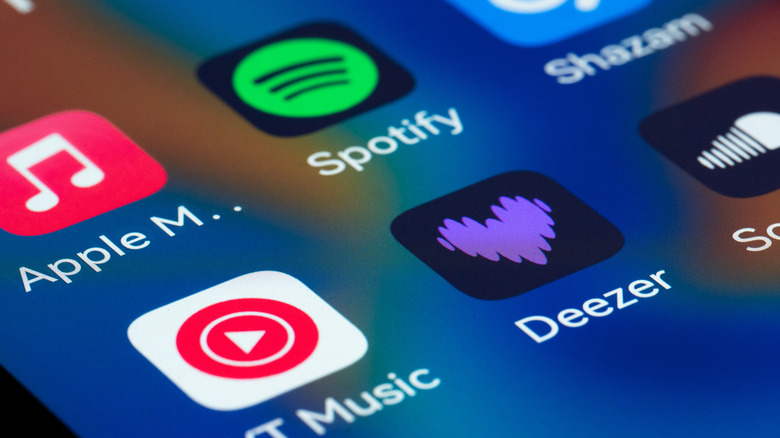
Ranking music streaming services these days is no easy feat, simply because most of them are good enough that you'll enjoy listening regardless of which app you choose. So, to rank them from worst to best, we did a lot of digging. First, we combed through user and expert reviews, noting the pros and cons of every major service.
As you might expect, we gave sound quality, including high-resolution and spatial audio, the highest priority. If a service didn't sound good, no amount of features would help it rank higher, which is why Spotify placed third. After that, we looked for other essentials, such as catalogue size, the quality of the Discovery system, and the app's ease of use. Additional features — such as app availability, podcasts, and human-curated radio stations — helped us determine which service offers the most impressive listening experience for the best value.