

Why Electric Vehicles Don't Have A Manual Transmission

Electric vehicles, or EVs, have an electric powertrain, which means they're built differently than traditional gas-powered cars. For starters, they require less maintenance, which doesn't necessarily make them cheaper to repair, but they don't need traditional oil changes every so many miles. Yes, Teslas have oil filters, and so do some other EVs, but these are typically for the gearbox.
The gearbox in an electric vehicle isn't quite like a conventional transmission since it typically uses a single-gear setup rather than multiple gears — meanwhile, there are up to 10 in some commercially available gas vehicles. It all has to do with how EVs handle torque, the rotational or twisting force of the motor that causes the vehicle to move, or rather, accelerate.
EVs accelerate instantly. An electric motor provides maximum torque as soon as it's engaged, which means it can go from 0 RPM to high power in seconds, certainly much faster than conventional engines. This ability to cover a wide power and speed range essentially eliminates the need to shift or change gears. It's also why some electric vehicles need special tires that can handle the maximum torque output, alongside the heavier weights of EVs from the internal battery packs.
Most EVs are equipped with a single-speed gearbox that offers several benefits and works well with an electric motor's wide RPM range and instant torque. These gearboxes help reduce weight, which is important because EVs are already heavy from their battery packs. Moreover, they reduce complexity and maintenance and help to achieve smoother acceleration with the added torque. A manual transmission in an electric vehicle would make it more complex, heavier, and also somewhat confusing to drive.
Why don't more EVs have a manual transmission?
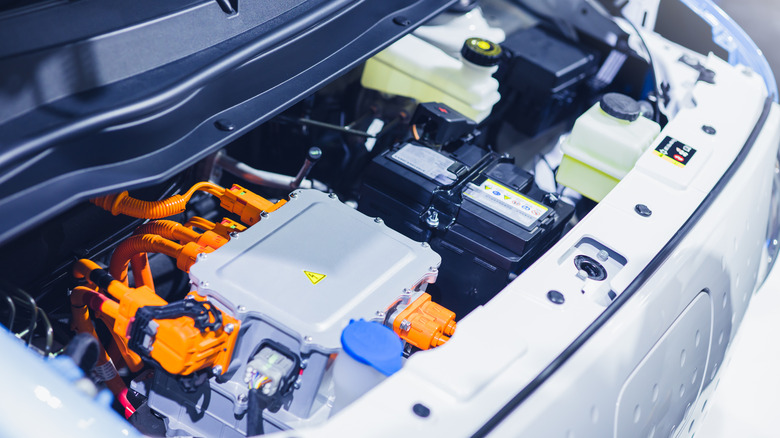
Though they're not typical, multi-gear electric vehicles do exist, meaning they're not a single speed like most consumer-grade options. Those with more gears are generally high-performance sports cars, like the Porsche Taycan and its dual-speed setup, or the Audi e-tron GT and its two-speed rear transmission. Some heavy-duty and commercial vehicles use extra gears for added towing power. Automakers such as Stellantis are reportedly experimenting with multi-speed EV transmissions as well.
Manual transmissions aren't really needed, because unlike conventional gas vehicles, EVs typically don't need different gear ratios to optimize torque and speed over a broad RPM range. In other words, you don't need to shift to third gear to accelerate enough to match highway speeds, or from zero to 20 miles per hour at a green light — it's all done effectively via one gear. The single gear transmits the energy needed from the motor to the wheels. Because of how they work, most of the ways to extend an EV's range and efficiency have nothing to do with the gearbox or optimal shifting, but instead deal with minor user or maintenance adjustments like driving gentler, relying on regen braking, or keeping the tires inflated.
But there are arguments to be made that adding extra gears can improve EV power and efficiency, ultimately helping to boost top speeds, which is why high-performance sports cars use two-speed setups. In the case of vehicles like the Porsche Taycan, the second speed or second gear is used at higher speeds. So, the driver isn't constantly switching or increasing gears like in a conventional vehicle, only when it's absolutely necessary for the high end of the vehicle's acceleration.