

With The Computer World On Fire, Mini PCs Might Become The New Norm - Here's Why
We may receive a commission on purchases made from links.
Computers have gradually been shrinking ever since they were invented. The first computer weighed several tons and filled up a room, and these days you can buy personal laptops that can play the latest games but are thinner than books. However, due to recent shifts in the industry, they might be supplanted by a somewhat unique style of computer: the mini PC. That's not to say people will abandon laptops, just that mini PC sales might eclipse laptop and standard desktop sales.
Mini PCs, as their name implies, are computers with absolutely tiny form factors. You can completely hide and mount one behind a monitor, which is perfect for people who don't have enough space for a full-size tower PC. Yet despite fitting inside palms, mini PCs are still fully functional computers with all the necessary components, just crammed into a minuscule case. Unlike laptops, you can't use mini PCs unless you provide an external power supply (such as a wall outlet) or plug in a monitor, mouse, and keyboard, but you can still take mini PCs on the go.
Hypothetically, if you have a hybrid job that lets you work from both the office and home, you could use a mini PC in your cubicle for all your work-related tasks, stuff the computer inside your pocket, and then continue from where you left off the next day from the comfort of your home. However, you could do the same with a laptop, but you need a backpack for storage. Mini PCs are poised to become the new norm because of technological advances and shakeups in the computer industry. Consumers generally want low-energy devices and something that doesn't take up a lot of real estate on their desk.
Price is a huge factor
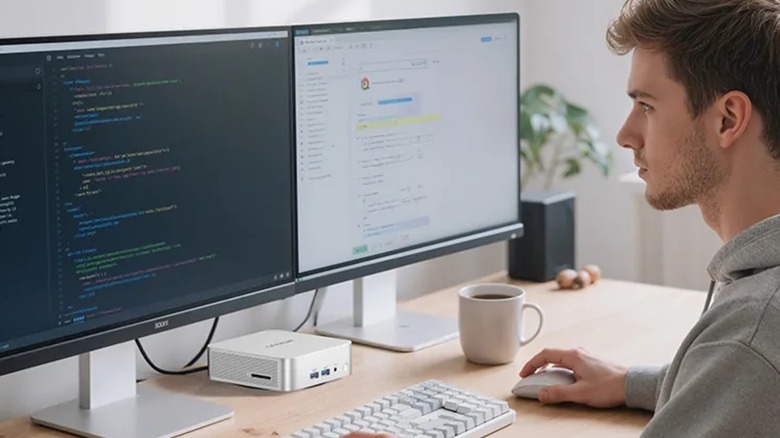
Mini PCs are inexpensive devices. If you want a quality product that can handle much of what you can throw at it, devices like the GEEKOM A5 Pro Mini PC offer a lot of bang for a little over $500. This is a huge deal since AI data centers are making the prices of most computers skyrocket, so who wouldn't jump at the opportunity to buy a computer that doesn't require a mortgage? But mini PC savings go further than just the sticker price.
They also generally benefit from low power consumption when compared to full-size desktops and even laptops. Some models, such as MSI's Cubi N ADL, require so little power that they don't even need fans, which means you don't have to use additional electricity to cool them down. Even the more powerful Cubi NUC AI+ caps out at 37 watts.
Comparatively, if you use a full-size rig, you're looking at anywhere between 300W and 800W for rigorous activities such as gaming. Given electricity prices these days – thanks in no small part to AI data farms hogging so much energy — purchasing a device that consumes very little electricity is an excellent way to lower your bills.
The gulf in power is steadily shrinking
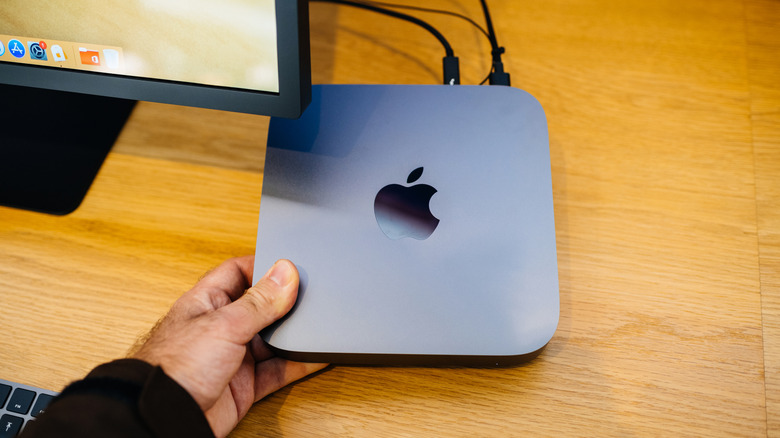
Mini PCs can perform many of the tasks associated with full-size computers. These tiny devices can surf the web and run word processors, and depending on the model, you can even upgrade them with new components. The only real difference is performance. A tower PC will always leave a mini PC in the dust — especially when playing video games — because it can fit more components.
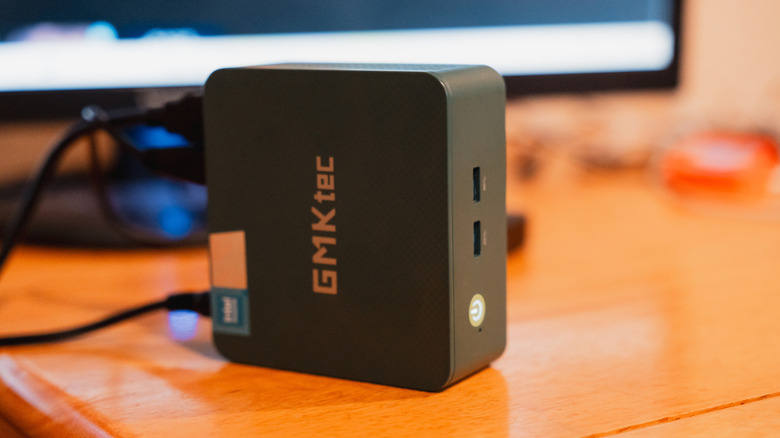
However, computer engineers have learned how to compress PC hardware, so while you need a desktop or laptop to accommodate the biggest SSDs commercially available, devices like the GMKtec Mini PC usually ship with 1TB SSDs, which should suit the average user's needs. Plus, depending on how much you spend on a mini PC, you might purchase a powerhouse that can keep pace with mid-range gaming laptops.
While the world's strongest PC will never match the world's strongest full-size PC, users can still emulate that power via cloud computing — kind of. So long as you have a solid Wi-Fi connection (many mini PCs have built-in wireless capabilities) and the requisite subscription, you can connect to any number of remote services. That's not to say you should rely on cloud services 24/7 and abandon the idea of personal computers. Instead, treat mini PCs as the versatile boxes they are — they can perform many of the tasks standard-sized PCs can, but for everything else, there's the cloud.