

5 Pieces Of Dead '80s Tech That Will Stir Up Emotions In Every Boomer
We may receive a commission on purchases made from links.
Technology is advancing almost faster than we can keep up with, so it's relaxing to look back and fondly remember the devices of yesteryear. And it's hard to get more iconic than tech from the '80s.
The '80s saw countless devices and gadgets that would shake up the tech industry, including the Nintendo Entertainment System and the Sony Walkman (technically released in late-1979, but its popularity didn't explode until 1980). While many younger people today will probably never get to experience such devices, the right bit of '80s tech can stir up emotions in the older generation, colloquially known as "boomers" (no relation to the Boomers from "Gears of War" or "Left 4 Dead"). Perhaps they're hit with a wave of nostalgia, recalling the first time they used a cell phone, or annoyance, remembering how much their children pestered them for a piece of tech that turned out to be a flash in the pan.
Here are examples of technology that has been discontinued or is otherwise outdated that likely elicit strong feelings in people currently aged 62 to 80.
The Clapper
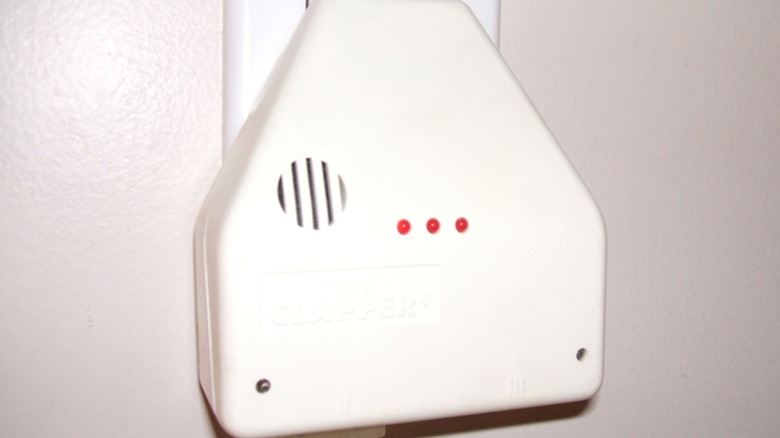
Long before you could control smart home gadgets with your phone, engineers were tinkering with ways to turn lights on and off without physically flipping a switch. The Clapper is arguably the most famous example.
The device, introduced in the mid-'80s, was a sound-controlled electrical switch that you activated by, well, clapping your hands. You clapped to let electricity through to the connected device and again to restrict the flow of electricity; you could even vary the number of claps to swap between outlets or set the Clapper to activate at any sound.
Part of the Clapper's popularity came from its universal appeal. Elderly people and users with mobility issues could utilize the device to turn lights on and off, but it was just as useful for anyone whose bed far from a light switch. However, what truly sold the Clapper was its low-budget TV commercial that popularized the slogan "Clap on! Clap off!" This simple earworm of an ad left an impression, and solidified the Clapper in the memories of almost everyone who lived through the '80s.
Pagers
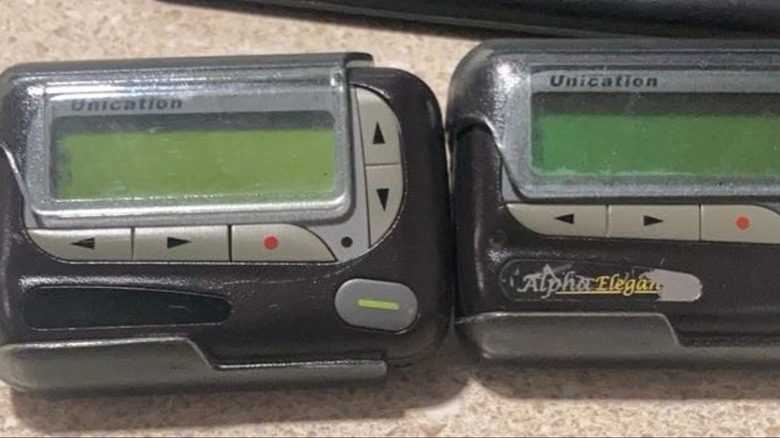
While the pager was invented in the early-1920s, the devices didn't reach their zenith until the '80s. Pagers are simple in concept: They buzz to tell you that you've received a message from an email or phone number, and also display the sender on the LCD screen. That's it. You can't respond with a pager, but you can politely excuse yourself from a social event without disturbing anyone with unnecessary talking or annoying ringtones.
While smartphones have primarily supplanted pagers because cellphones let users quickly respond to whoever tries to contact them, the modern world of communication has room for pagers. Unlike smartphones, pagers don't need a cellular or wi-fi network, and are actually subject to less lag.
While some people still use pagers — especially those who work in emergency services — many more prefer smartphones due to their ease of use. Plus, given the number of companies that still manufacture pagers and paging services compared to those in the smartphone business, it's pretty obvious that while pagers aren't dead yet, they're a dying breed.
DynaTAC Cellular Phone
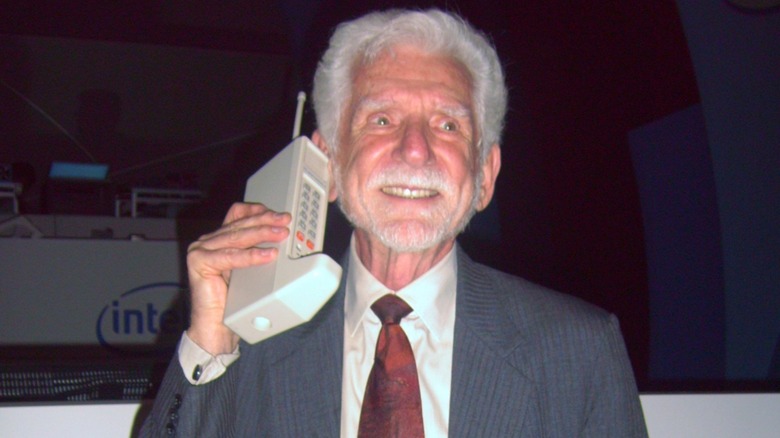
These days, we take cellphones for granted, partially because they've become integrated into our daily lives — you can even use them to print out label stickers and play music. But in the '80s, cellphones were a new invention, so people who used them tended to make heads turn. Mostly because the world's first cellphone, the DynaTAC Cellular Phone, was a brick of a device.
As the DynaTAC phones predated inventions like the Nintendo Game Boy, designers weren't concerned with implementing entertainment features. The DynaTech cellphone was a spartan device that cost several thousand dollars and only had enough battery life for 30 minutes of use. And you thought smartphone apps like Netflix were battery hogs. Still, the sheer freedom the DynaTAC provided proved an overwhelming success, and designers iterated on the device until it was eventually replaced by the world's first flip phone: The MicroTAC 9800X.
While the DynaTAC is horribly outdated by modern standards, it still lives on in spirit through modern cell phones and any piece of media taking place in the '80s that depicts characters using brick-shaped wireless phones.
The Power Glove
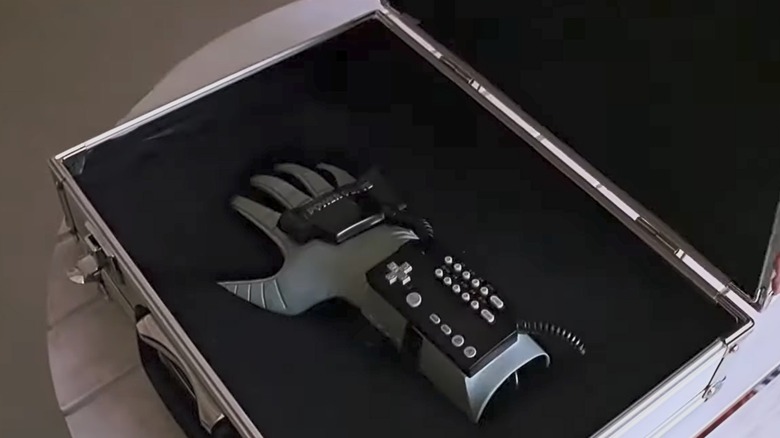
While many devices from the '80s are tied to memories where the user squealed with joy, others, like the Nintendo Power Glove, unearth long-buried groans of annoyance. This gaming peripheral was a controller you wore on your hand like a, well, glove, and was one of Nintendo's first forays into motion controls. However, like many gimmicky add-ons back then, the device barely worked. Users were lucky if the Power Glove even functioned with games literally designed for the device.
Any parent who lived through the '80s and bought an NES for their kids probably had to deal with their constant pleas for a Power Glove. Hype for the gadget was highly inflated, thanks in no small part to the movie "The Wizard," which served as a stealth commercial for the device (and other Nintendo products). But after buying a Power Glove, parents then had to live with the realization that they purchased a product that quickly went into storage — a feeling that might persist to this day.
In the eyes of gamers, the '80s and '90s were synonymous with the console war between Nintendo and Sega, and Nintendo's Power Glove was a strong argument for its competition.
Instant Cameras
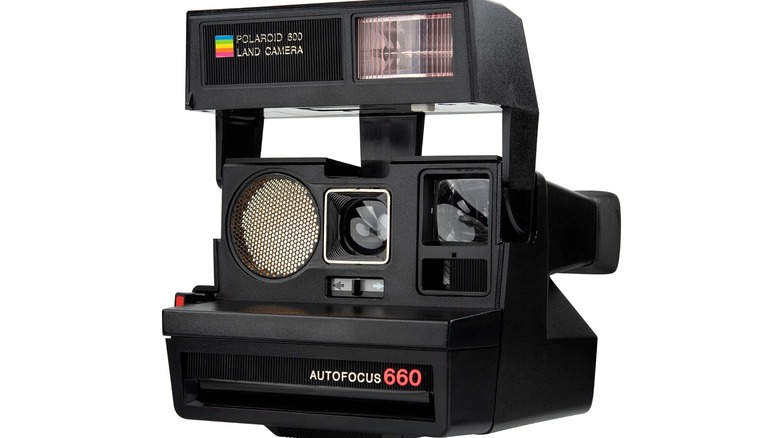
Before the digital age, cameras relied on rolls of film, and even if you knew how to develop your own photographs, the process was still expensive and time-consuming. But then Polaroid introduced a revolutionary technology: Instant photography. Just snap a picture, wait for the film to develop, and you have immortalized an image, no dark room or chemicals needed. Granted, Polaroid introduced the technology in the late-1940s, but when most people think of instant cameras, devices like the 1972 Polaroid SX-70 and 1981 Polaroid Sun AF 660 come to mind. These cameras were so popular they became synonymous with instant photography — there's a reason why many people call instant camera film squares "polaroids."
Many people have fond memories of using instant cameras to make quick mementos. These devices not only immortalized the events, but also provided a burst of instant gratification. And we can't forget the ritual of using the film squares they dispensed like fans to help the development process. You didn't need to, but it was all part of the fun.
While some still use traditional film, instant polaroids included, they're more or less obsolete because you can create physical photos by connecting digital cameras to printers. Heck, Polaroid manufactures a 2-in-1 gadget that's both a digital camera and printer. But without the SX-70 and Sun AF 660, fewer people might care about such a device.