

Do Smart Plugs Use Electricity When Turned Off?
We may receive a commission on purchases made from links.
Smart home devices continue to spoil the masses, and digital companions like Alexa and Google Assistant are getting smarter. Nowadays, it doesn't take much to automate everything from lighting and temperature control to what's playing on your smart TV. Smart plugs have also been around for a while, and are now some of the most essential smart home gadgets on the market. They're also relatively simple to use: Just plug one into an electrical outlet, then plug in a device you want to power and control remotely.
Smart plugs are great for small appliances like pillar fans and ceramic heaters, especially if you don't want this type of equipment running constantly. But did you know that even when a smart plug is turned off, it's technically still drawing power? Generally speaking, most smart plugs will draw between 1 and 5 watts in standby mode, which is also known as "phantom power."
This is actually an intentional move on the manufacturer's part to ensure your smart plugs maintain a Wi-Fi connection; that way, they're always ready to receive commands via an app or automation tool like Alexa or Google Home. That said, not all smart plugs are created equal, and purchasing an over-qualified set of plugs for low-power electronics may negatively impact your electrical bill.
A high-wattage smart plug shouldn't be in charge of a bedside lamp
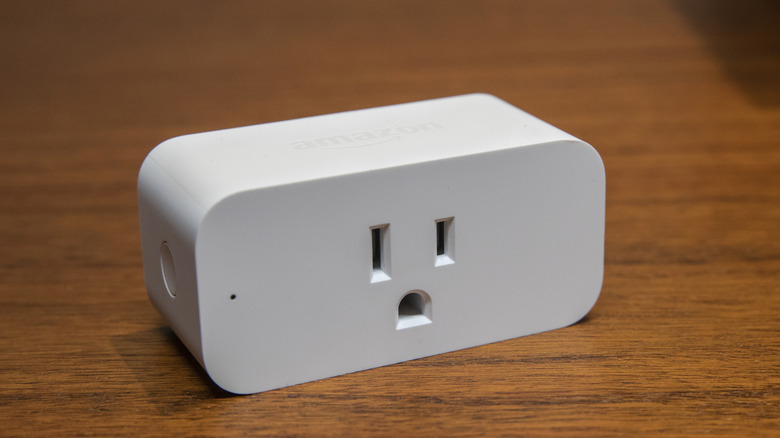
Let's look at a product like this TP-Link Tapo Smart Plug three-pack: Each of the plugs supports up to 1,800 watts, and space heaters draw about 1,500 watts on average. If you wanted to connect your heater to a smart plug, the Tapo would be a solid choice. Now, let's swap the heater for a bedside lamp with an LED bulb: On average, that lamp should pull between 2 and 18 watts. While you can still use that Tapo plug to control your lamp, it's technically overqualified, and the plug may draw more power than is necessary.
This may not be such a big deal if we're only talking about a single lamp — it's when you have multiple over-consuming plugs controlling multiple lamps, appliances, and other devices that energy draw may become an issue. The same goes for phantom power: One smart plug drawing 1 to 5 watts in standby isn't such a big deal, but four or more plugs that are set to off might be an electricity situation you want to take a closer look at.
Many home devices use more energy than we think, and one of the chief benefits of owning smart plugs is being able to see how much power your lifestyle demands. Many smart plug companion apps have energy-saving dashboards that'll let you track a plug or device's power consumption over days, weeks, and months, along with scheduling tools you can use to program on- and off-hours for your tech.