

7 Clever Uses For Smart Sensors Around The House
We may receive a commission on purchases made from links.
Smart sensors aren't just for turning lights on when you walk into a room. There's all manner of fun and clever ways to use them around your home. Whether you're tracking your child's suspicious midnight fridge raids, monitoring wily pets who've developed a penchant for dancing on the countertops, or just trying to understand how your home is actually put to use every day, we've got you covered with all sorts of sensors and clever ways to find and use the data.
Before we begin, I'll note that some of these automations are fairly complex and will only be possible to configure using Home Assistant. While it's a platform that can result in mistakes for beginners due to its sheer complexity and number of integrations, it's also the most developer-friendly once you understand its basic tenets. I'd also suggest buying only Matter sensors — and checking out What is Matter? — for future proofing and cross compatibility, especially in a home enviroment with mixed devices.
1. Interactive home map showing who's where

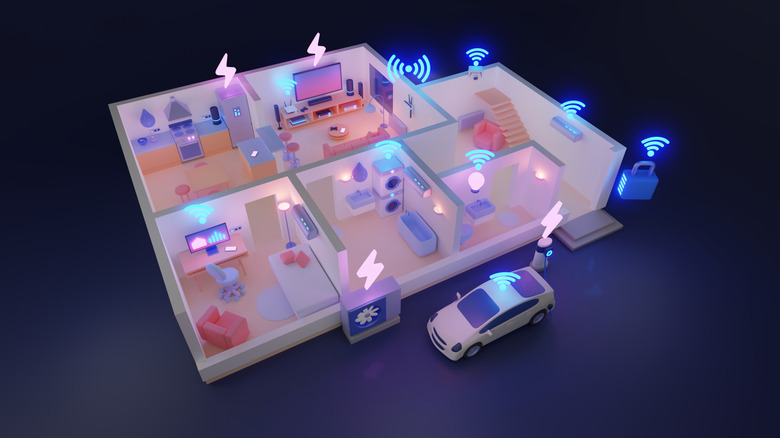
How cool would it be to have a map of your home following everyone's location? That's exactly what the Bermuda BLE project aims to do using Bluetooth trilateration with low cost ESP32 hobby development boards. It's slightly less dystopian than CCTV inside your home, but handy if you have a big house and lots of kids (or animals!).
Take this a step further by making a floorplan of your smart home into an interactive dashboard, so that every light can be controlled by tapping on the map, and rooms light up to reflect the current status.
If you only want to know when a room is occupied and not necessarily who is in it, consider mmWave presence sensors instead. Motion sensors can be useful around the home, but they're a very blunt instrument that will only trigger once when someone moves. If they sit down and watch TV, it won't trigger again. After an initial room scan, mmWave presence sensors can detect motion as small as someone breathing. They're more like tiny close-range radar systems.
The small downside to this is sheer cost: mmWave sensors can run up to $50 each. The Aqara FP300 is our pick, offering both presence, light, humidity, and temperature sensors in one small Matter-compatible package. That's a lot of useful data for other automations.
2. Pet mischief detector

We have a problematic dog in our household, to put it mildly. He's an agile and smart Collie, so nowhere in the kitchen is safe from his explorations. We're not fans of putting animals in a cage though, so we just have to work around him and remember not to leave any food out. But presence sensors can help out here too, since they're capable of detecting both large and small objects alike. At the least, it's worth knowing where he's been so we can clean surfaces when we need to.
Combined with a passive Bluetooth beacon on the collar (these silicone mounts are good), you could code some automation logic that detects if your mischievous pet is in the kitchen alone for more than 15 seconds (although frankly that might be too lenient for ours). It alerts you to take action. If your status is set to out of the house, and you tend to leave them alone anyway, angle the presence sensor up slightly so it ignores the floor, then any detections will only occur when they get up high. It could be set up to bring up the kitchen camera and allow you to warn them down, or automatically play a message on the kitchen speaker.
3. The energy vampire detectors
Once you've got location and presence sensing, adding in power detection through the use of energy monitoring plugs for TVs is trivial (Eve Energy is the most popular Matter over Thread choice, at around $35) — and your smart home already knows the status of any smart bulbs or lighting fixtures. But now you can use it to detect who in the household needs a gentle nudge when it comes to wasting energy.
Use a presence sensor to start a three minute countdown once the room status changes to unoccupied. At the end of three minutes, check if power is registered through the TV socket or if lighting status is still on, then find the last known user and nudge them to go turn things off and stop wasting power. If you want to be really Orwellian about it, log the infraction and create a leaderboard at the end of every month.
4. Migraine predictor
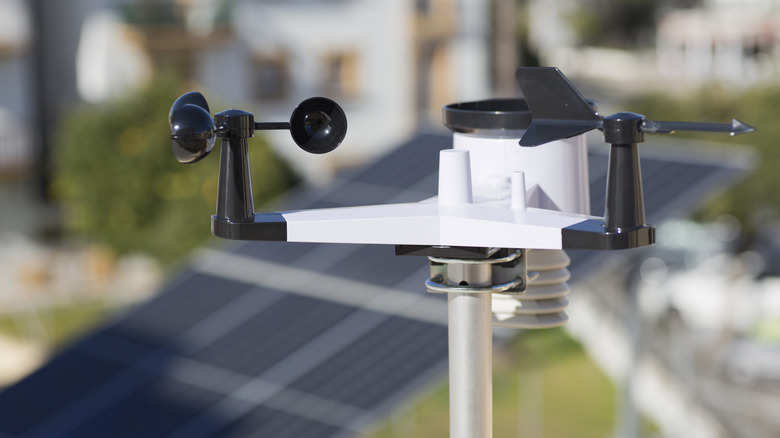
This one will take a bit of tech knowledge and setting up, but studies have shown that barometric pressure can have strong correlation to migraine onset in people prone to them, so if you find this is true for you, it's worth getting a heads-up.
To try this, you'll need to install an outdoor weather station and specifically log the data for barometric pressure. Tempest Weather Station is regarded as the best with a local API for personal use, though it doesn't come cheap at $350, while Ambient rings in at $200. Keep an additional log of which days you get a migraine on; three months' worth of data is probably enough to correlate.
If you see a connection between your migraines and sudden pressure drops — and what level that might be triggered — you can automate. When that occurs again, alert your phone to suggest hydration and maybe even dim the office lights and draw the blinds so you can go into hibernation mode.
5. Cognitive performance protection

Carbon dioxide isn't just warming the earth — it's making us dumber, too! Carrying on with the theme of atmospheric effects, you should know that even moderately elevated levels of carbon dioxide in your home can result in serious detrimental effects to cognitive performance. While some would say "just open the windows occasionally," some of us are geeks, and we want actionable data and phone notifications. Indoor air sensors can be pricey, but easily justified if you work from home. The IKEA Alpstuga is Matter-over-Thread smart air quality monitor for only $30.
Outdoor carbon dioxide levels are normally anywhere between 350 and 1000ppm (parts per million) — but studies show that anything above 1000ppm can have a significant effect on cognitive tasks. If your air is stale or many people have been gathered in the same room, levels can quickly elevate to the thousands. That might be why going for a quick walk can clear your head or boost your memory.
The simplest automation would be an alert if the CO2 level rises above a certain level, but if you have a smart HVAC system you could activate the air circulation when it hurts a certain level, too. While smart air purifiers exist, they won't scrub CO2.
6. Your smart speaker is also a smart sound sensor

When your house is dotted with smart speakers that happen to include a decent microphone for listening to your voice (and you really may want to add some voice assistants to your home), guess what? They're also pretty smart sound sensors. Supports varies between manufacturer, however.
Here's how to enable your Apple HomePod to listen out for smoke alarm sounds for free. Alexa Guard also adds the ability to detect for glass breaking on Amazon smart speakers — with a premium plan adding the option of dogs barking among others. Unfortunately, Google needs a Home Premium plan (previously called Nest Aware, before Google killed off the entire Nest brand) for any kind of smart sound alerts.
While a smart smoke alarm like the X-Sense series that will alert you directly is best, it's costly to replace a whole house-worth of alarms prematurely, so having your voice assistant listen out for issues is the next best thing.
7. Fridge raid detector

Do you have a child that's prone to midnight snacking? I once woke up to find six bottles of squirty cream had been emptied, and I'm pretty certain the dog didn't learn how to open the fridge.
This could have been avoided if we caught a kid in the act with an emergency notification. A time-based automation combined with a basic door sensor on the fridge itself should do the trick — the Aqara P2 Matter-over-Thread door and window sensor would be our choice. And at around $25, it's cheap enough that you might want to consider putting one on the biscuit tin as well (or the pantry). If someone opens the fridge anytime past 11PM, it can be automated to turn the lights in the kitchen on full blast, and play an announcement from the smart speaker in your sternest parent voice. Just be sure to disable the alarm if your own phone's Bluetooth beacon is detected, especially if you yourself are a late-night eater.