

5 Ways 3D Printers Could Change In 2026
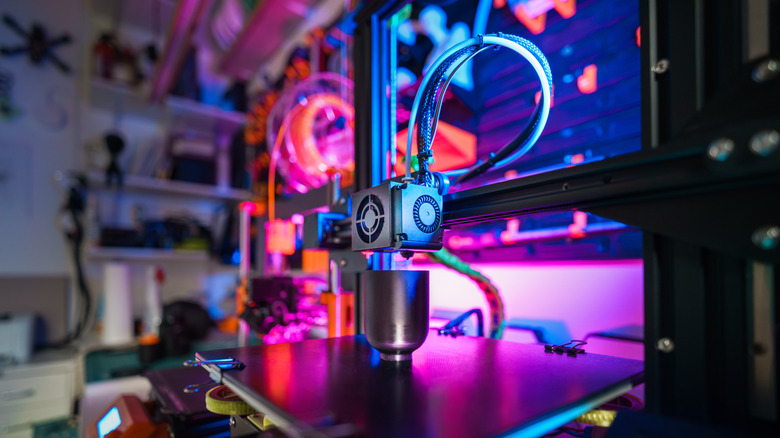
3D printing is in the middle of a transition period from a novelty hobby into a serious home manufacturing solution. Early adoption was helped along by some of the best sites for free 3D printing projects, but 2026 is poised to focus on professional-grade reliability and material diversity. Some of the latest developments in the space focus on industrializing the home workshop, making complex fabrication accessible to all.
Innovations that were previously exclusive to industrial 3D printers or high-end models are converging with solid software to create a "plug-and-play" future. Affordable 3D printers are already starting to show this, with features like built-in multi-color printing, reduced waste from color changes, and slicer software that helps make it all possible.
2026 represents a pivot point where the barriers to entry fall down, allowing users to spend less time tinkering with settings and more time making cool stuff. For those already in the know, this means a massive jump in throughput and part quality and less time troubleshooting a bed level or clearing a clogged nozzle. Manufacturers are pushing focus to software optimizations and ease-of-use features, making 2026 the best time to get into 3D printing.
Mainstream UV printing to add color and texture

Get ready for precise color finishes on projects thanks to ultraviolet (UV) printing technology, not to be confused with the well-established liquid resin 3D printers that are great for highly detailed work. Unlike traditional 3D printing that builds volume by layering molten plastic or curing layers of resin, UV printing is a digital process that uses ultraviolet light to dry thin layers of ink instantly. This allows a machine to apply vibrant colors and complex textures to nearly any hard surface, including glass, metal, and wood. Industrial-scale UV printers have existed for years, but consumer-friendly versions like EufyMake E1 are expected to reach full retail availability in 2026. FDM printing a basic model, then using a UV printer to add detail and color is going to transform the hobby.
UV printing is like adding a high-definition skin to an object, which is a big upgrade over monochrome plastic gadgets with obvious layer lines. This should result in near-endless customization, as UV printing provides durable, high-detail designs on non-traditional surfaces without needing to paint or post-process. As the technology catches on, it's only a matter of time before it becomes more affordable and cost-effective UV printers flood the market.
Affordable tool-changing systems to cut purge waste
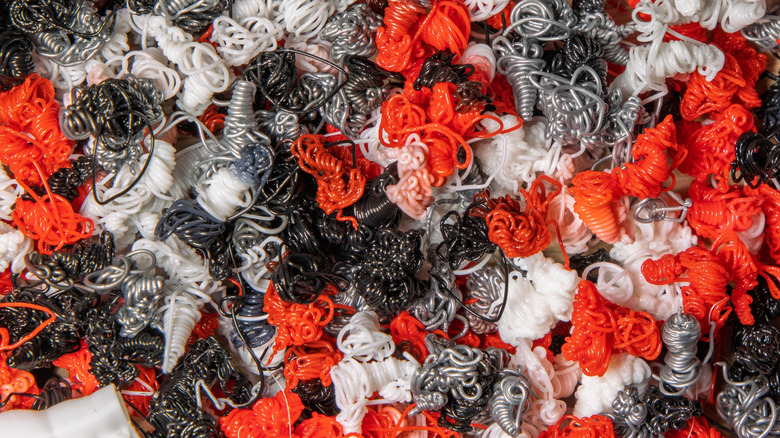
Efficiency when handling multi-color and multi-material projects is a major focus for 2026 3D printers. While some 3D printing projects are a waste of your time, others simply waste your filament, even if the build ends up being fully usable.
On single-filament 3D printers, users need to "purge" and unload the current color or material to load the filament needed next. This ends up wasting filament, resulting in "printer poop" that's unusable unless recycled into another purpose. A 3D printer capable of handling multiple filaments at once, or an extruder with more than one nozzle, will effectively cut this wasteful practice out. Snapmaker U1 features four separate nozzles to print multiple colors and materials without the waste material associated with traditional single-nozzle printers. It will save users money by having better yields per filament spool used, too.
Bambu Labs and Prusa are market leaders when it comes to handling multiple filaments at once with industrial efficiency. The upcoming Vortek nozzle-swapping system from Bambu Labs is looking like a game changer that could vastly reduce waste material while significantly increasing print speed. This means complex, multi-material 3D printing projects will become cheaper and faster to produce. The 2026 market will likely see these high-end efficiencies trickle down into more affordable, mid-range machines. Elegoo's new Centauri Carbon 2 is a brilliant example of this, providing smart filament management without breaking the bank.
Next-gen materials to expand what you can print
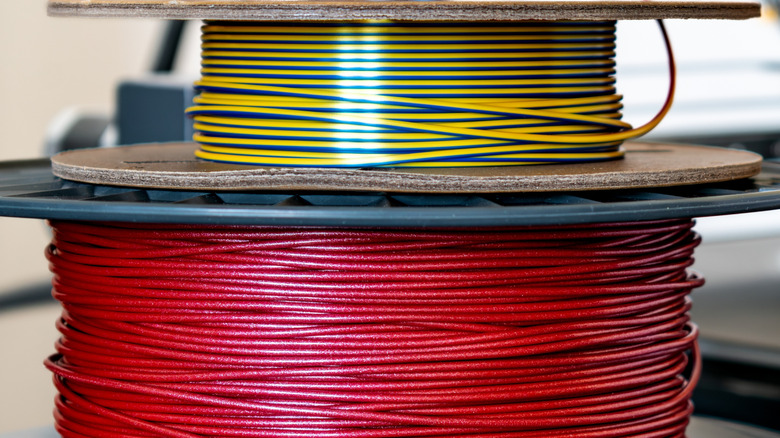
3D printing isn't just locked into standard plastic filaments like PLA anymore, and it's expanding into more hybrid materials for safe desktop fabrication. 2026 is set to be the year that advanced composites and metals become commonplace in home workstations. Polymaker recently introduced the PPS-GF20, which is a glass-fiber reinforced filament with flame retardant properties that sells for around $59.99 for a 500-gram spool. There are also foaming filaments like PEBA Air, which allows users to reduce the weight of a part by up to 50% by adjusting the temperature of the nozzle, making it simple to create lightweight, functional wearables.
One of the coolest breakthroughs in 3D printing is the growth of Cold Metal Fusion, which means making metal parts with hardware like the Formlabs Fuse. Granted, the equipment needed is north of $20,000 and has a large footprint that wouldn't be suitable for most home setups. It also uses special powder that is layered in a chamber which is then fused by a laser. But we're seeing plastic filaments fused with powdered metals already (although it's abrasive and needs a hardened steel nozzle due to it wearing down brass nozzles), so it's only a matter of time before Cold Metal Fusion becomes affordable.
Smarter slicers and automation to reduce failed prints
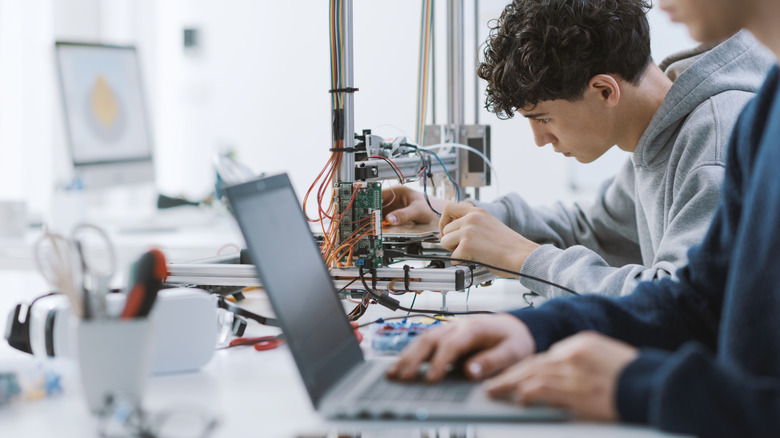
3D printers are only as good as the software that drives the whole process, and 2026 is the year that software levels up. Gone are the days of users having to manually input carefully calculated settings thanks to new programs using simulation-driven toolpath optimization to define material properties at the 3D pixel (voxel) level. With slicers controlling voxels, software can ensure that a component is flexible in one section and rigid in another using the same base material. This pinpoint precision approach to 3D printing makes sure the shape and strength of a 3D project are best suited for its purpose or real-world applications.
Automation is the overarching theme for software this year, freeing users from manual oversight that can lead to failed prints. Industry experts believe that software will start to play a larger part in the overall production of metals too, driving down costs and increasing quality. It's important to stick to trusted brands in the 3D printer software space, such as Elegoo, Cura, and Orca. There are nefarious AI-generated programs making the rounds that turn automation into slop, but the focus for manufacturers and software engineers this year is distinguishing between useful automated engineering and generic computer-generated clutter.
All-in-one systems to merge additive and subtractive work
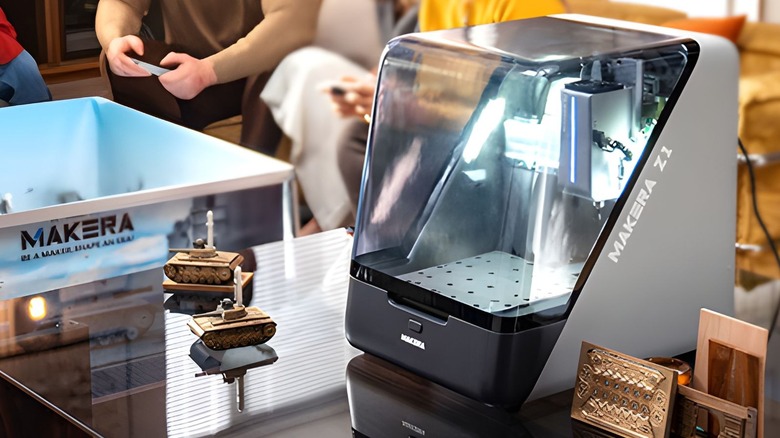
It's entirely possible that 3D printing capabilities could soon become a feature of a multi-functional machine capable of laser engraving and CNC milling. Hybrid machines that can swap between additive (3D printing) and subtractive (laser engraving and CNC milling) manufacturing are becoming more refined and easier to use. Makera Z1 is set to be the simplest CNC mill on the market for home use in 2026. It offers a high level of precision with materials such as solid aluminum and hardwoods that 3D printers can't match.
The idea of additive and subtractive manufacturing entering the home is supported already by software solutions like Millmage, which aims to simplify the way users interact with milling machines. As these tools become more integrated, the "desktop factory" will be capable of producing finished, consumer-ready products that are made up of metal, wood, and plastic in a single assembly. Even if 3D printers sit alongside laser engravers and CNC millers on a user's desktop, 2026 is the year where this reality becomes practical for everyone. The additive manufacturing market is undergoing a period of consolidation, with stronger brands merging to offer comprehensive, all-in-one manufacturing solutions. It's looking like 2026 will be the year 3D printers start to feel less like tinkering tools and more like reliable, professional-grade production machines.