

What's The Average Lifespan Of AA Batteries? Here's How Long They Last In Storage

There are probably a lot of items you keep tucked away in drawers to use sparingly that you don't realize actually expire. One such item is AA batteries. While they don't technically "go bad" as food might, they do half a shelf life. It's tempting to buy a massive pack in bulk to pull out a couple as needed for remotes, toys, and other battery-operated electronics. This could be even years after you bought them for a device that doesn't need them swapped often, like a TV remote, wall clock, or smoke detector. But they do have a shelf life that's important to be aware of.
With that said, most alkaline AA batteries last a very long time, as in up to 10 years or longer. However, it's entirely possible you may unearth a pack you forgot you had or a backup supply your elderly parent or grandparent has been stockpiling for decades, thinking they "never go bad." It's important to understand the average lifespan of AA batteries. Using them beyond that could be dangerous if there are signs of leakage, swelling, or corrosion in the worst-case scenario, or they simply won't work, or work to their full capacity, in the best.
How long AA batteries last
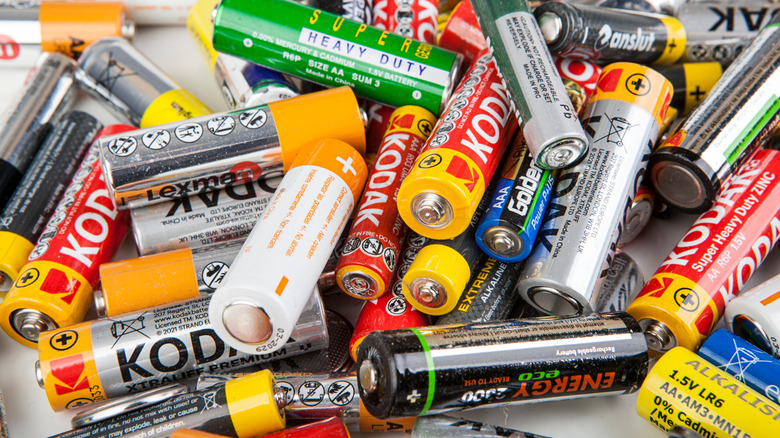
Alkaline and lithium AA batteries offered by reputable brands like Costco, Kirkland, and Amazon Basics typically have a shelf life of about 10 years, though some lithium batteries from brands like Energizer can last for up to 25 years, alkalines up to 12. That's no surprise since Energizer ranks among the best and most popular battery brands. Rechargeable AA cells may last for a shorter duration of time, from around five-to-10 years. This depends on how often you use them and how many charge cycles they have gone through. Most rechargeable battery packages will indicate the average number of charge cycles before they need to be safely disposed of and replaced. This typically ranges anywhere from 300 charge cycles up to 2,100.
You should be able to spot a shelf life on the package, which isn't necessarily an expiration date, but more like the "best before" date you might see on food. Generally, the date is indicated with a month and year or "EXP" followed by the year. This means that the manufacturer is guaranteeing they will work to at least 80% of their capacity and performance up to that date. Lithium batteries might include a code you'll have to reference from the brand website to understand the date. Rechargeables only show a manufacturer date since the shelf life depends on usage factors, like, as noted, the number of charge cycles, which you can get through in a few months, years or longer.
Testing and storage to prolong life

If you find a package in storage, you can test the batteries using a dedicated battery tester. It will tell you if the battery is good or bad. If you don't have a tester handy and there are no signs of leakage, corrosion, or swelling, give the battery a try, even if it's past the presumed or declared date. If it's older than that date, however, it may not last as long nor offer as much capacity.
To prolong the life of AA batteries, follow proper storage tips. Keep them in a cool, dry place, so the garage during humid or frigid seasonal temperatures isn't a good idea, nor is the myth that batteries should be kept in a refrigerator. If you're not using a device that has batteries for an extended period, like an old TV remote you no longer use or a child's electronic toy, remove the batteries. This will help prevent a faster discharge, which can lead to dangerous battery acid leaking out of them. When dealing with crucial devices like a smoke alarm, always use newly purchased batteries. Don't forget to safely recycle fully discharged batteries that are no longer working. Never toss them in the garbage, as they will remain in landfills for more than 100 years and can contaminate surrounding soil and water. So, AA batteries can last a long, long time, but they probably won't work as new a decade or more later.