

It Takes Years To Refuel A Nuclear Submarine - Here's Why
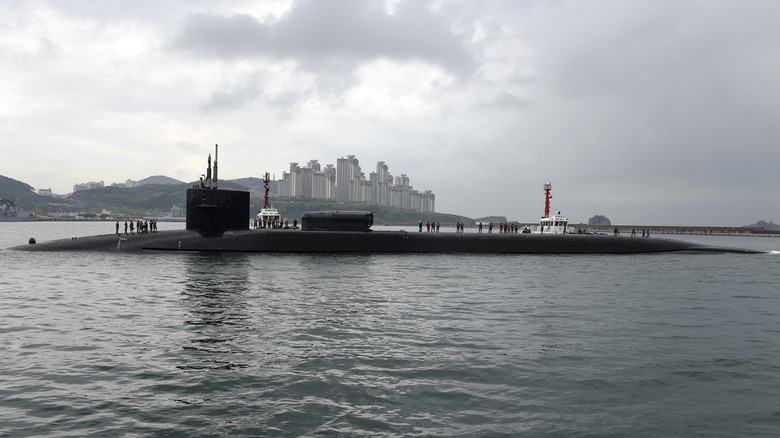
You probably charge your phone daily, while your car needs gas or a battery top-up every few days. But you don't have to take the device or vehicle apart when you connect it to power or fill up the tank. Refueling a nuclear submarine, on the other hand, is a complicated process that takes years, just like refueling a nuclear aircraft carrier. However, unlike carriers, which may spend up to six years going through the Refueling and Complex Overhaul (RCOH) process, a nuclear submarine takes a shorter time for its Engineered Refueling Overhaul (ERO) process. The job can be done in two or three years, assuming other events do not cause extra delays. In addition to safely removing the nuclear core from the submarine and installing the new one that will power the vessel for another couple of decades, the engineers also perform the overhaul process meant to modernize the equipment to newer standards.
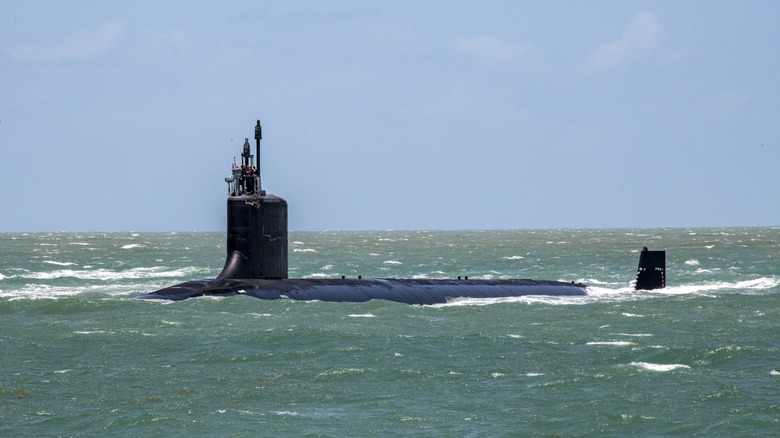
Taking a submarine offline for a few years at a time may seem like a security risk, but the U.S. Navy operates 71 submarines of various classes. All of them are powered by nuclear reactors, which can operate for decades. Also, new submarines are built regularly. Finally, not all submarine classes that are in operation will ever require refueling. Virginia-class and Columbia-class designs feature nuclear cores designed to last for the entire life of the ship, or about 33 years and 43 years, respectively. It's the models in the Ohio and Los Angeles classes that will require mid-life ERO processes.
What happens during a submarine refueling?
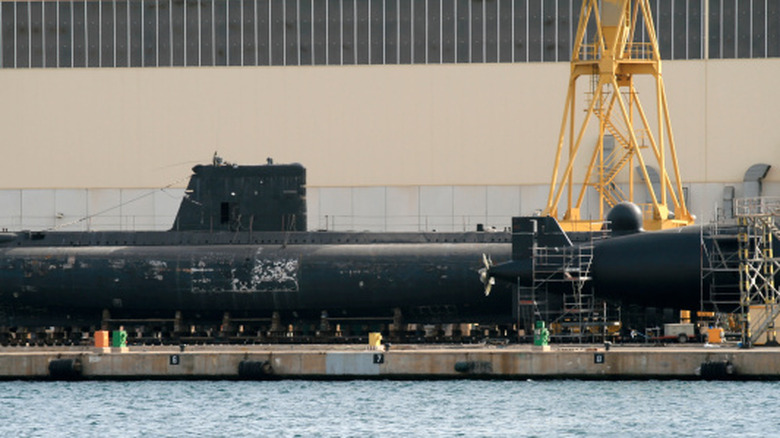
The ERO process is slow because it's designed that way for safety reasons. The nuclear submarine has to be brought into a facility that's capable of handling nuclear material throughout the replacement process, to ensure the safety of everyone involved in the repairs and the sailors who will crew the ship once the refueling process is done. The nuclear core remains radioactive during refueling, so radiation must be contained and the nuclear waste must be stored securely.
The submarine is brought to a dry dock for the ERO process, where engineers go through a rigorous procedure to defuel the ship and refuel it. The reactors are shut down and cooled before removing the old reactor core and installing its replacement. The actual removal of the spent core involves cutting through the submarine's hull with hand tools, as the reactors aren't easily accessible. These operations are performed under strict ventilation and filtration protocols to prevent radiation contamination. The old core is transported off-site for secure storage, as the nuclear material remains active. The new core is installed, and then the reactor is reassembled and the submarine is resealed. These procedures require precision and numerous inspections, as there's no room for error. The structural integrity of the hull is key for allowing the submarine to operate at depth.
After the fuel is replaced, the modernization process begins. After two decades of service, the submarine will be updated for the next 20 years in service. Engineers inspect existing machinery, electronics, and weapons systems and replace older components and technologies with newer ones. The submarine undergoes another round of inspection and quality assurance processes after it's rebuilt. The ship then heads to sea trials to ensure the submarine is safe and all systems are operational.
How much does refueling a submarine cost?
Like nuclear aircraft carriers, nuclear-powered surface ships undergo extensive RCOH processes — and they're not cheap or quick. For example, it cost $2.8 billion to refuel and retrofit the USS George Washington aircraft carrier, and the process took even longer than anticipated. In May 2023, the U.S. Navy announced that the George Washington completed its RCOH process after 69 months. It involved upgrading the propulsion, infrastructure, and combat systems. The George Washington entered RCOH in early August 2017 at the Newport News Shipbuilding in Norfolk, Virginia, but the COVID-19 pandemic impacted operations, leading to delays.
Refueling a nuclear-powered submarine is less costly but still runs between $600 million and $800 million, according to a National Defense Magazine report from 2015. That's why the Navy has moved to building life-of-the-ship reactors, which do not have to be refueled midway. In March 2023, the U.S. Navy announced the last ERO work for an Ohio-class submarine, the USS Louisiana. The process took 40 months, involving 870,000 resource days, significantly more than similar ERO procedures for the USS Nebraska and the USS Maine. The refueling and modernization process took longer because of the pandemic, similar to the USS George Washington's RCOH delays. For comparison, a brand-new submarine can cost between $5 billion (Virginia class) and up to $15 billion (Columbia class).