

Ranking 6 Major Live TV Streaming Platforms From Worst To Best
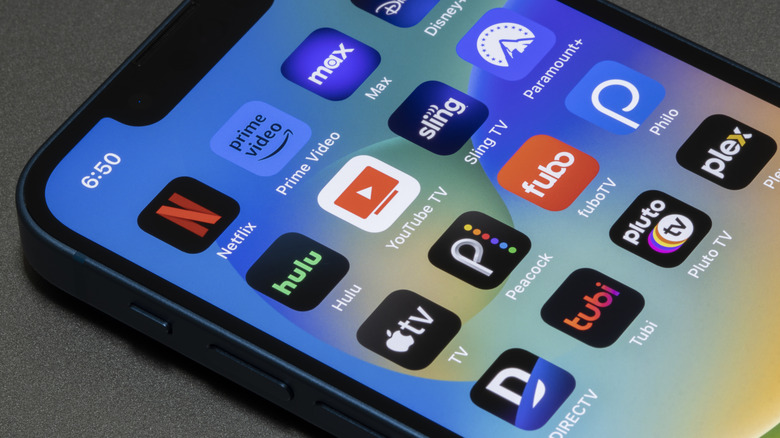
Cable TV used to be the only way people kept up with world news, watched live TV, and supported their favorite sports teams from afar. But in the late 2010s, as high-speed internet came to every household and people realized how expensive cable had become, not to mention the outrageous two-year contracts, streaming took over. You could watch content on demand from services like Netflix for a small fee. There was just one problem, though, and that was live content. Streaming services didn't carry live sports or news channels, which limited their appeal.
Fortunately, times have changed. Switching away from an expensive cable contract doesn't mean you have to miss watching your favorite team play, and that's thanks to live TV streaming platforms. These services bring all the fun of cable, including regional sports and news, without the cost, and can be accessed not just from your TV but also from your phones, tablets, and laptops. In the US today, there are six major live TV streaming platforms: Philo, DirecTV, Sling TV, Fubo, Hulu + Live TV, and YouTube TV. Choosing one among them can be tricky since each service has its own niche. Some focus on entertainment, while others are made for sports fanatics. To help you find the one that suits your lifestyle, we've combed through expert and user reviews of each service, assessed their catalogues, and ranked them from worst to best.
Philo
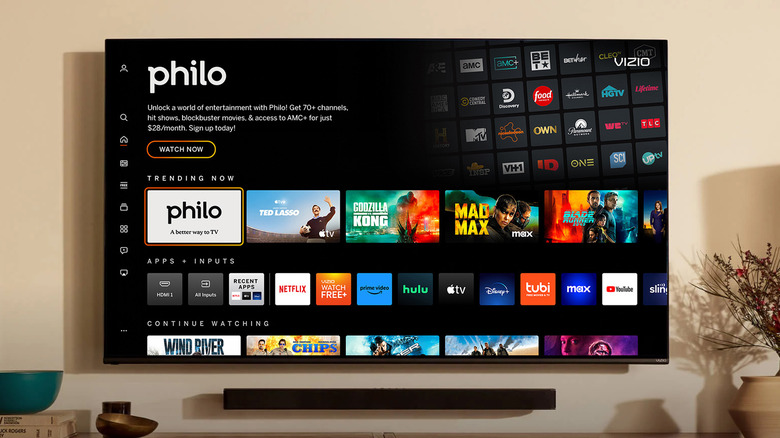
Contrary to popular opinion, live TV streaming services are also expensive. Not as much as cable TV, but still costly enough for many people. And if you don't want to spend $100 every month, Philo could be a great alternative. It costs $28/month with no hidden fees, and for that, you get access to over 70 live TV channels, including popular ones like MTV, Paramount Network, BET, and The History Channel. Unlike Sling, DVR support is also present and is actually one of the best. That's because Philo allows users to record and save any live TV program for up to a whole year, so you don't have to watch the new episodes of your beloved show right away.
Philo's interface is divided into easy-to-understand sections, reminiscent of Netflix, and the user experience stays consistent whether watching on a TV or a laptop. You can stream on three devices simultaneously. The $28 price also includes subscriptions to AMC+ (with ads) and Shudder. Add-ons like MGM Plus and Starz are available for an additional fee. The only complaint some experts have had about the interface is that it always starts at the beginning of every show, not at what's being aired live. To do that, you need to click on the little "Jump to live" button.
As you may have guessed, the insanely low price does come with a big handful of shortcomings. The first is the lack of any sports or news content, aside from BBC News. This kind of defeats the whole purpose of subscribing to a live TV service. Beyond that, the live streams are limited to 720p. While on-demand content does bump the quality to 1080p, it's still a far cry from the 4K capabilities of many TVs these days.
DirecTV
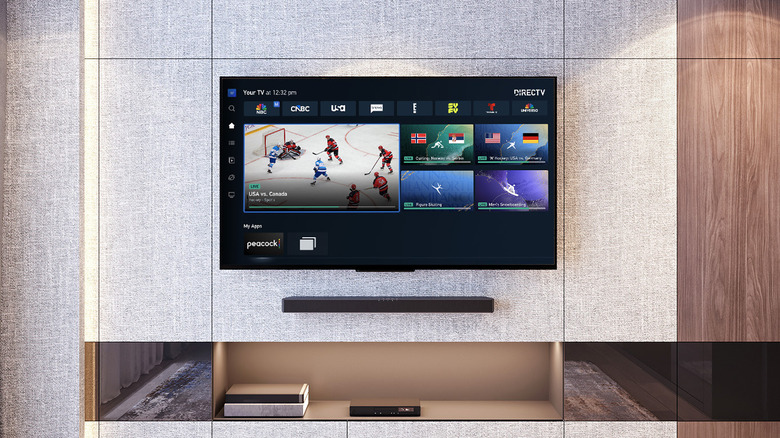
Finding the right cable TV replacement isn't easy if you love surfing through hundreds of channels. Every live TV streaming service focuses on a particular niche, partly to keep costs lower for consumers. But if money is no concern, then DirecTV should be on your radar. The service's bread and butter is the $119 Ultimate package that contains every major TV channel you can imagine. DirecTV bundles Max, Cinemax, Starz, and Paramount Plus with Showtime for $45 more with the Premier package.
That being said, these two packs aren't the only reason we've included DirecTV on this list. Recently, the platform introduced Genre packages, allowing people to focus on the content they want without paying for the rest. For example, MyEntertainment ($34.99/month) offers over 40 channels, including subscriptions to Disney Plus, Hulu, and Max, while the MySports ($64.99/month) bundle includes over 20 sports channels and an ESPN subscription, along with local NBC and Fox affiliates. Sadly, RSN support is only available with a premium package. Device support is decent except for consoles like PlayStation and Xbox. 4K streaming isn't locked behind another paywall, meaning you can watch the two 4K live TV channels it supports without a hitch.
Given all the benefits, why doesn't DirecTV rank higher? The answer lies in the interface. As a general rule of thumb, DirecTV works amazingly on any device with a keyboard or mouse, with a slick UI and easy controls. But when a remote is involved, the cracks start appearing. For some reason, clicking the left/right directional buttons switches the channel, while clicking the bottom one takes you home. Annoyingly, there's also no way of knowing the streaming resolution, since DirecTV labels its streaming options as Good, Better, and Best.
Fubo
The biggest reason some people still haven't cut the cord is sports. It's hard to find everything you want to watch with live TV streaming, especially since many services simply don't support any regional sports networks (RSNs). This is exactly where Fubo shines. The service is divided into three tiers: Pro, Elite, and Deluxe. The cheapest one starts at $73.99 (excluding fees) and gets you access to over 210 channels, along with regional games from MLB, NBA, and NHL. The Elite pack bumps up the channel count to over 270 and adds 4K streaming capabilities. Finally, the Deluxe pack, while not cheap at $103/month, tries to justify its price by offering international sports, MGM+, and NFL RedZone.
Fubo also takes the crown for big households, as it allows 10 simultaneous streams or 3 on a mobile device without an additional fee. Unlimited cloud DVR is a welcome addition, and you have 9 months to catch up on all the recorded content. What's not very welcome with Fubo is the channel selection. It's a page straight out of cable TV's book where only a few of the hundreds of channels are the ones you'd actually like to watch. Major misses include the likes of TBS, TNT, Discovery, and The Food Network. There is also a temporary feud with NBCUniversal channels, which means no NBC either.
All that being said, Fubo does earn some points back with its interface. It's neatly laid out, and unlike DirecTV, the left/right buttons don't change channels. Instead, they forward or rewind the stream by 15 seconds. Weirdly, the tabs for on-demand shows and movies aren't available on mobile. Instead, you need to search for shows manually. Also, most live TV streams are in 720p, which is a clear step down from others on the list.
Sling TV
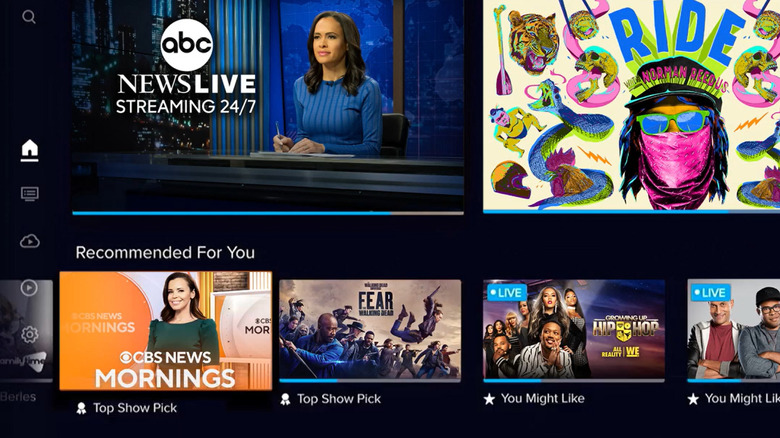
Sling TV takes what's good about Philo and turns it into a service that's useful not just for entertainment fans but for almost everyone. Plans start at just $19.99, but this tier is pretty barebones, with just over 10 channels, and it's not the reason Sling TV ranks third. The real reasons are the two main packs: Sling Blue (40+ channels) and Sling Orange (30+ channels). While they both cost $45/month, they couldn't be more different. Orange takes the Fubo way of prioritizing sports, with channels such as ESPN, ESPN2, and ESPN3. On the flip side, Blue takes a more balanced approach to news and sports, featuring Fox, NBC, and ABC, as well as Fox Sports and the NFL Network (varies by region). We'd recommend going with Blue since it's more comprehensive, but if you cannot decide, Sling would happily sell you a combo pack for $60/month.
Unfortunately, Sling isn't perfect. It doesn't include any Paramount channels, regardless of the plan you choose, and there's no unlimited DVR support. In fact, users are limited to just 50 hours of free DVR, after which they need to shell out an extra $5/month. Beyond that, you cannot access local ABC channels without an antenna. On a rather positive note, Sling does take good care of all the pixel peepers by offering 4K streaming quality for select ESPN and Fox broadcasts. Other Sling TV features like picture-in-picture help people watch sports while working. It's also one of the very few to offer international channel packs for Latin American, Asian, and Middle Eastern audiences.
Hulu + Live TV
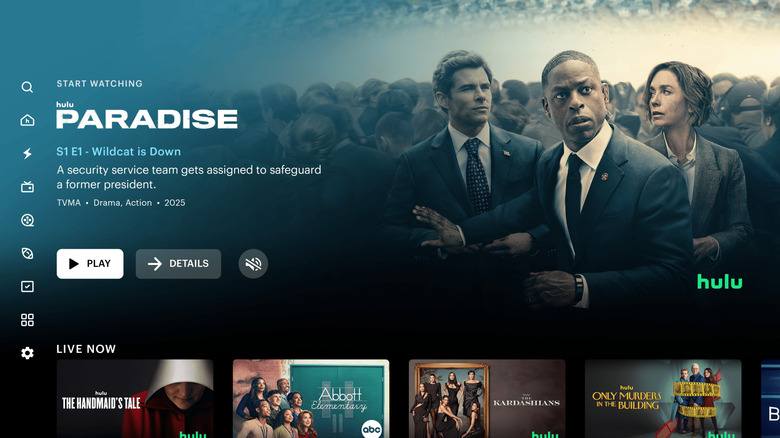
Despite the annoying price hikes, people still love streaming because platforms like Hulu and Disney+ host franchises like Marvel and acclaimed original shows that nobody wants to miss. Unfortunately, if you're already paying for these services, adding a live TV subscription could balloon your monthly budget by a lot. This is exactly the problem Hulu + Live TV aims to solve. At a starting price of $89.99/month, it gives you access to over 100 live channels along with three ad-supported streaming services: Disney+, Hulu, and ESPN Select. Subscribing to those services separately would cost about $19/month. For an additional $10, you can get rid of ads in both Disney+ and Hulu as well. There's unlimited DVR support regardless of the tier.
Of the hundred or so channels included, Hulu doesn't take the cable route and carries every major live-TV channel except AMC. This lineup ranks second, behind DirecTV, which obviously costs much more but also includes regional sports networks (RSNs). The quality of the streams, however, is inconsistent. If you're not watching on a Fire TV Stick, Apple TV, PlayStation, Xbox, or select Samsung TVs, your streams will be limited to 720p quality at 60 fps. Even if you do have a supported device, there are no 4K channels on Hulu + Live TV.
Another controversial topic is the user interface. Hulu has undergone major redesigns, which has had the internet divided. While some love the new look with simplified controls, others have pointed out the compromises that arise from merging the live TV and streaming apps into one. Experts say this leaves less screen space and makes the UI confusing. Plus, you only get two simultaneous streams unless you pay an extra $9.99/month.
YouTube TV
YouTube TV is the top dog when it comes to live TV streaming, and these aren't just our words, but those of experts and real users alike. It costs $82.99/month, which isn't cheap, but also not the most expensive. For the money, you get 100+ live channels, including major networks like Disney, ESPN, Fox, and more, though no Lifetime or History Channel. On top of that, YouTube TV is the exclusive home of NFL Sunday Ticket, which you can add separately for $378/year, and ESPN Unlimited support is reportedly coming. Recently introduced genre-specific plans also help lower costs for people who just want to enjoy entertainment channels ($44.99/month) or combine entertainment with news and family content ($59.99/month).
Still, the biggest reason why YouTube TV ranks number one is the UI. If you love regular YouTube, the TV app will feel right at home. It also features a tile-like interface, with content divided into three sections: Library, Home, and Live TV. As you might expect, the Home tab contains recommendations, while Library takes care of the things you've saved. YouTube TV was also the first to introduce Multiview for sports fans, allowing them to watch multiple games at once. Beyond that, Key Plays curates a playlist of the game's most important moments, and you can configure this feature to show you highlights of the game before tuning in to the live stream.
While there are plenty of reasons why YouTube TV is better than Hulu + Live TV, it's not perfect. There's no RSN support, so you may need to say goodbye to watching your favorite college team. The platform also restricts 4K streaming behind a $9.99/month paywall. That said, the add-on unlocks unlimited simultaneous streams at home and lets you watch DVR content offline on mobile.
Methodology
Ranking live TV streaming services is a lot harder than it looks, simply because people have different preferences. A service that ranks high on this list might not work for everyone if it doesn't include a specific network they want. So, to keep things fair, we based our rankings on factors like channel selection, pricing, and features such as DVR storage and simultaneous streams. The availability of regional sports networks also played a role, but it wasn't our only criterion, since not everyone enjoys sports. While niche services are often cheaper and easier to access, platforms with a broader range of content are ranked higher because they make it easier to discover content.