

What Really Happens To Old Printer Cartridges After They're Recycled?
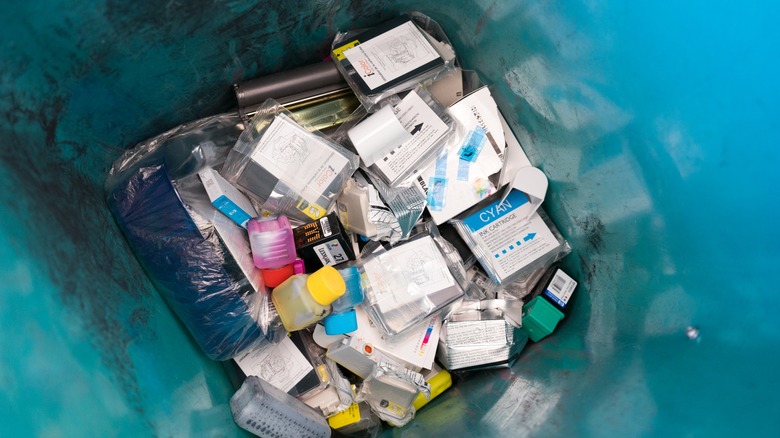
Anyone who has ever owned even one of the most reliable inkjet printers has likely been forced to tangle with disposable cartridges on many occasions. It would be better if single-use printer cartridges went away entirely, but until then, these highly recyclable items should be reused. When your cartridge runs dry, you shouldn't throw it in the trash, not just for the obvious environmental reason, but because a recycled printed cartridge can be put toward all kinds of purposes, whether it be creating new cartridges or serving as material for roads and furniture.
Printer cartridges are made up of various components, most predominantly plastic and metal, but also electronic elements like lead or cadmium. If those cartridges are brought to a landfill with the regular trash, not only will they take ages to decompose, but those electronic components could potentially leak into soil and groundwater, endangering the local environment. If you take the time to bring your cartridges to a recycling service at a business like Staples or Office Depot or return them to the manufacturer, not only do we prevent this nasty scenario, but the cartridges can then be repurposed in manners both mundane and fascinating.
Old cartridges can be repurposed in a variety of ways
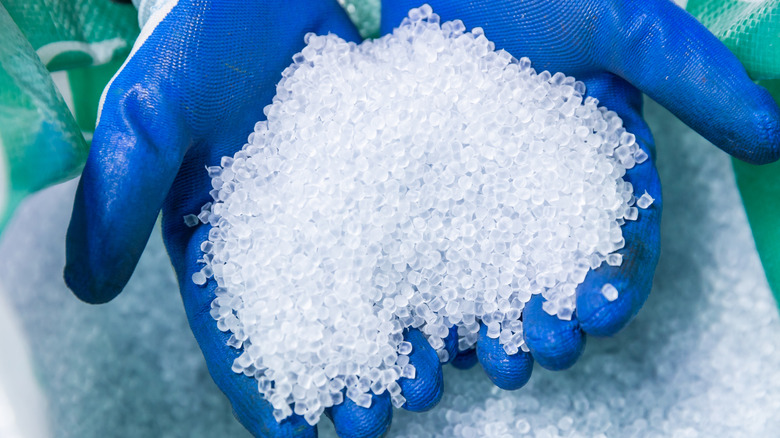
The obvious use for a recycled printer cartridge is as another printer cartridge. If the cartridge is simply out of ink, but otherwise still functional and structurally sound, it can be returned to its manufacturer and refilled with ink, then sold as a recycled cartridge for a discounted price. Other benefits of cartridge recycling include plastic staying out of the landfill and less power and material are used to manufacture cartridges from scratch. Or you can forget about expensive cartridges altogether by purchasing a printer that supports third-party cartridges or refillable tanks.
If the cartridge can't function in its intended role anymore, that doesn't mean it's completely useless. Instead of refilling it, it can be, where the cartridge is broken down into its components, each of which can serve a different purpose. The plastic and metal can be reused for a variety of products, while any residual ink and toner can be siphoned out and used to fill pens or pave roads. An Australian company, Lousy Ink, sells recycled ink by the bottle directly to artists, alongside tools like pens made from recycled plastic.
On a larger scale, recycled printer cartridge materials can be used to create more sustainable asphalt and wood products. The contaminated plastic elements in a cartridge can be repurposed into a material called eWood, a sturdy timber substitute that can be used to make fences or park benches. Recycled plastic from cartridges have also been used as a replacement for the binding agent in asphalt, leading to the creation of environmentally friendly plastic roads.