

5 Android Phones That Use Silicon-Carbon Batteries Instead Of Lithium-Ion
We may receive a commission on purchases made from links.
Chinese smartphone vendor Honor unveiled the world's first commercial silicon-carbon battery at MWC 2023, the Honor Magic Pro 5. A flagship built with a 5,450 mAh battery with 12.8% higher energy density than traditional lithium-ion batteries. However, only the Chinese version of the phone would offer the silicon-carbon battery. Honor has since released other devices with silicon-carbon batteries, with other Chinese manufacturers following suit. These developments suggested the silicon-carbon tech would come to iPhone, Pixel, and Galaxy phones from Apple, Google, and Samsung next. That hasn't happened yet, but silicon-carbon batteries have advanced significantly since 2023. Several Android devices now feature massive batteries compared to iPhone, Pixel, and Galaxy devices.
Silicon-carbon batteries allow manufacturers to build phones with larger capacity batteries without increasing the handset's thickness. This favors ultra-thin foldable devices where design constraints force smartphone vendors to use ultra-slim batteries. Silicon-carbon refers to the chemical components used in the anode. These batteries still use lithium to move energy, but the silicon-carbon replaces the graphite used in traditional batteries.
Unfortunately, the silicon expands when combined with lithium, potentially impacting the battery's longevity, as the anode will change volume with each charge and discharge cycle. This may explain why companies like Apple, Samsung, and even Google, which ship hundreds of millions of handsets every year, are more cautious about adopting the technology. That said, several devices made in China now offer silicon-carbon batteries with capacities that can exceed 7,000 mAh.
OnePlus 15
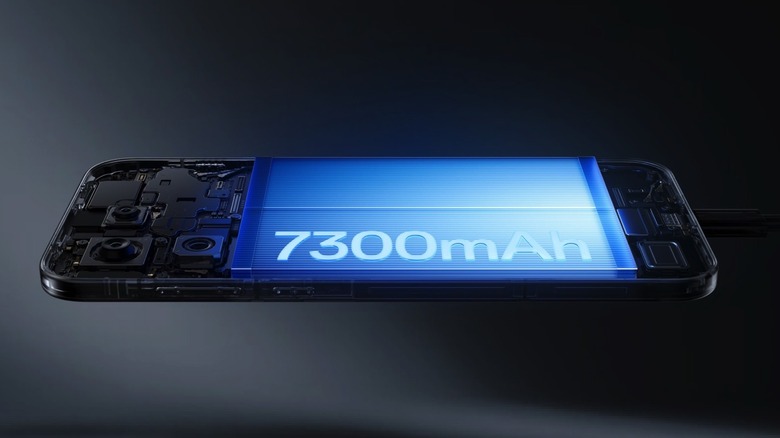
The OnePlus 15 is one such Android phone featuring a high-capacity silicon-carbon battery. Launched in late October 2025 in China, the OnePlus 15 is available for purchase in the U.S. starting at $899 before any deals and discounts. The handset features a 7,300 mAh silicon-carbon battery that supports 120 W (wired) and 50 W (wireless) charging speeds.
OnePlus calls the battery a Silicon NanoStack battery and says it's "the biggest battery in a consumer phone in North America," boasting that the battery provides 31 hours of video playback, which hints that the phone can last more than a day on a single charge. In our OnePlus 15 review, we found that the phone can easily last for two days.
The OnePlus 15 is more than a battery phone. It's a flagship phone from the Oppo subsidiary featuring high-end hardware. The handset offers a 6.78-inch AMOLED display with a 165 Hz refresh rate, the Snapdragon 8 Elite Gen 5 chip, 12 GB or 16 GB of RAM, 256 GB to 1 TB of storage, and a triple-lens camera on the back with three 50-megapixel sensors.
Motorola Razr Fold
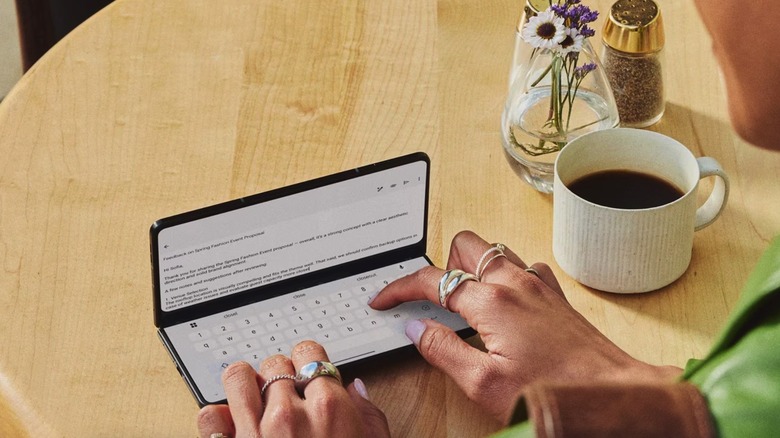
Motorola has sold several clamshell foldables, but those didn't feature silicon-carbon batteries. Motorola's first book-type foldable, the Razr Fold, has a smaller silicon-carbon battery than the OnePlus 15, at 6,000 mAh, and only supports 80 W (wired) and 50 W (wireless) fast charging, but that may be due to foldable phone design constraints (a 4.7 mm profile). The interior of the handset also has to accommodate a hinge in the middle and a triple-lens camera. That large battery is likely made up of two batteries, one for each of the handset's two halves.
On the product page, Motorola says the Razr Fold has a "battery that refuses to quit," thanks to "advanced silicon-carbon technology." Motorola doesn't offer a battery life estimate for the handset, but says it'll offer all-day battery life. The phone will be available in various markets, including North America, later in 2026, with prices starting at €1,999 ($2,304) for Europe. That means independent reviews have not been able to test the performance of this silicon-carbon battery.
Other Motorola Razr Fold specs include an 8.1-inch foldable display with a 120 Hz refresh rate, a 6.6-inch cover screen with a 165 Hz refresh rate, the Snapdragon 8 Gen 5 chip, 12 GB and 16 GB memory options, and three storage versions (256 GB, 512 GB, and 1 TB). The phone will run Android 16 out of the box with up to seven years of Android updates. It also has three 50-megapixel sensors on the back.
Realme P4 Power
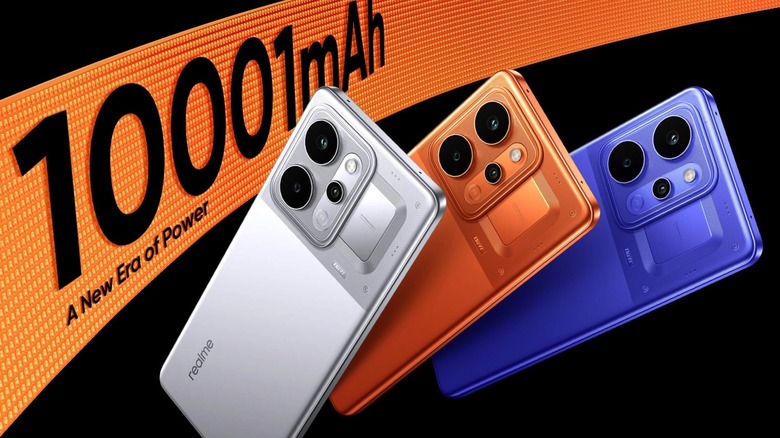
The Realme P4 Power is a mid-range Android smartphone that doesn't have the same high-end specs as the other handsets, but features a massive 10,001 mAh battery. That's despite the handset weighing 219 grams and being 9.08 mm thick. Third-generation silicon-carbon technology is responsible for that, according to Realme. The company also says the 10,001 Titan Battery features Realme's "most advanced internal stacking process," without disclosing what that means. The phone should offer 32.5 hours of YouTube playback, 11.7 hours of gameplay, and 185.7 hours of internet browsing. The company says these estimates are over 12 hours, 5 hours, and 69 hours longer, respectively, than 7,000 mAh batteries.
Realme also points out that with just 5% battery charge remaining, the phone can still offer three hours of voice calls, more than an hour of navigation, and almost two days of standby. The company also claims the P4 Power will reach 1,650 cycles before the battery degradation drops below 80%, which may amount to eight years of battery health. Separately, tests from Tom's Guide have shown the handset can offer three days of battery life and 13 days of standby.
While it runs on the MediaTek Dimensity 7400 Ultra chip, it offers a few high-end features, including a 6.8-inch OLED display with a 144 Hz refresh rate, up to 12 GB of RAM, and up to 256 GB of storage. On the back, there's a triple-lens camera: 50-megapixel main lens, 8-megapixel ultra-wide, and 2-megapixel macro camera. The phone retails for INR 25,999 (roughly $282 USD) in India.
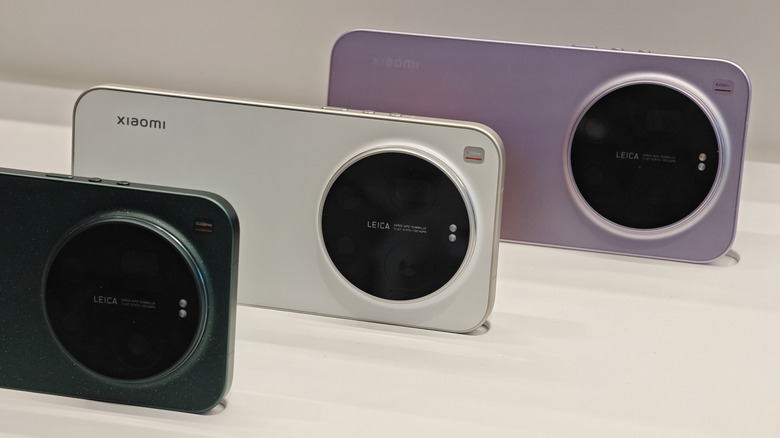
Xiaomi 17 Ultra
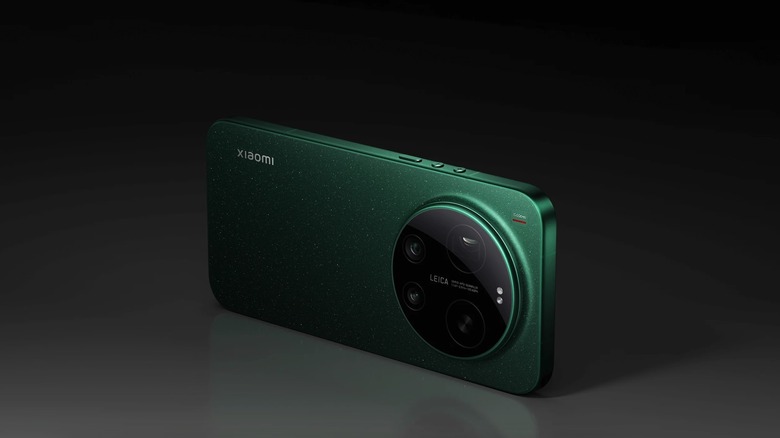
As the name suggests, the Xiaomi 17 Ultra is a high-end flagship handset. Unveiled in September 2025 in China and late February 2026 in Europe, the Xiaomi 17 Ultra features the Snapdragon 8 Elite Gen 5 flagship chip paired with 16 GB of RAM and 512 GB or 1 TB of storage. The triple-lens camera on the rear incorporates a one-inch 50-megapixel wide lens, a 50-megapixel ultra-wide sensor, and a 200-megapixel periscope zoom lens. On the front, there's a 50-megapixel selfie camera. The phone has a 6.9-inch main screen, which supports a 120 Hz refresh rate.
A 6,000 mAh silicon-carbon battery powers the Xiaomi 17 Ultra experience, which supports 90 W (wired) and 50 W (wireless) fast charging speeds. The handset can also act as a power bank, supporting 22.5 W (wired) and 10 W (wireless) charging speeds. Xiaomi calls its silicon-carbon battery the Xiaomi Surge Battery and says it can offer 1.5 days of use. The Xiaomi 17 Ultra will last 1,600 charging cycles before the battery health drops below 80%.
A PhoneArena review for a Xiaomi 17 Ultra version with a 6,800 mAh battery says the handset lasted over 22 hours in a web browsing test and over 14 hours in a video streaming test. The handset sells for €1,499 ($1,728) on Amazon Germany; just one place to buy the expensive Xiaomi flagship if you're considering this particular silicon-carbon battery phone.
Honor Magic V6
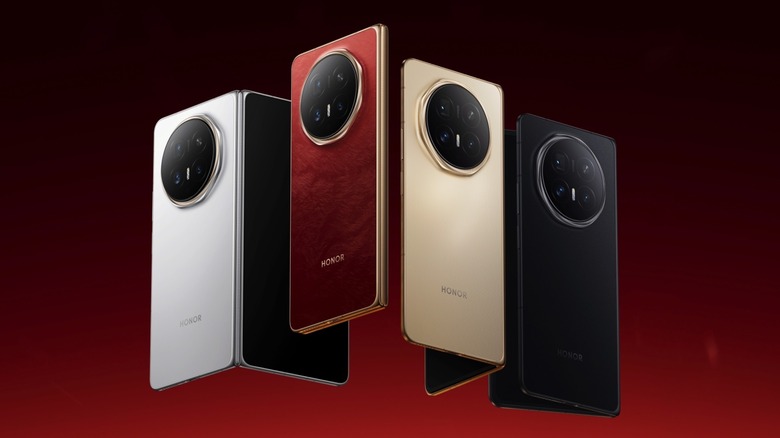
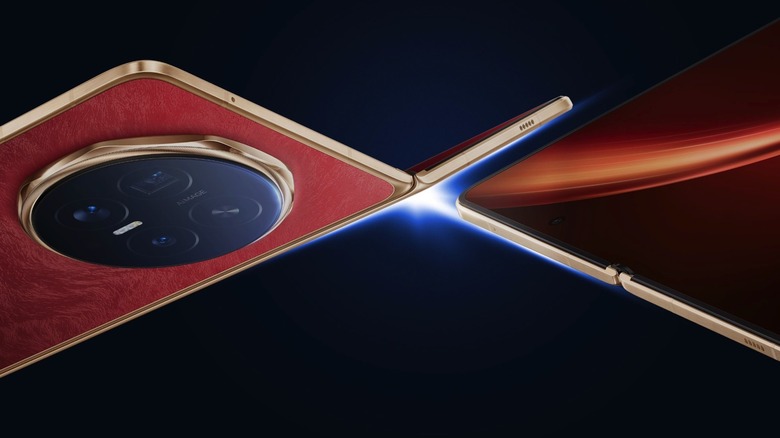
The ultra-thin Honor Magic V6 is the newest foldable coming from the Chinese smartphone vendor. Announced at MWC 2026 in early March, the handset is available in China for 8,999 yuan ($1,309), where it comes with a massive 7,150 mAh battery. The global version of the phone will feature a 6,660 mAh battery when it launches later in 2026. Both are silicon-carbon batteries, with Honor calling the Chinese version a Blade Battery, featuring 32% silicon content. Honor explained during a briefing that BGR attended that the global version will feature 25% silicon content in the anode, and an energy density of 921 Wh/L, higher than the energy density of a Tesla 4680 battery.
The battery should offer all-day battery life, according to Honor. Finally, the battery supports fast-charging speeds: 80 W (wired) and 66 W (wireless). When it comes to specs, the Honor Magic V6 offers high-end hardware, including two LTPO OLED panels that support 120 Hz refresh rates: a 7.95-inch foldable display and a 6.52-inch cover display.
The Snapdragon 8 Elite Gen 5 processor is paired with 12 GB or 16 GB of RAM, while storage options start at 256 GB and go up to 1 TB. The triple-lens camera on the back features two 50-megapixel sensors (wide and ultrawide) and a 64-megapixel periscope zoom lens. The foldable comes with Android 16 preinstalled and offers up to seven years of Android updates.
How we chose these silicon-carbon battery phones
Since many Chinese smartphone manufacturers have started making silicon-carbon batteries, it's easy to find such devices in various markets outside the U.S., including high-end models that offer the best possible hardware, not just high-capacity batteries. For our list, we looked at smartphones featuring silicon-carbon batteries that are available for sale in the U.S. or that will launch soon in North America. These are the OnePlus 15 and the Motorola Razr Fold. But we also looked at handsets that are exclusively available in China and other global markets, or will launch later this year after having been officially announced.
We also included foldable and candy bar phones to show what's possible with silicon-carbon battery tech as of early 2026, especially considering the longevity worries associated with silicon-carbon batteries. The Honor Magic V6 is especially interesting in any discussion involving this new battery tech, as the Chinese vendor has significantly increased the amount of silicon used in the battery, as noted earlier. While the Honor, Realme, and Xiaomi phones on the list aren't available in the U.S., interested buyers can try to import them, or buy the international versions from a European market.