

What USB OTG Means For Android Phones (And Why You Should Use It)
We may receive a commission on purchases made from links.
Universal Serial Bus (USB) is a standard port found on many devices. Most phones, including iPhones, come with USB-C starting with the iPhone 15 series. The only difference is the physical interface used in different smartphones — some use USB-C while others have the older micro-USB port. Since the arrival of the USB standard in the '90s, it has massively evolved with every generation. As a result, there are many different types of USB ports.
The continuous improvement in the USB standard has resulted in Android phones using the port to have various capabilities besides charging. For example, the USB On-The-Go (simply referred to as USB OTG or OTG) was introduced in 2001 as part of the USB 2.0 specification. Over two decades after its introduction, OTG has become ubiquitous. But do you know what USB OTG really means for your Android phone? In a nutshell, this specification enables your Android phone to act as a USB host instead of always acting as a peripheral.
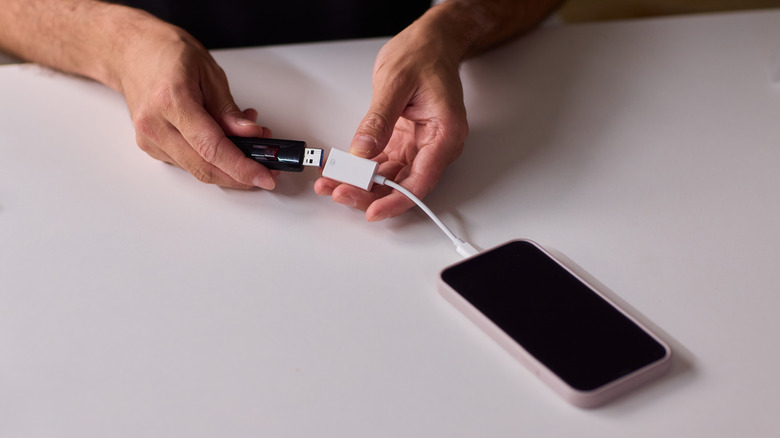
That means that you can directly connect other peripheral devices to it, like a flash drive. Therefore, if you want to transfer files from your phone to a flash drive, you can do so directly without having to use a computer as the host device. OTG also allows a phone to act as a peripheral when necessary, such as when you hook it up to a computer.
How USB OTG works
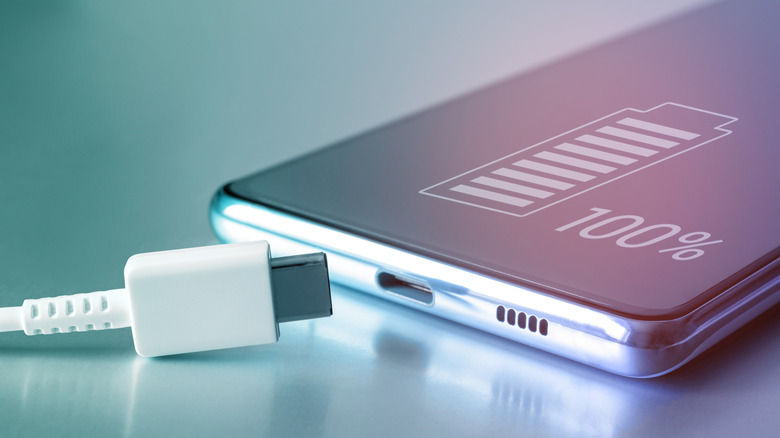
The secret behind the working of OTG is how two connected devices can establish a communication link when they're physically connected using a USB cable. Since USB OTG enables your phone to act as a host device or a peripheral device depending on the situation, it will automatically detect when another device is connected at the end of the link using an ID pin, which is part of the Attach Detection Protocol (ADP).
Once it establishes that another device has been attached at the end of the link, it will then act as a host and supply power to it over the USB link to create a connection. The peripheral device also has a role to play when it comes to establishing the connection, as it sends a Session Request Protocol (SRP) signal while waiting for power from the host device at the other end of the cable. This is just the tip of the iceberg of how OTG works — the inner workings are much more complicated than that.
OTG is important for connecting peripherals to your phone
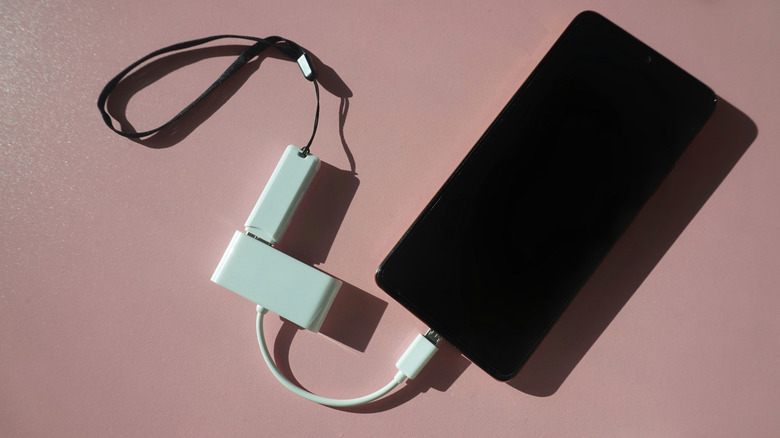
If your phone has OTG support, it can come in handy in a variety of scenarios. As previously mentioned, one use case of OTG is being able to directly connect a flash drive to your phone. Besides, you can connect other storage devices like external hard drives and SSDs. OTG support also enables your phone to connect and work with an external keyboard and mouse, turning it into a fully portable device for getting some work done while on the go.
Another scenario where you take advantage of USB OTG is when you want to use a gaming controller while gaming. However, note that there are some devices that you shouldn't plug into your smartphone's USB port. Additionally, you may not be able to connect some peripherals directly to your phone because of the difference in ports. For example, your thumb drive might have a USB-A connector, while your phone uses USB-C. In such a case, you will need to look for USB OTG adapters that will help you overcome the mismatch, like Anker's USB-C to USB-A OTG cable.