

What Type Of Microfiber Cloth Is Best For Cleaning OLED Screens?
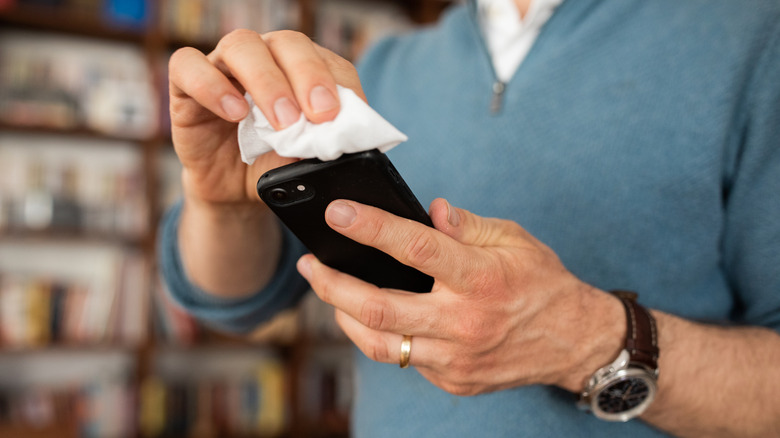
It's fairly common knowledge that, if you have a flat-screen display like an OLED TV or monitor, you shouldn't try to clean it with paper towels and water. The go-to for cleaning any kind of display safely and thoroughly, especially an OLED display, is a microfiber cloth. However, just saying "get a microfiber cloth" isn't the most comprehensive answer. You specifically want a microfiber cloth with a higher concentration of softer, more absorbent materials.
As opposed to something like a cotton rag, microfiber cloths are made of synthetic materials like polyester and polyamide. These specially-engineered materials are designed to clean without scuffing and scratching. While all microfiber cloths contain these materials, they are present in different ratios depending on the cloth's intended purpose. If you use a cloth with the wrong ratio to clean an OLED screen, you may be able to get rid of a few smudges, but you run the very real risk of creating new scratches on the display.
The key is in material ratios
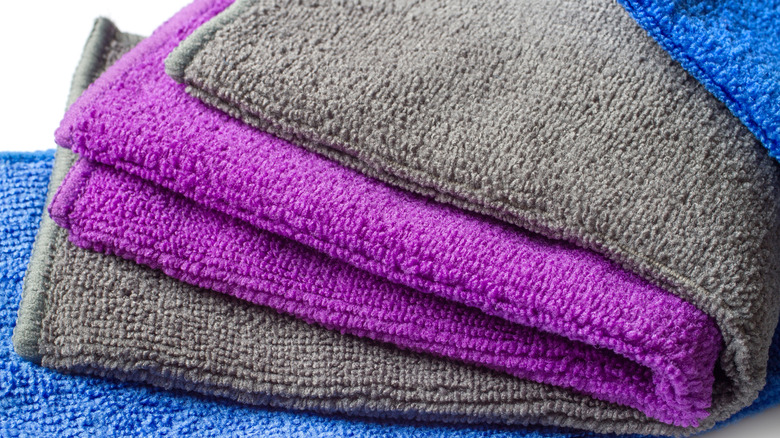
Microfiber cloths are primarily composed of two synthetic, petroleum byproduct fabrics: polyester and polyamide, the latter of which you may know better as nylon. Polyester is abrasive and forceful, good for scrubbing away stubborn stains, while polyamide is soft and absorbent, picking up and carrying away dust, dirt, and other assorted contaminants like a sponge. The combination of these two materials, as well as the fact that they are split into extremely fine fibers (hence the name "microfiber"), are the main reasons that microfiber cloths clean up messes as well as they do.
However, a typical microfiber cloth does not contain an exact 50/50 split between polyester and polyamide. Rather, the ratio of polyester to polyamide usually favors the former, as it's the polyester that makes the cloth good at physically removing stains and smudges. A microfiber cloth that is intended to be used for cleaning a floor or counter, for example, might have a ratio of 80% polyester to 20% polyamide. If you use a microfiber cloth with this ratio on your OLED screen, it would be more prone to leaving scratches on the display's surface than a cloth with the ideal ratio, and that's due to the increased scrubbing power of the higher polyester content.
A cloth with a higher polyamide content is safer for an OLED screen
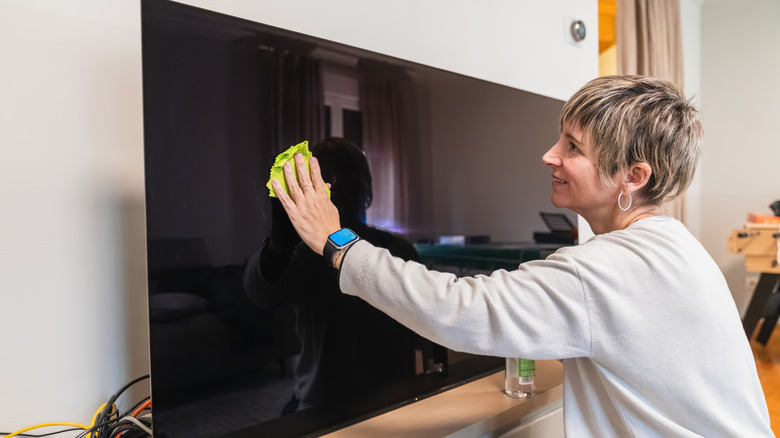
A microfiber cloth with an 80/20 polyester-to-polyamide ratio could be used to clean an OLED screen in a pinch, but you would need to be gentle when wiping to avoid creating any new scratches. Rather than that, the better approach would be to use a microfiber cloth with a composition that favors polyamide ever so slightly more.
The ideal microfiber cloth for a monthly OLED screen cleaning routine has a composition of 70% polyester and 30% polyamide. It may sound like a small change, but it makes a massive difference. A little more polyamide in the mix makes the cloth softer and more absorbent, improving its ability to gently carry away dirt, dust, and smudges from a screen's surface rather than physically scrubbing them off. The polyamide's absorptive nature allows it to hold many times its own weight in liquid and captured dust, which is perfect for swiping along the surface of an OLED screen with the help of a screen-cleaning solution or water. Just remember to clean the cloth if you ever drop it on the ground, as that absorptive power could pick up errant debris.
Many microfiber cloths intended for screen cleaning will have this particular blend of fabrics. If you're not sure which kind of cloth you have, try running your fingers along its surface while it's dry. A household cleaning microfiber cloth with a lower polyamide content will feel harder and slightly abrasive, while a screen-ready cloth will feel very soft and plush, almost like silk.