

5 Giant Things You Didn't Know Can Be 3D Printed
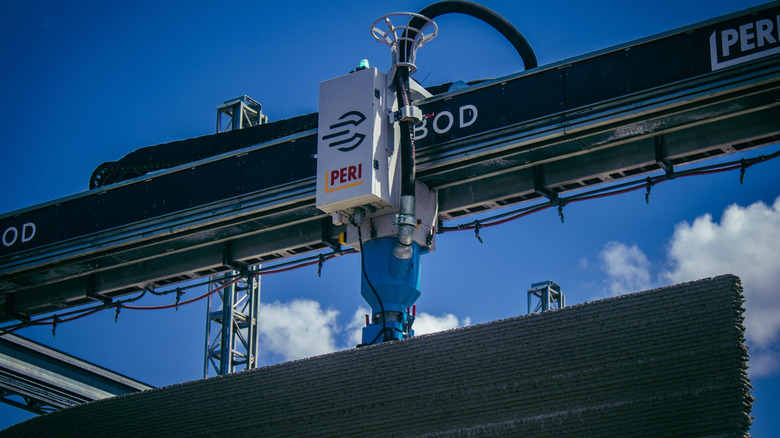
Industrial additive manufacturing was the birthplace of desktop 3D printing, but industrial use-cases have evolved into an increasingly useful tool for large-scale production. The focus isn't on plastic prototypes and flexible animals found in home workshops; it's on the core mechanics of 3D printing, spanning across multiple technologies and materials in ways that could change 3D printing in 2026. Residential buildings, bridges, seafaring vessels, and even space rockets are among the incredible applications of additive manufacturing right now, with a shift towards "printing big" driven by a need for faster production timelines and reduced material waste.
Manufacturers turning to additive manufacturing are turning out record-breaking projects. For example, the University of Maine's Factory of the Future (FoF 1.0) has demonstrated this massive scale by producing 3D printed objects up to 96 feet long and an output rate of 500 pounds per hour. Unlike traditional subtractive methods like milling, additive processes allow for organic, optimized designs that only use the necessary amount of material.
As the global construction 3D printing market is expected to grow by 20% over the next five years, the technology is moving from experimental prototypes to essential industrial infrastructure. By using robotic arm systems and specialized gantry printers, engineers can now produce monolithic components that were previously impossible to cast or weld.
Life-size dinosaur replicas
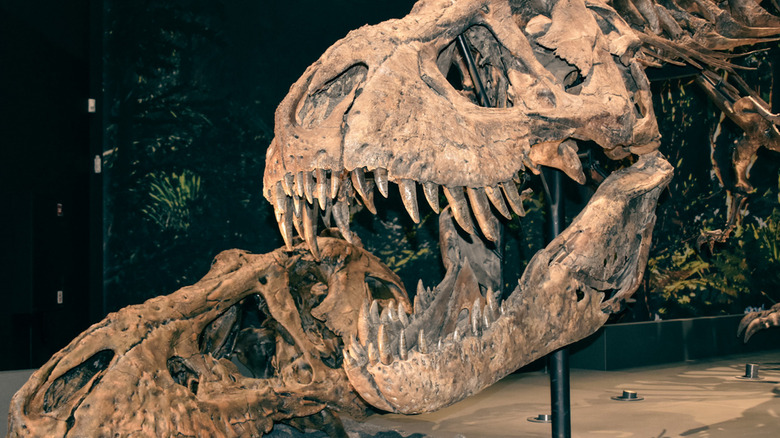
Museums and research institutes are using large-format 3D printing to recreate history with unbelievable precision. A stunning example is Naturalis 3D printing a life-sized reconstruction of a Tyrannosaurus rex, nicknamed Trix, for the Nagasaki Dinosaur Museum in Japan. Naturalis started the process by 3D scanning around 320 individual bones, which were then reconstructed by an anatomist. The original skeleton in Leiden is mounted for ease of research, so the 3D printed version was designed with a specific attack posture that stands upright to demonstrate just how imposing the legendary predator was.
The team used Builder Extreme 3D printers and PLA bioplastic, which is a durable polymer derived from lactic acid. This allowed for a realistic finish while ensuring the structure remained lightweight for international transport. The process also gave birth to Trixification, which replaces missing skeletal segments with recreated digital versions of the original bones rather than relying on the risky casting process from other specimens. For those who have seen dinosaur bones up close, they would have noticed a complex frame around which the skeleton is assembled, but the museum created a construction kit from the digital copy that allows the skeleton to be assembled by inserting support rods that are threaded through pre-modelled holes in the bones, resulting in a clean finish.
Residential buildings
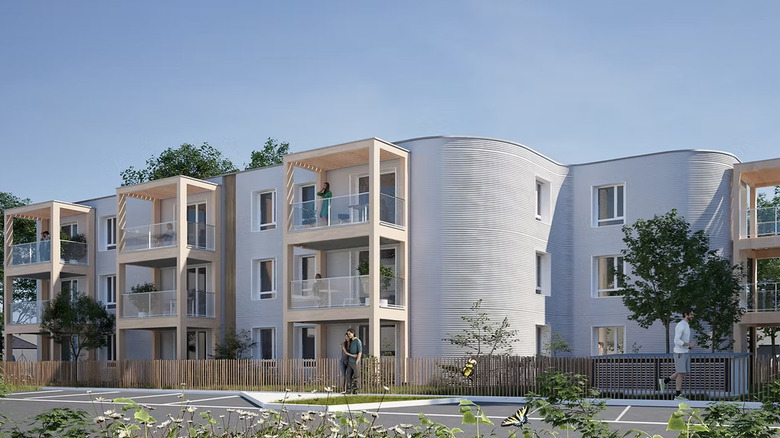
The construction industry is shifting toward on-site additive manufacturing to address housing needs efficiently despite the complicated nature of 3D printing homes. A good example is in Bezannes, France, with the ViliaSprint² project constructing a three-story apartment building featuring 12 social housing units. It's currently Europe's largest 3D-printed apartment building, measuring 11 meters wide, 34 meters long, and 9 meters high. While previous projects like this use 3D printing for aesthetics or insulation, this building is made up of 100% 3D-printed walls, eliminating the need for traditional structural supports within segments of the walls.
The ViliaSprint² project is made from a specialized concrete supplied by Holcim Lafarge, which provides high structural strength and improved fire protection. A COBOD BOD2 gantry printer was used to finish off the build, which was relocated several times to cover the building's entire footprint. It's a modular approach to building that allows for significant time savings, with one floor taking around four weeks to complete. This technology has the potential to save two months compared to the conventional brick-and-mortar approach. To prove this, a secondary traditional building is being constructed next door so engineers can make direct comparisons to analyze the long-term operational efficiency and sustainability of 3D-printed residential infrastructure.
Boats
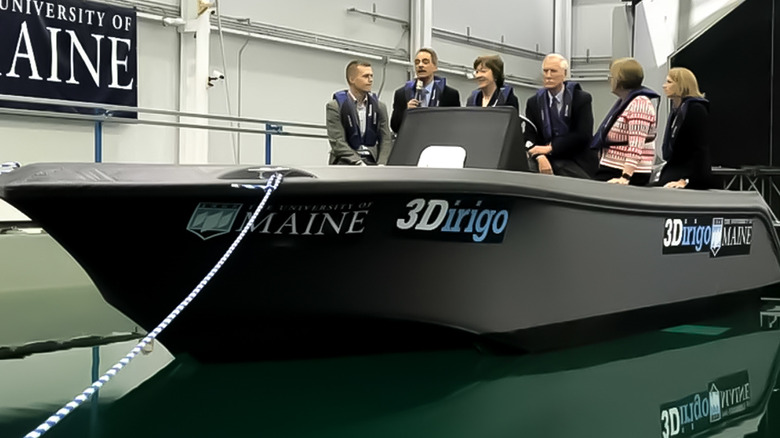
Maritime engineering keeps reaching new heights with the production of large-scale and functional vessels, and 3D printing is creeping into this manufacturing sector, too. The University of Maine Advanced Structures and Composites Center developed 3Dirigo, a 25-foot-long boat weighing 5,000 pounds. It was produced in only 72 hours using the world's largest polymer 3D printer, capable of fabricating objects up to 100 feet long. With three Guinness World Records, including the largest solid 3D-printed boat ever made, the vessel proved its buoyancy and structural integrity by carrying six passengers in an ocean engineering laboratory wave basin.
The boat is made from a carbon fiber-reinforced plastic, which is one of the strongest 3D-printing materials at home, too. While mass production of 3D-printed hulls is still in development, additive manufacturing offers immediate value in creating molds and hull plugs, not to mention this record-breaking boat making waves for the long term. Rather than using fiberglass and wood to make molds for yacht roofs, 3D-printed variants can be completed in days rather than months. The reduced environmental impact is worth a mention too, with less manpower, fewer natural materials being used, and faster turnaround times, saving energy.
Space rockets
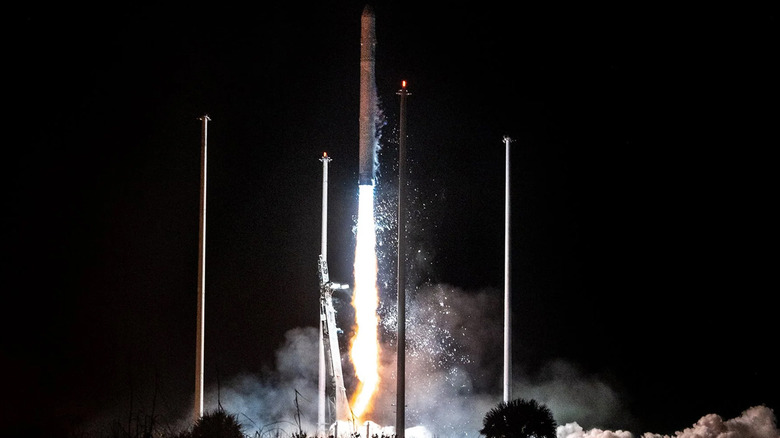
Aerospace companies are starting to leverage additive manufacturing to build rockets that are lighter and more cost-effective. A good example here is Relativity Space, which developed Terran 1, the first 3D-printed rocket to reach space and pass Max-Q, which is the maximum point of dynamic stress during flight. Around 85% of the rocket's mass was 3D-printed, including its nine Aeon engines. Relativity Space used its proprietary Stargate robotic arm printers to produce a full-sized rocket from raw metal in just 60 days. This unique manufacturing setup allows engineers to iterate on designs quickly by reprinting components with structural improvements in a fraction of the time needed by traditional manufacturing.
Terran 1 didn't reach orbit during its inaugural test flight due to a second-stage ignition issue, but it pushed the idea of 3D-printed rockets and parts being strong enough to resist the extreme pressures of launch. Relativity is taking the knowledge gained from Terran 1 to Terran R, a medium-to-heavy lift reusable rocket designed for bigger payloads. It's going to use the same LOX-methane propulsion systems alongside flight software that proved itself in Terran 1. Targeting a 95% 3D-printed composition for its future vehicles and plenty of secured contracts for satellite launches, we can only expect 3D-printed metal in space to become more commonplace.
Stainless steel infrastructure
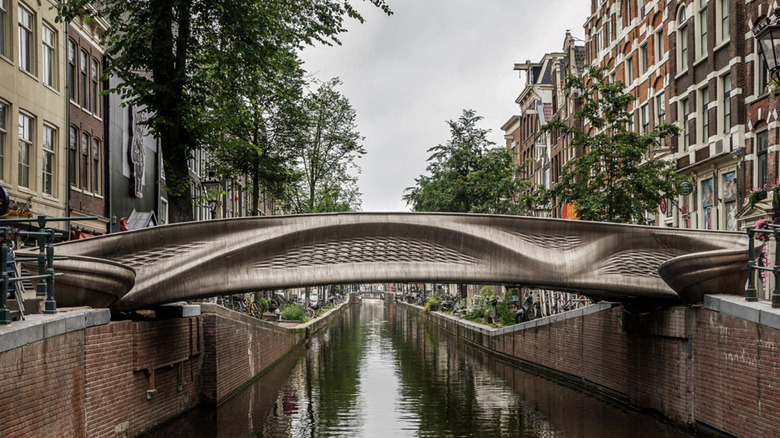
3D-printed metal is becoming a proper choice for infrastructure manufacturers to create "smart" public structures. In Amsterdam, a 3D-printed bridge, made by MX3D, spans a canal in the Red Light District, serving as a pedestrian walkway. It was fabricated using four welding robots depositing 6,000 kilograms of stainless steel layer by layer. The bridge features an organic and fluid design achieved through topology optimization and generative design, which allowed engineers to reduce the total amount of material used while maintaining high structural integrity.
The coolest part about the MX3D bridge is that it is not just a bridge; it's a live laboratory. It's equipped with an array of sensors that monitor displacement, vibration, and environmental factors like air quality in real time. All of this data feeds into a computer model, which researchers at The Alan Turing Institute use to understand how the bridge handles foot traffic and aging. The bridge is now decommissioned after a two-year permit ran out, but that wasn't the point of this project. This installation proved that 3D printing can create safe and durable infrastructure for urban environments. MX3D continues to grow as a company and licenses out its robotic printing software to industrial manufacturing companies.