

The 3 Best Solar Panels You Can Buy Right Now, According To Consumer Reports
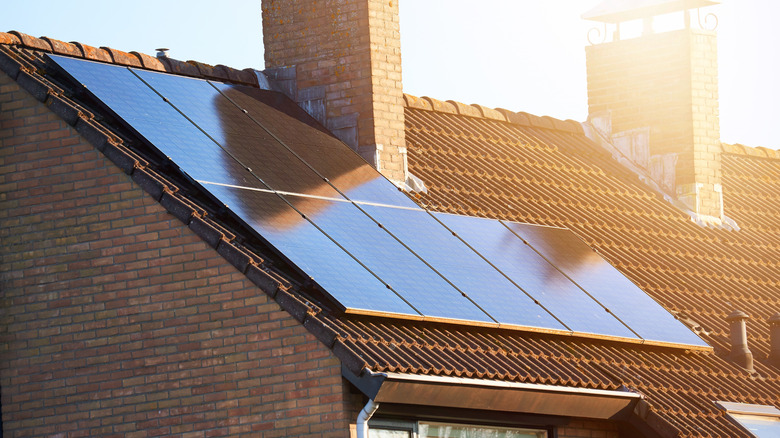
Solar panels, depending on the connectivity, can be used for a variety of applications. You can use them to charge power stations and solar generators, to power electronics or batteries in an RV or camper, or to charge power systems connected to your home like a whole-home backup solution. Of course, smaller panels can also simply be used to charge power banks or power devices directly, if they have USB ports incorporated.
However, the most obvious choice is to install a renewable solar solution in your home, preferably on your roof or in your backyard, to power up your most-used devices, appliances, and gear. That said, solar panels are expensive, there are many different types, including different qualities and capabilities, and there's a lot of general mystery in the panel-choosing experience.
How do you select which panels are best for your home and setup? It varies, but one of the best ways to check on quality and value is to consider what Consumer Reports has picked out. That's because not only do products go through a panel of best-in-class experts, but it also incorporates community-based information — so you know the product has been well-tested. The following are some of the best solar panels you can buy for your home, right now, according to Consumer Reports recommendations.
Solar Panels: Some things you should know first
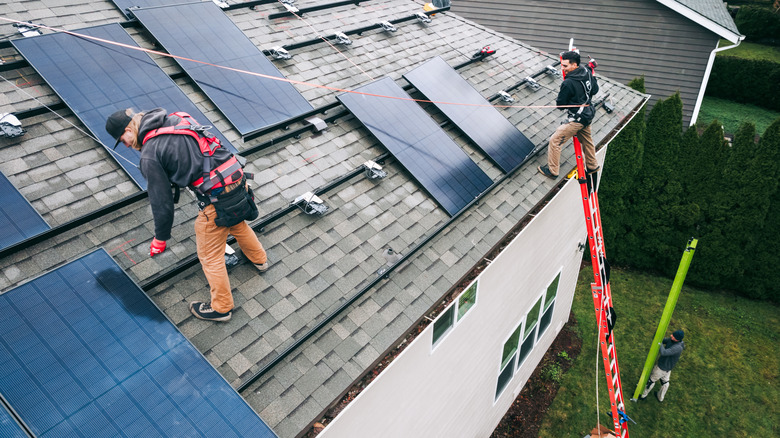
If you're thinking about installing solar panels on your home or a renewable energy system, there are some things you should definitely know first. For starters, they might save you money over the long term, but initial and upfront costs could be relatively high, depending on where you live. Additionally, not all roofs are suitable for panel installation, in which case you may need to install yours elsewhere, like in your yard. One of the most important factors to consider before installing solar panel batteries is your current home and family's energy needs.
Your average power consumption will help determine how big a system you need, including how many panels, how much energy you need to generate, and how big or how many backup batteries you have installed. It's not something you want to dive in headfirst without a little planning, or at least understanding the capabilities and limitations of solar panels and their resulting power systems. A great example is the cleaning schedule. You must have most solar panels cleaned once or twice annually, more often if you live in a dry or dusty environment.
Interestingly, you must have a backup battery installed and proper equipment to keep your power supply operational during a grid outage. If the grid goes down and you don't have this kind of setup, you'll still lose power in your home even with solar energy being generated. Although this is a technology consideration, not a regulatory one.
Jinko Solar JKM420N-54HL4-B
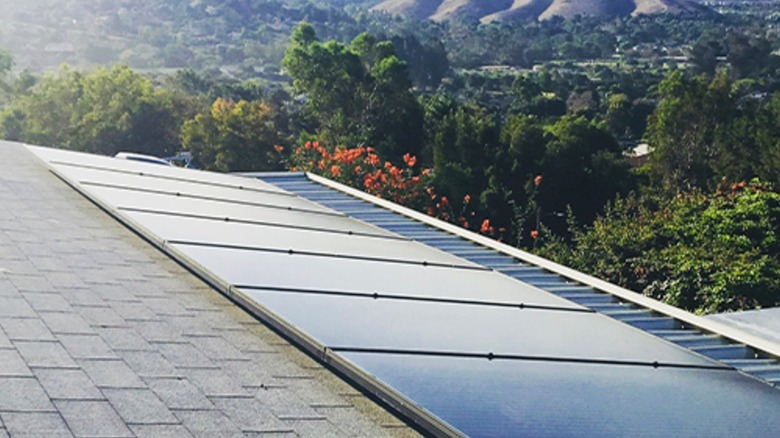
The top recommendation from Consumer Reports is the Jinko Solar JKM420N-54HL4-B. It's a 420-watt panel that the team says "meets" its claimed power output. In the world of solar panels, 420-watt options are most ideal for residential use because they offer a solid balance between high power generation and physical size. Those grids or lines you see on solar panels aren't for decoration; they're called fingers and busbars, and they link up the photovoltaic cells used to turn solar energy into electricity. The bigger the panel and surface area, the more fingers and busbars, and the higher the output.
CR says the Jinko panel worked well even in low-light conditions and did exceptionally well at producing power in high-temperature environments. That makes it a strong candidate for rooftop installations, even more so when you consider the price, which is well under $200 per panel. Jinko also offers a 25-year product warranty with each panel, so any investment you make is seemingly well-covered.
Qcells Q.TRON BLK M-G2+420
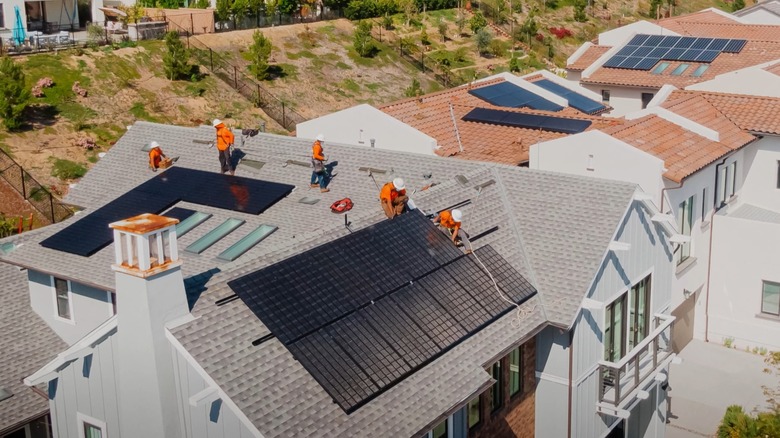
The second panel the CR team recommends is the Qcells Q.TRON BLK M-G2+420, another 420-watt panel. As with the Jinko panel, this one offers strong low-light condition performance, high output in higher temperature settings, and great reliability — since it meets its power capability claims. The latter is a really important factor to consider overall, because although a panel maker might promise certain output capacities, panels don't always hit those ranges in the real world.
Consumer Reports says that this panel, and the others recommended, do indeed match their promised claims. The downside to this one, if you can call it that, is that it's slightly more expensive than some of the other options on the market. Qcells prices them at about $300 per panel, but they do come with a 25-year product warranty, and they generate plenty of power. You may well decide that's a higher cost worth paying.
JA Solar JAM54S31-405/MR
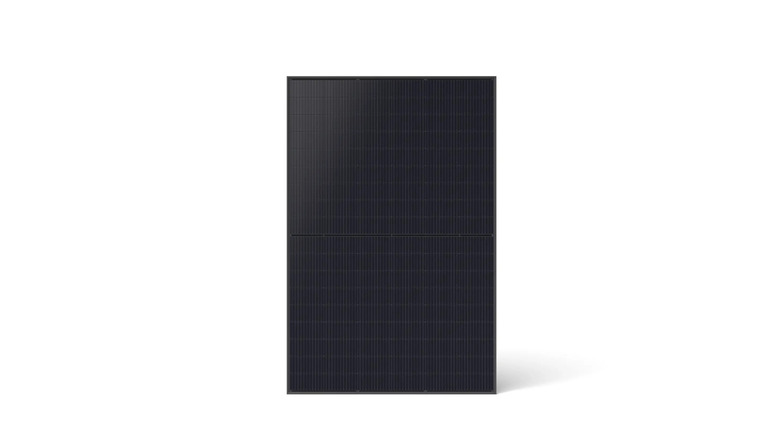
The third and final recommendation from CR is the 405-watt JA Solar JAM54S31-405/MR panel. It meets all power claims. In fact, CR says it has earned "stellar scores" in that regard, so you know exactly what kind of power generation you're getting before you install anything. It does offer strong low-light performance, as well, but where it falls short compared to the others in the list is with the high-temperature performance.
CR describes the scores as "midlevel" or average there, so you may want to go with another, more capable panel for hot climates and warm areas of the country. The JA Solar panel is, by far, the most accessible at around $145 per panel. Then again, it only comes with a 12-year product warranty versus some of the more generous options offered by competitors. That's still decent coverage and should last for quite a while if you run into any problems. All in, it is a trade-off worth considering, but again, it may be acceptable to you when you consider the more budget-friendly price.