

The Science Behind How Submarines Stay Hidden
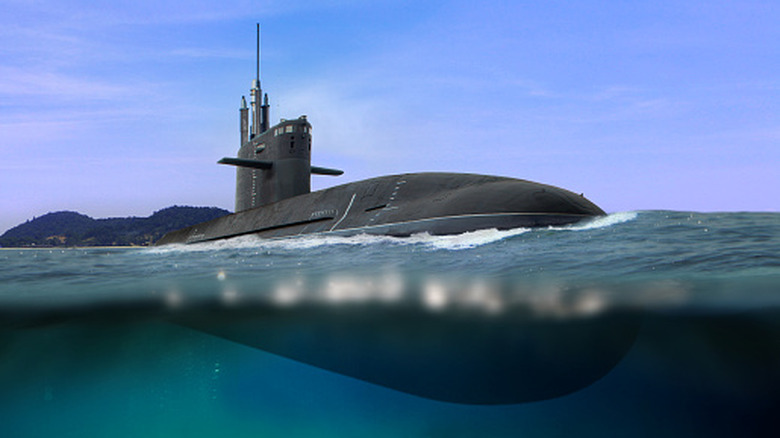
One of the most ingenious developments of naval science and warfare is undoubtedly the submarine. With its fully-sealed design, a nuclear submarine can stay submerged for months, quietly creeping up behind and beneath enemy vessels, either spying on their operations or delivering direct attacks with torpedoes. This is good, since it takes a long time to refuel a nuclear submarine. Of course, since submarines were so ingenious, many countermeasures against them have cropped up such as active and passive sonar, but submarines are designed and operated in such a way to avoid both, such as sonar-scrambling bodies and piloting techniques that take advantage of the wave-curving properties of ocean water.
Modern submarines are designed in such a way that, while it's not impossible to ping them with an active sonar pulse, it is exponentially harder to do so without a carefully-trained ear and constant vigilance. Not only that, but submarines are also designed to reduce the overall noise they make, and their pilots are trained for utmost careful control, all to avoid passive sonar pulses. A submarine's ability to vanish both from sight and sonar may seem almost supernatural, but there is a simple science behind every aspect of a submarine's impressive stealth capabilities.
The shape of a submarine hinders active sonar
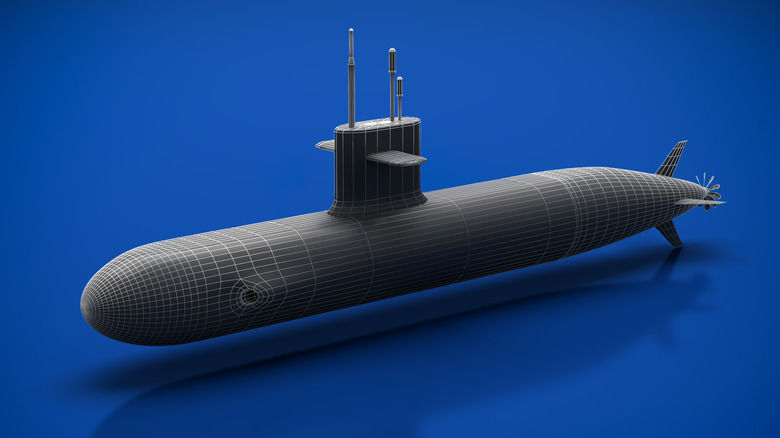
When it comes to searching for targets and hostiles in the ocean, sonar is the first and foremost tool for all naval forces. Unlike radar, which is meant to ping targets on land and in the sky, sonar is specifically designed to echo through the murky depths of the ocean. A sonar operator can fire off an active pulse, registering the presence of any objects, animals, or vessels that it pings (echoes) off of. Obviously, if a submarine were hit by that pulse, its position would be compromised immediately. This is where the shape of a submarine comes into play.
In order for a sonar pulse to actually register, it needs to bounce directly back from whatever surface it pings. If it doesn't bounce back, it won't register, or will only register faintly and inconclusively. Submarines are specifically designed with sleek, sloping bodies because that round shape makes it difficult-to-impossible for a sonar pulse to bounce back directly. As an extra measure, some submarines may be coated in an insulating material like rubber, which absorbs sonar pulses in addition to scattering them. With all of these measures, if a sonar operator received a ping from their active pulse, it would be extremely wispy and unclear, forcing them to keep scanning and giving the submarine time to make its escape.
Submarines use various tricks to reduce their sound and avoid passive sonar
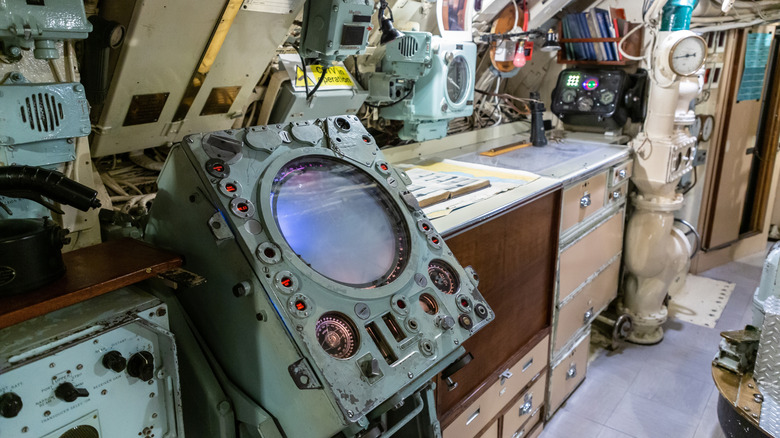
While active sonar is manually triggered by an operator aboard a vessel, it's not the only kind of sonar that submarine pilots need to worry about. There's also passive sonar which, rather than firing off direct pulses, instead listens passively to ambient noises from the ocean. Even if a submarine's surface scuttles active sonar pulses, if it produces any large, obvious noises, a passive sonar will still catch it.
To hinder monitoring efforts from passive sonar, submarines have a few tricks incorporated into their physical designs, while pilots are trained in a few ways to avoid making noise. The biggest generator of noise on a submarine is the propulsion system, with the noise of rear propellers being a dead giveaway. To keep things quiet, the propellers are curved in such a way as to generate less bubbling, while the engine inside of the submarine is cushioned to keep it from rattling around. As for the pilots, if the submarine needs to quickly vanish from an enemy's range of hearing, they'll dive down into layers of hot and cold water. Sound travels differently in different temperatures and pressures of water, bending at particular arcs when things shift. By hiding in these "shadow zones," the submarine's sound won't reach the enemy's ears. Newer, autonomous submarines could be a major change in naval warfare if trained in similar tactics.