

Why There's Simply No Need For Microsoft Office Anymore
Microsoft Office was once the best office suite for all your productivity needs. Word, Excel, and PowerPoint were ubiquitous with office work, school work, and personal use to the point that few would consider using anything else. However, things have changed a lot over the years, and Microsoft's programs are nowhere near as essential as they were decades ago.
While Microsoft has expanded the office suite into what it now calls Microsoft 365, including more apps like OneNote, OneDrive, and Teams, it's also made the software package more expensive while adding unpopular and frustrating features. That includes integrating the Copilot AI chatbot into the service to help with what it calls "vibe working."
These changes, combined with the availability of free alternatives that offer better overall user experiences, mean Microsoft Office is no longer necessary for anyone who doesn't have a workplace or school that specifically requires it.
AI is making Microsoft 365 worse and more expensive
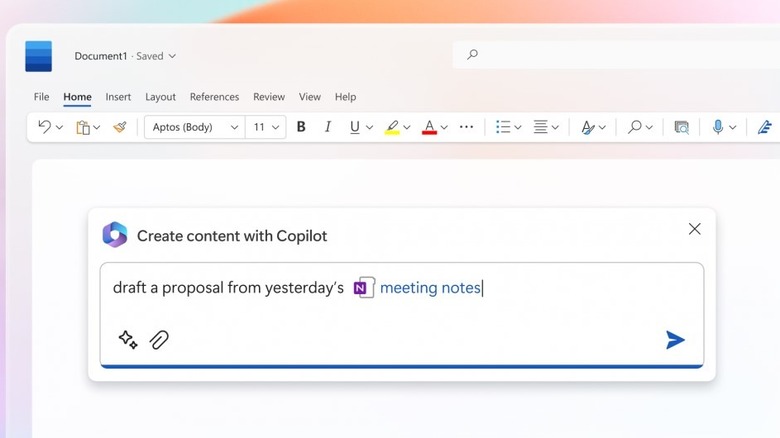
Currently, Microsoft 365 plans start at $9.99 a month, or $99.99 a year for Personal, with Family and Premium options that allow up to six accounts to join. That follows a January 2025 price increase that coincided with Microsoft adding Copilot as part of all plans. This timing made it pretty clear that consumers are being asked to pay more for AI features whether or not they have any intention of using them.
Users have also reported increasing frustration with Microsoft 365, especially as the company continues to push Copilot. One Reddit user received over 2,000 upvotes for calling it an "active impediment to workflow." Others shared more specific criticisms of the service, such as Outlook's search becoming unhelpful and Copilot sometimes making it hard to do simple things like opening your email. Add to that the more general concerns associated with AI (like security, privacy, and environmental impact), and it seems lots of Office 365 users are overpaying for software that doesn't work as well as older versions that are no longer available.
If you just want the classic apps without things like cloud storage or AI features, there is Office Home 2024, which charges a one-time price of $179.99. This doesn't include features like Teams, Outlook, and Microsoft Defender, nor will it receive any updates with new features. Office Home 2024 is nice for those who don't want to add yet another subscription to their monthly budget. However, if all you plan to use are Word, Excel, and PowerPoint, there are cheaper options (even free ones) that'll get the job done.
Free alternatives to Microsoft Office get the job done
Fortunately, there are plenty of alternatives out there for anyone frustrated with Microsoft 365, many of which are free. The most obvious is Google Drive, which offers its variants of Word (Docs), Excel (Sheets), and PowerPoint (Slides) to anyone with a Gmail account online. Since everything lives in Drive and is connected to your email, it's easy to access your files on any device or share them with others. Additional storage beyond the 15 GB that all Google accounts come with is inexpensive, with even the highest Google One subscription tier — which includes 2 TB of storage, access to Gemini's paid features, and more — costing the same as Microsoft 365's lowest tier at $9.99 a month and $99.99 a year. That doesn't include any major deals or discounts available to new subscribers.
There's also LibreOffice, a free office suite that provides the classic Microsoft Office experience many users miss. It includes equivalents to Word (Writer), Excel (Calc), and PowerPoint (Impress), as well as applications for making diagrams, databases, and editing mathematical formulas. Plus, it's open source, so anyone with the skills can modify it to make improvements, or add new extensions and share their work with other users.
Independent options like LibreOffice come with their drawbacks. They lack the convenience of cloud support, and you can't collaborate with other users while using anything other than Calc. Still, for the average user who only needs the basics, it's worth considering as an alternative to Microsoft 365 and its increasingly frustrating and expensive offerings.