

Does Putting Aluminum Foil Behind Your Router Actually Improve Your Wi-Fi?
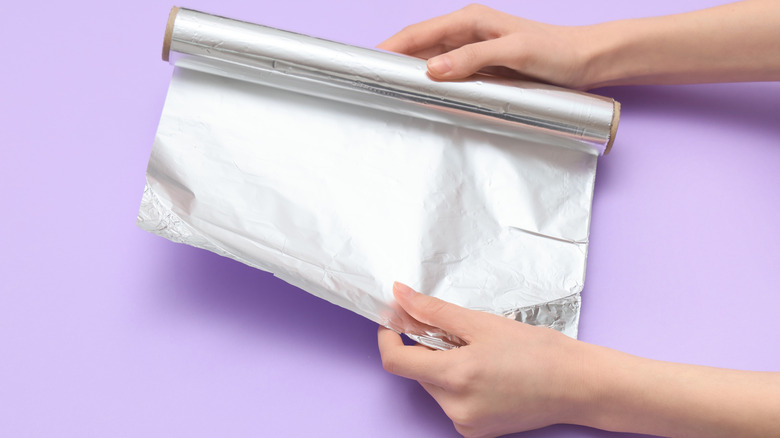
Putting aluminum foil behind an antenna is an old trick people once used to boost TV or radio signals. Nowadays, people are using this same tactic to increase internet speed from Wi-Fi routers. Some call it a myth, but it turns out that putting aluminum foil behind your router actually can improve your Wi-Fi.
An experiment conducted by the Department of Computer Science at Dartmouth College proved that an "optimized reflector" works well with Wi-Fi access points and can weaken or enhance signals in targeted areas. The experiment showed that aluminum foil is one such reflector that functions ideally to shape wireless signal coverage.
A layer of aluminum foil behind your router will act like a satellite bouncing the signal in the direction it's facing. This can eliminate dead zones or reduce dropouts in the target area, or even boost signal throughput by up to 55%. What's more, the foil blocks the signal from traveling in the area behind it. If you have a problem with neighbors trying to access your network and hog bandwidth, aluminum is a viable solution.
The best ways to set up aluminum foil behind your router
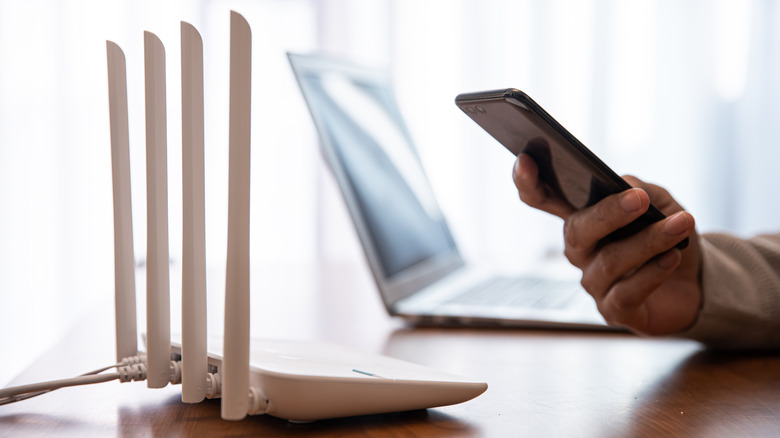
It's great that something as simple as aluminum foil can boost your Wi-Fi, but let's be honest: a crinkly sheet of reflective metal is going to be an eyesore in the corner of your office or living room. Some DIY magic will fix that. You can buy a cheap 3D printer and create a PLA model in any form you wish to design — ideally with a dish-shaped element for optimal reflecting. Cover the finished model in a layer of aluminum foil for a final product that's much more artful and less utilitarian in appearance.
The experiment at Dartmouth College also involved the use of 3D printers to create a reflector. Industrial-grade machines can 3D print giant things like space rocket parts out of aluminum. However, machines that can 3D-print aluminum are prohibitively expensive and definitely overkill for a simple DIY project. Heck, this life hack works just as well with a cut-open aluminum can, after all. For at-home use, the simplest technique is to fold a sheet of aluminum foil into a rigid C-shaped wall behind the router.