

Your Surge Protectors Might Be Expired - Here's Why
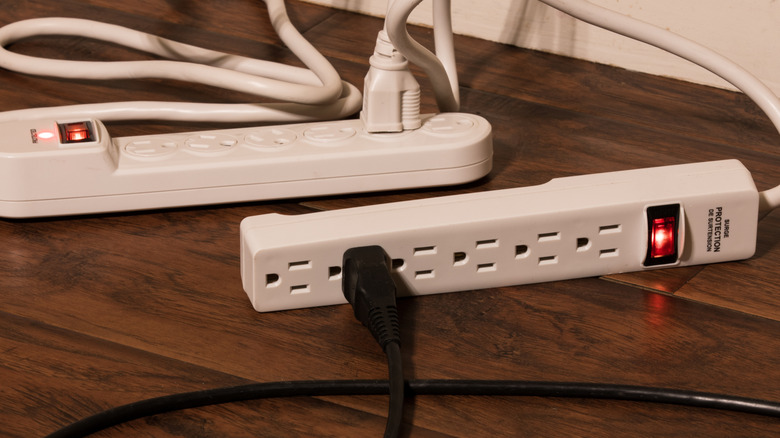
There's a difference between owning a surge protector that's done its time versus one that's actually expired. Neither one is good to keep around — especially if it's giving off a strange smell — but expired surge protectors are more of a trap than you might think. Even if yours seems functional, you'd only realize that it isn't once it's too late. It would be beyond heartbreaking to find your computer has been ruined because you accidentally depended on an expired surge protector to safeguard it during a severe thunderstorm. Turns out, using an expired surge protector is basically the same as not having one at all.
Surge protectors work by using metal oxide varistors (MOVs), which are voltage-dependent resistors that are susceptible to degradation. They can fail with age or with repeated use. Normally, these components save your equipment by absorbing and grounding excess voltage from power surges or other voltage disruptions (AI could even be triggering some such outages). But your surge protector is expired once its MOVs have been worn down completely. Luckily, there are telltale signs you can watch out for to determine whether your protective hardware is no longer working as it should. Working surge protectors typically sport a status light indicator to show they're operational; otherwise, their LED indicators are off when they should be on, or they might be a different color than they usually are.
How to predict the expiry date of your surge protector
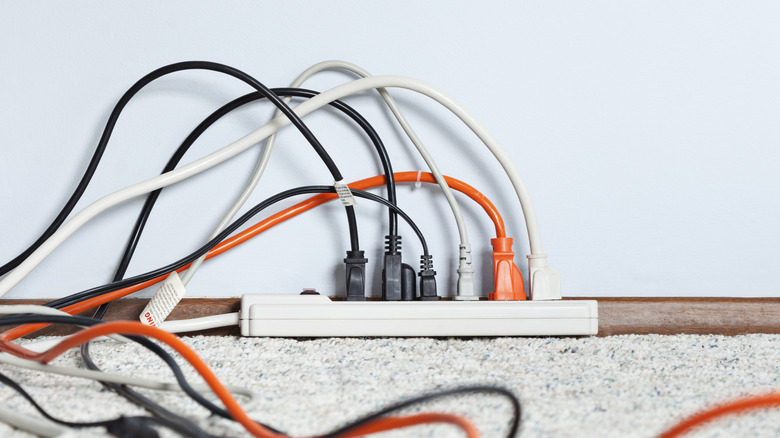
Unfortunately, surge protectors don't have an explicit printed expiry date, but experts estimate the average lifespan of a given surge protector is two to five years long. You can get an idea of when your surge protector will expire based on its manufacturing date and how much you've already used it. Depending on the brand of your surge protector, you can consult the serial number on the back or bottom of your device to decode the manufacturing date, but the way you would do so differs across brands. On Tripp Lite surge protectors, for example, the manufacturing date is indicated by the first four numbers of the device serial number; for Schneider Electric surge protectors, the first two numbers of the serial number denote the year of manufacture. If you can locate your device's model number on the hardware itself or in the product manual, try searching online to see if there's any information about the manufacturing date, especially if there happens to have been a recall on the product.
Generally speaking, if you did experience a large electrical storm, lost power, or know you've had a massive voltage spike with the surge protector plugged in, you'll know that your surge protector has gone bad; at that point, you'll want to replace it. Essentially, treat surge protectors as single-use items, even if there's no visible damage. Once a surge protector has fulfilled its duty by absorbing excess voltage to protect your equipment, it becomes much less effective; at that point, it won't be able to absorb energy when the next surge hits, effectively putting your electronics in harm's way.