

The 8 Best Cheap And Expensive Phones For Seniors In 2026
We may receive a commission on purchases made from links.
Like in every demographic, many older adults are keen to stay connected in the digital world, but constantly changing technology can prove particularly hard to navigate for those who didn't grow up with touchscreens and apps. While many phones claim to make life easier for the user, it can be difficult to know which ones truly deliver on that promise.
Lowering the barrier to entry with tech is possible when the device incorporates thoughtful features and intuitive design. This might include large, high-contrast icons, simplified menus, physical buttons, and one-touch emergency calling. Accessibility tools, such as screen readers or voice control, should be easy to find, not hidden deep within settings menus. These kinds of design choices help older adults enjoy the benefits of modern tech without feeling frustrated, overwhelmed, and, frankly, unwelcome.
To help internet researchers discover which phone is best for them or a friend or relative, BGR poured over a variety of options and compared factors such as price and battery life (the full methodology is explained at the end) to create this list of the top four cheap phones and top four expensive phones for seniors in 2026.
What makes a great phone that's friendly for older adults?
There are a number of giveaways that a phone is truly appropriate for people of all ages, but the exact features to look for will depend on the needs of the individual. Those with limited mobility may benefit most from larger buttons, voice controls, or more responsive touchscreens with a higher refresh rate. Some devices offer "one-handed mode," which reduces the usable screen area and brings controls within easier reach, making the phone simpler to operate.
Older adults with declining eyesight might prioritize large displays, adjustable text sizes, and high-contrast modes to help them see what they're doing more easily. Those with hearing difficulties may prefer devices with hearing aid compatibility or a louder maximum earpiece volume. Other great features benefit all of us, no matter the age, but may provide more peace of mind to older users. Examples include a physical SOS button that can quickly alert loved ones or emergency services when the user is in trouble and a crash detection feature where the phone can sense a fall or impact and automatically trigger an emergency response.
It goes without saying that not all older adults need or want simplified devices. Many would be happy with a standard smartphone. In these cases, built-in tools such as voice assistants and health tracking apps can still add real value without changing the overall experience. In compiling this list, BGR has highlighted both devices specifically designed for users who may find standard smartphones challenging, as well as the best mainstream options that include accessibility and safety features older adults may value.
Should I get a smartphone or a flip phone for an older adult?
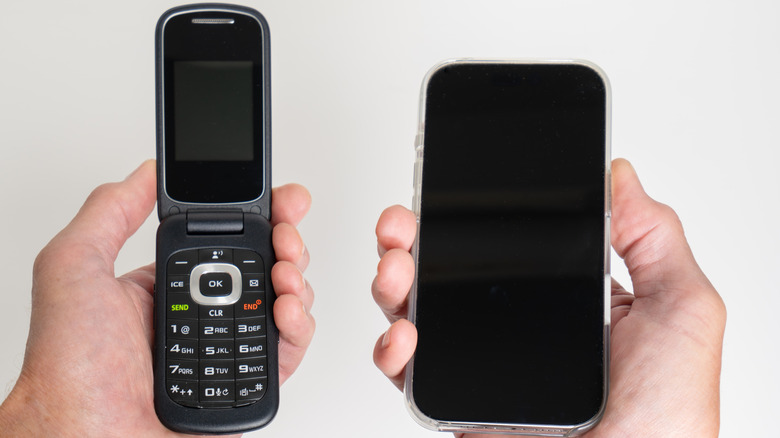
While it may be a rarity to see flip phones in 2026's sea of smartphones, many of the so-called "dumb phones" are still being made for those who aren't quite ready to part with all their buttons in exchange for a bigger screen. In fact, they are often preferable for older users for this reason; large, backlit buttons make dialing and typing easier. What's more, because flip phones don't have quite so many bells and whistles, the learning curve for using one can be less steep and daunting.
On the other hand, smartphones tend to offer the latest apps and features, allowing users to do video calls with family, access health tools, browse the internet, and use AI voice assistants. Large touchscreens also make reading and navigation easier, which can be especially helpful for those with vision challenges. However, these capabilities come at a cost. The lack of physical buttons may frustrate those who prefer the tactile feedback of pressing keys, and the wide variety of apps and features may prove overwhelming. It can also be hard to decide whether Android or Apple devices are better for older users, especially because many different devices can look and sound very similar. Ultimately, the choice of flip phone or smartphone will depend on the person's needs and comfort level using technology.
Cheap: Jitterbug Smart4
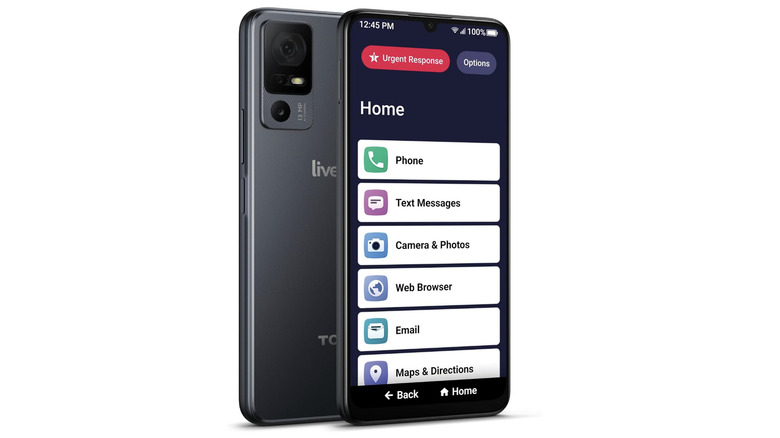
The first device on our list is the Jitterbug Smart4 from Lively, which is a smartphone that has been designed specifically with older adults in mind. It has a much simpler interface than your typical touchscreen, reducing the learning curve for those who haven't grown up with a screen in hand. The display size is 6.75 inches, it has a vertical resolution of 720 pixels, and the main menu comes up intentionally large and easy to read. Those hard of hearing should have no issue with an earpiece volume that goes up to 87.4 decibels, according to testing by RAZ mobility.
The Jitterbug Smart4 also comes with built-in health and safety features, including an Urgent Response button that connects users to a 24/7 emergency response team and shares their GPS location. Its battery life is pretty solid, as it can last up to four days on standby, according to Senior Living.
Affordability is also an important criterion for many older phone users, and this one is currently available from Amazon for around $40, but those looking to make use of the Urgent Response button and some of the other emergency features will have to pay the manufacturer, Lively, a monthly plan. While BGR does recommend a couple of Lively devices on this list, do note that the Lively Mobile phone carrier is not our team's favorite.
Cheap: Jitterbug Flip2
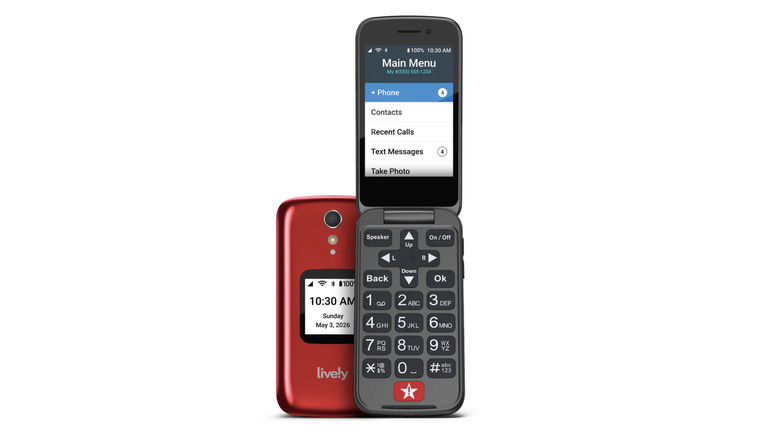
The next device is also a Jitterbug, but this time it is a flip phone rather than a smartphone. Its price is similar, at $35 from Amazon, but the Lively Jitterbug Flip2 does have a smaller 3.2-inch screen, as is necessary with flip devices. However, as outlined earlier, this type of phone is often preferred by older adults. It also has physical buttons that are clearly labeled, including the Urgent Response button, which is also found on the Smart4. The Jitterbug Flip2 also boasts an average battery life of 12 hours.
In a world where tech companies are constantly stripping devices down to as few buttons as possible, it's refreshing that the Flip2 includes what some might call an extra button — the dedicated speaker button lets users instantly switch to loudspeaker mode during calls. According to RAZ mobility testing, the earpiece volume reaches 78.5 decibels, which is a little bit quieter than its smartphone counterpart but still plenty loud enough per user reviews. One of the things that makes the Flip2 stand out from comparable flip phones is the fact that it connects to Amazon Alexa to provide smart functionality. Users can make calls, send texts, check their battery level and usage, and request information using voice commands, which is unusual for a non-smartphone and a great inclusion considering the price.
Cheap: TCL Flip Go
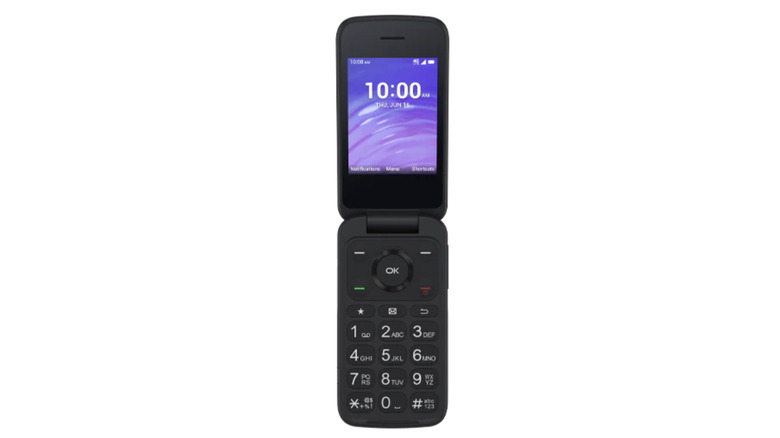
Next up is the TCL Flip Go, which strikes a great balance between the simplicity of a flip phone and can't-live-without features of a modern smartphone. For less than $50 if purchased from Walmart with a T-Mobile plan, it comes with a large keyboard, 4G internet access, and a 2MP camera (which isn't the best quality, but is an asset given its price). The Flip Go has a handy second screen on the outer lid so users can see who is calling before opening it up, and a user interface intentionally designed to be simple.
Reviewers praise its battery life, saying it lasts for multiple days on one charge with even heavy use. In fact, one reviewer describes it as a "nuclear reactor" when compared to an iPhone, and TCL itself says the flip phone is capable of up to 14 hours of talk time. User reviews also mention that its ringer is particularly loud, and it features dual noise-cancelling microphones along with M4/T4 hearing aid compatibility.
Do note that the Walmart option is locked to the carrier Metro by T-Mobile. That being said, T-Mobile is a great option for seniors, with its Essentials Choice 55 plan offering unlimited calls, unlimited texts, and 50GB of data on two devices for just $60 a month. Unlocked versions of the Flip Go are available from Amazon for about $115, or consumers can wait until their T-Mobile plan lapses and ask their service provider to unlock their handset for them.
Cheap: Motorola Moto G55
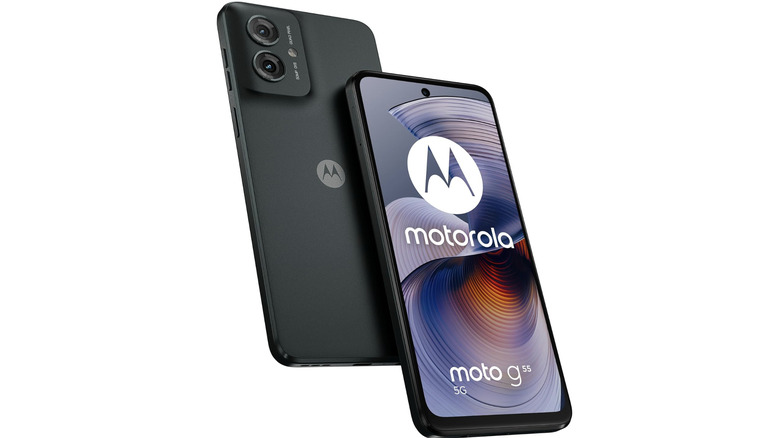
The Motorola Moto G55 is the first device on this list not specifically designed for older adults, but its features make it a great affordable choice nonetheless. It's a smartphone with a 6.49-inch screen. Testing by Expert Reviews revealed it can last for over 24 hours on one charge, which is a strong performance given its price. At the time of writing, the Moto G55 is available from Amazon for $186, which is a decent deal for a modern touchscreen.
For seniors, this Motorola smartphone stands out for its ease of use and reliability. Reviewers say it has a simple interface and that it is responsive, helping to reduce barriers for those with lower dexterity. It also weighs only 182 grams and is about 0.3 inches thick, making it comfortable to hold and carry around. The screen is large and crisp, offering a sharp 1080p resolution and impressive brightness of up to 980 nits, as per Expert Reviews. Setting it apart from the other cheaper devices is its camera, which features a 50MP main sensor, an 8MP ultrawide lens, and a 16MP front-facing camera for those all-important family video calls. Do note that the Moto G55 version available in the U.S. is only compatible with GSM carriers like T-Mobile, but is not compatible with CDMA carriers like Verizon.
Expensive: Samsung Galaxy S25
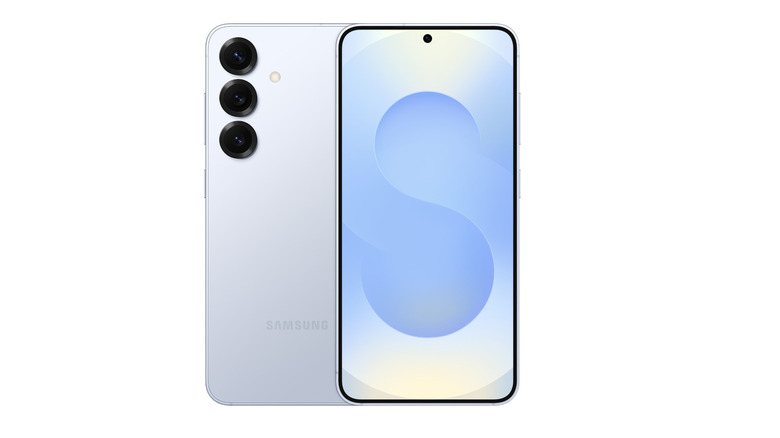
The first of the four expensive cell phone picks for seniors is the Samsung Galaxy S25. Samsung is known for its ultra-high-def cameras, and this model lives up to expectations. It boasts a 50 MP main camera, a 12 MP ultra‑wide lens, and a 10 MP telephoto lens with 3× optical zoom on its rear, and the selfie camera is also 12 MP. In plain English, that means it's capable of taking sharp, detailed photos in most situations, such as when zooming in from far away or when light is low. Despite the demands of such a powerful camera, the Galaxy S25's battery life is impressive, lasting up to 37 hours on standby with a single charge, according to Gadget Versus.
Reviewers praise the S25's call quality and impressive earpiece volume. It is also compatible with many Bluetooth hearing aids and uses advanced noise-canceling technology, making calls clear even in noisy environments. The device also comes with an AI assistant, Gemini, which may sound daunting if you're not familiar with it, but makes using the phone much simpler. After holding down the physical power button, you can ask Gemini to complete phone tasks for you with a voice or text command, such as sending a message or setting a reminder. At the time of writing, the Galaxy S25 is available from Samsung for $799.99.
Expensive: BlindShell Classic 3
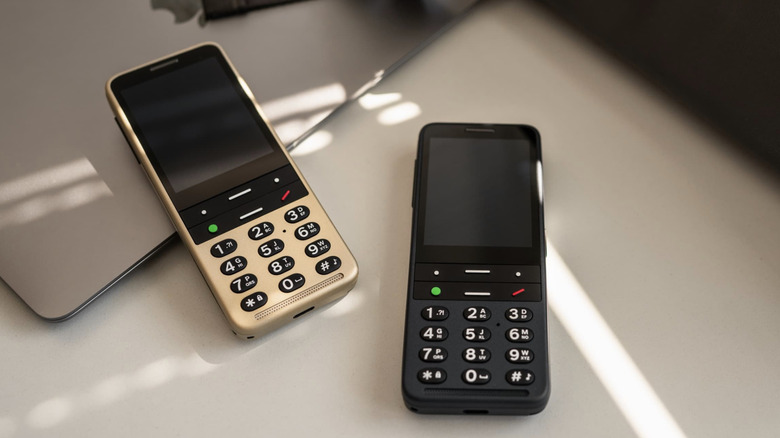
The BlindShell Classic 3 is designed specifically for the visually impaired, making it great for users who struggle with regular smartphones. It has the physical keypad and other external buttons of a retro cell, but the power, features, and sleek metallic feel of a modern smartphone. BlindShell phones do not rely on a touchscreen; instead, they are designed to be controlled by voice and external buttons. The Classic 3 does have a touchscreen, which is disabled by default, but can be used with third-party apps.
Other impressive features include its new Luna AI assistant that can understand commands in conversational English and perform tasks on the phone, like setting up calendar events or timers. The Classic 3 also offers the Tandem app, which lets a trusted friend or family member connect to the phone and remotely control the device to provide real-time assistance when needed. Reviewers say that Tandem can be used for tasks such as adding new contacts or changing device settings.
Like some of our other featured choices, the Classic 3 does come with an SOS button that allows users to quickly alert a pre‑selected contact in case of an emergency. It also boasts up to 96 hours battery life and a ringer that goes up to 100 dB. You can grab it from Amazon for $690.
Expensive: iPhone 16 Plus
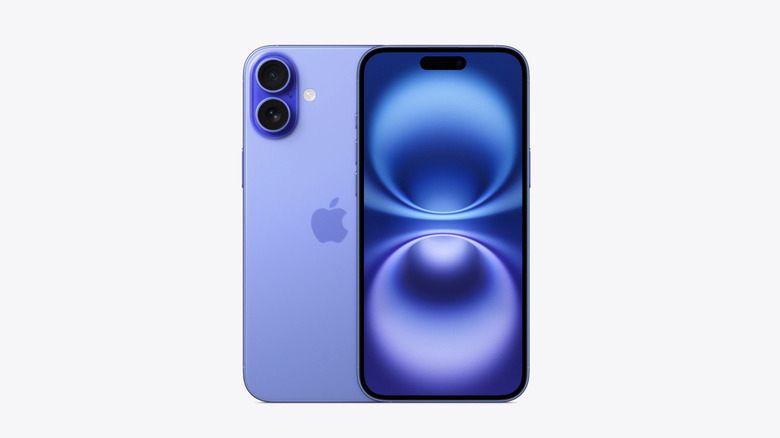
iPhones are the most popular phones in the world for a reason; they are intuitive to use and are built with the highest quality materials and software. While great for everybody, these factors are especially important for older adults who may have less tolerance for complicated interfaces and frequent errors.
BGR highlighted the iPhone 16 Plus in a 2024 review and the product still holds up. It's not quite top-of-the-range (that is the iPhone 17 at the time of writing), so buyers aren't paying a premium for that privilege. But it is still one of Apple's newest offerings, so it has most of the latest features and software compatibility. These include its customizable Action Button, which can be set up to quickly take the user to accessibility tools or favored apps. The accessibility tools have been honed over years of research, and now include Eye Tracking, which lets users navigate their device using just their eyes without touch, and the Accessibility Reader feature that adjusts the font, size, or color of on-screen text to make it easier to read.
While it doesn't have a physical SOS button like some of the other devices on this list, the iPhone 16 Plus can automatically contact emergency services if it detects a fall or car accident. It can also connect via satellite to send an SOS when there's no cellular signal and send check-in notifications to family or friends to let them know you've arrived safely at your destination. But all this, plus a 6.7-inch screen and almost three days of battery life (per The Guardian), will set you back $699 from Apple.
Expensive: Google Pixel 9
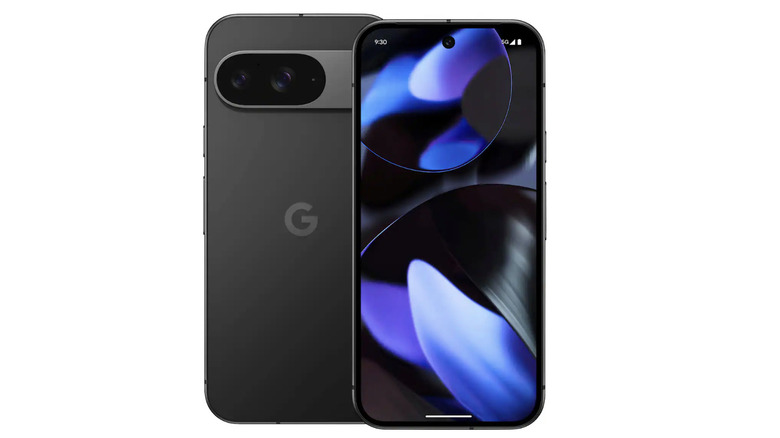
The final expensive device that BGR rates highly for older adults is the Google Pixel 9, which is currently available from Best Buy for $749. Its screen measures an average 6.3 inches on the diagonal, but it boasts 1080-pixel vertical resolution and a peak brightness of 2,700 nits, making it really easy to see what you're doing. The battery life is admirable for a smartphone, with The Informr reporting it lasts for eight days on standby.
In terms of accessibility and safety features, the Pixel 9 is hearing aid compatible, meaning it can connect to them via Bluetooth to help filter out background noise, and it comes with the TalkBack screen reader. Like the Samsung Galaxy S25, it has the Gemini AI Assistant to enable intuitive voice control, which is particularly handy for those with low dexterity. It also shares some of the iPhone's safety tools, such as crash detection and off-grid SOS messaging.
Other accessibility features are unique, though, such as its Guided Frame that helps those with low vision take selfies with sound and vibrations. Another is Call Notes, which automatically records and transcribes phone calls, making it easier for those with hearing difficulties to follow conversations.
Methodology
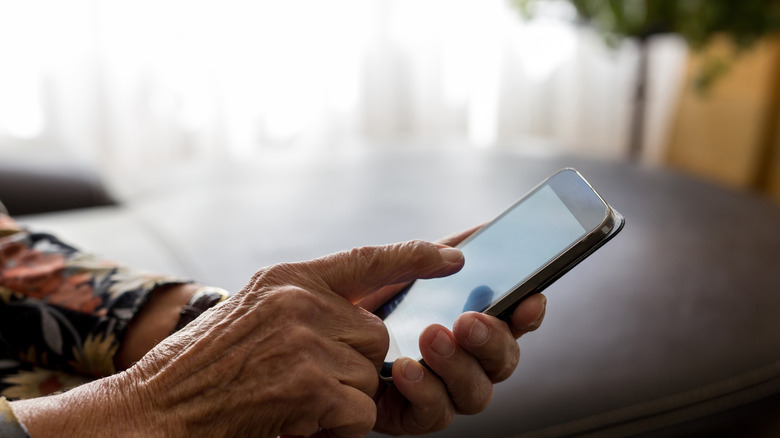
BGR created a long list of phones suitable for older adults using recommendations from user forums (including Reddit), expert tech reviews, and guides on senior-friendly smartphone design. These were then ranked based on the following objective criteria: price, display size and brightness, battery life, speaker quality, if it has physical buttons, and if it has safety features.
These criteria help to gauge the device's display readability, battery reliability, ease of use for those with low hearing or dexterity, and practicality in an emergency situation — all of which are widely cited as important features for older adult cell phone users. From this list, we chose the best four priced below $300 and above $650 to feature as the best cheap phones and best expensive phones, respectively, for this article.