

Are Braided USB Cables Actually Worth It?
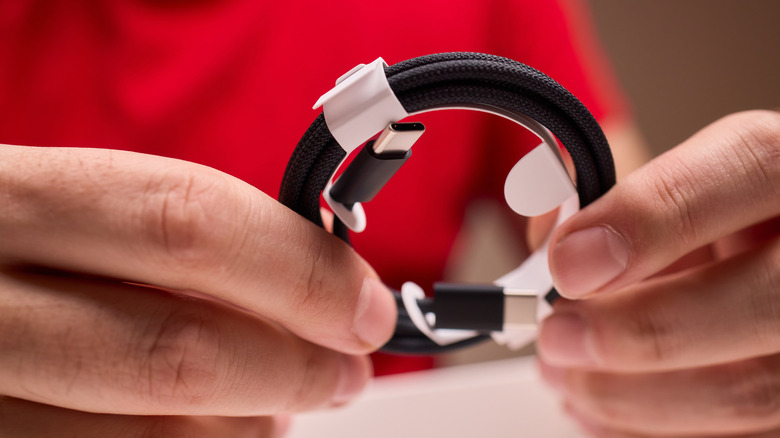
Braided cables have become very popular in recent years, often touting increased durability and longevity for your charging cables when compared to regular rubber cables. However, is this extra durability really worth the extra pricing that braided cables can sometimes carry? While it might be easy to look at braided cables and their stiffer outer design as a net positive, it really depends on how you use the cable. That's because, as people online have noted time and again, the weakest points of cables — and one of their top failing points — is often where the connectors have been attached to the cable, not the cable itself. So how do you determine if a braided cable is worth it? Well, you have to look at your use case.
For starters, braided cables make a lot more sense when you're talking about heavy-use items. This means phone chargers and HDMI cables that get moved around a lot. In this case, having the more durable and stiffer design of the braided cable can be useful, as you don't want to worry about bending and breaking the components inside the cable quite as easily. However, if you're just talking about a cable for a device that you never really touch, then a regular cable is likely fine, as you aren't moving it around a lot. It's still important to take into account the other differences between types of USB cables — like bandwidth — but otherwise, you can sometimes save money by not buying braided cables for items you don't plug and unplug often.
When braided cables are a must-have
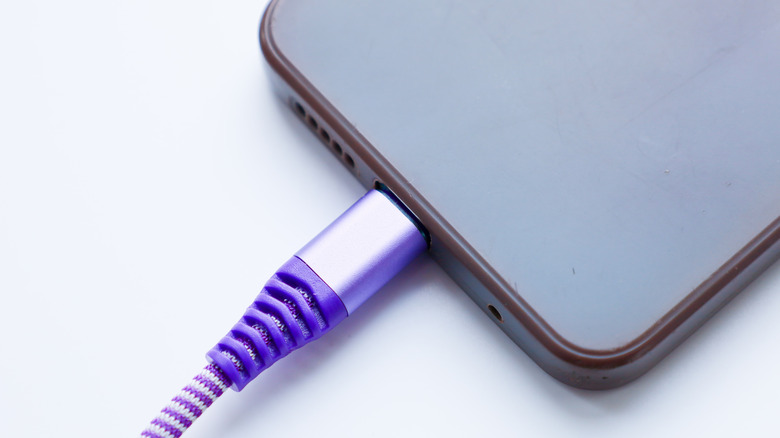
As we noted above, braided cables are generally considered worthwhile when you're talking about items you use a lot. This includes phone chargers, cables for keyboards and mice, and so on down the list. All of these items receive pretty heavy usage throughout our days, and having a more durable cable can be a boon, as it helps cut down on general wear and tear thanks to the stiffer outer cover of the cable. This is important, as Anker says that one of the primary ways cables wear down is due to twisting.
This is why we recommend potentially investing in nice, braided cables if you plan to move the cable a lot. The braid won't affect the overall performance of the device, and the slightly stiffer cabling might be a nuisance to get organized exactly how you want it at your desk or workspace, but it can save you some headache down the line as daily wear and tear affects the cable. Of course, a lot of the durability of a cable also comes down to how you use it. It's important to always find the best USB cables for your devices, as this can help you avoid bad ones that already have problems. However, with a few extra pointers, you can also improve how long your cable lasts.
How to help your cables last longer
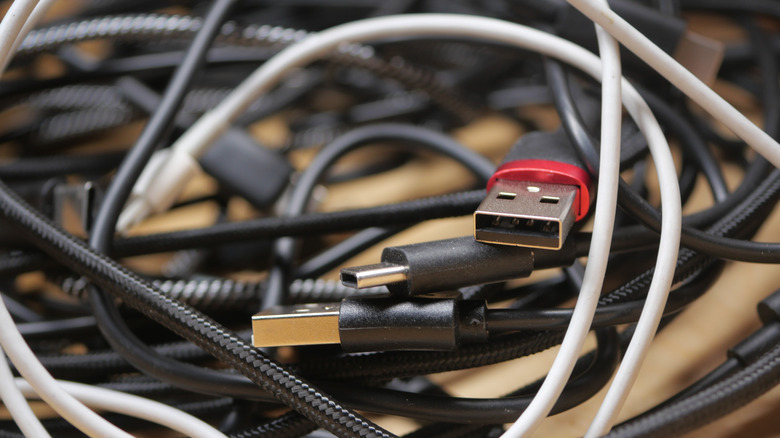
The best way to preserve your USB cables is to keep things organized and clean. This can be tough, especially if you share your workspace with others or have children. But some of the best cheap gadgets for cleaning up cable clutter can help a lot here, especially if you haven't invested in a cleaner workspace already. Using these, you can carefully organize wires so that they don't get tangled up or bent in odd ways.
Another good way to help your cables last longer is to properly store them when not in use. While it might be tempting to just stuff your cables into a drawer, it's actually recommended that you coil them up to avoid bending them too much. The basic idea here is to place one end of the cable in your hand and then slowly wrap it around your arm's length (up to your elbow) and then back to your hand. Next, do the same thing, but this time rotate your hand around so that the cable is actually looped in reverse to the first piece. Continue this until you completely loop the cable, and then wrap it with a zip tie or Velcro strip.
Ultimately, routine maintenance, proper storage, and good cable management are key to ensuring your cables last as long as possible. With all that in mind, you can often take advantage of cheaper cables — so long as they fit what your devices need — and save a little money. Still, if you want to feel a bit better about your investment, then going with a braided cable does at least provide slightly stiffer protection for your wires.