

Why A Handheld GPS May Still Be Worth Using Today
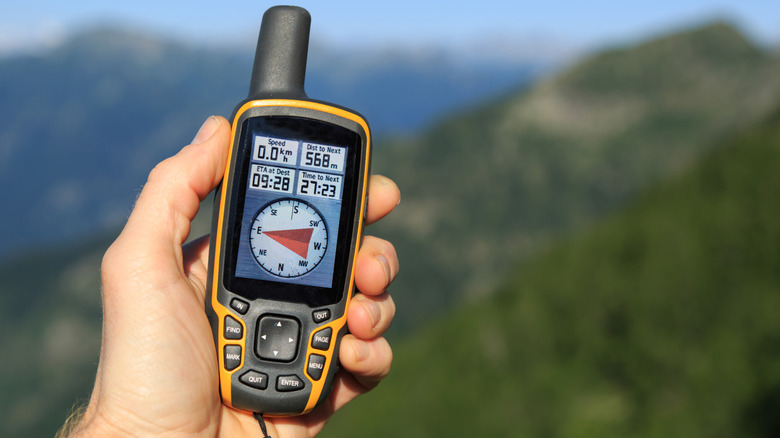
Modern smartphones have replaced so many standalone consumer devices, including cameras, MP3 and media players, calculators, flashlights, and even dedicated GPS units. But while they certainly do a lot of those things in one, convenient device, sometimes it's still better to have a standalone option. In a major storm or outage, for instance, you want to have a standard flashlight instead of using your phone and wasting its battery. Cameras are another great example. Your smartphone takes great pictures, but actual cameras deliver professional-grade shots and give you a lot of control over the final image. The same can be said for GPS mapping – your phone usually does a great job with directions but falls short in several ways compared to dedicated GPS units.
Handheld GPS devices are an offshoot of the dash-mounted ones, but they're also much more valuable than a phone in certain scenarios. Sure, you can pull up GPS on your phone pretty much any time, but if there's no signal in the area, you'll have to plan ahead. The GPS still works on phones without signal – Google knows where you are even with GPS off — but you'll want to have any maps you're using downloaded for offline viewing. You have to do that before going offline. Most GPS handhelds from Garmin and other brands already have topographical maps on the device, but there's another big reason why standalone GPS might be better especially in remote or survival situations: battery life. With a dedicated handheld you get 35 hours or more of battery life versus eight to 12 hours with a phone. If and when you need to maintain a consistent signal, battery makes all the difference. Many handhelds also use replaceable batteries so you can simply swap in fresh ones as needed.
What else makes a handheld GPS worth using over a phone?
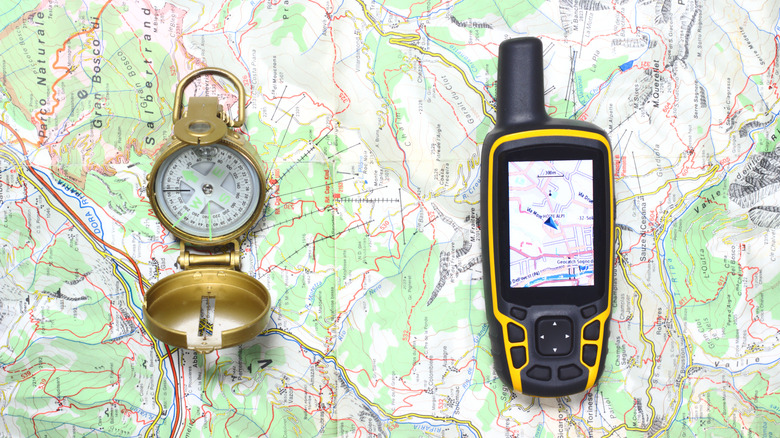
Battery life is a huge benefit, especially when you're out in the wilds or remote areas with no signal, but it's not the only feature that GPS handhelds do better than phones. Generally, GPS handhelds are designed specifically for outdoor use, so they are more durable and can take a beating better than your phone. While most phones are weather resistant, handheld GPS units can endure moisture, rain, dirt, dust, and extreme temperatures. With iPhones and Androids, you also have to install apps specifically for hiking and outdoor adventures. GPS handhelds have mostly everything pre-installed, including digital compasses, messaging tools, and more.
Dedicated GPS devices are also equipped with larger more powerful antennas, which means stronger signal in outdoor environments and, in most cases, better accuracy and positioning. They also connect to different or, at times, multiple Global Navigation Satellite Systems (GNSS) frequency bands. There are multiple satellite constellations currently in use, with GPS being the most widely known and developed by the United States Department of Defense. Others include Russia's GLONASS, Europe's Galileo, Japan's QZSS and China's advanced GPS alternative, BeiDou.
Your phone's GPS system has gotten much more accurate with new technologies in recent years allowing accuracy to within a 16-foot radius in optimal conditions, but accuracy can worsen near obstructions. The downside of GPS devices can be as expensive as a smartphone and may require subscription fees.