

SpaceX Just Hit An Important Milestone After Launching More Starlink Satellites
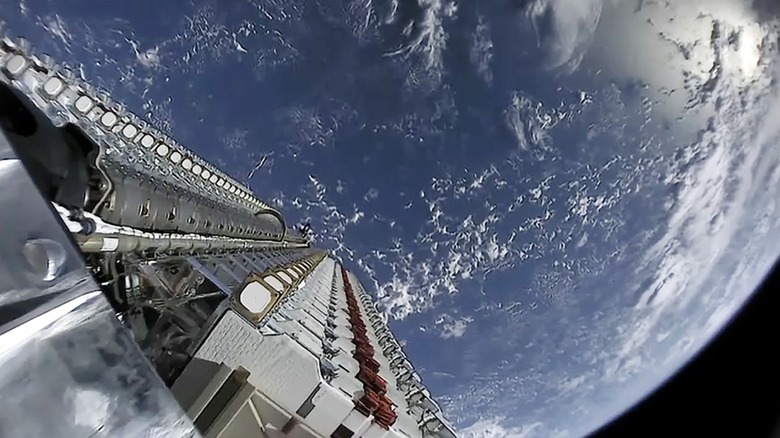
Starlink is a communication system and wholly owned subsidiary of SpaceX that can provide fast internet connectivity to some of the most remote locations on Earth. While Starlink is not flawless, it serves both commercial and government uses. The system provides as much coverage as it does because Starlink owns more satellites than there are visible stars in the night sky.
Earlier this month, SpaceX launched two Falcon 9 rockets that delivered 54 new satellites into space, bringing the total of orbiting Starlink satellites to over 10,000. This constitutes around 70% of all active satellites hovering above the Earth, minus the 10 nonfunctioning Starlink satellites. Oh, and over 1,500 satellites that Starlink has launched have lost orbit and fallen back to Earth.
While maintaining over 10,000 orbiting satellites is a feat in and of itself, the speed at which Starlink/SpaceX achieved this milestone is also noteworthy. In October of 2025, only 8,400 Starlink satellites orbited the Earth, which means SpaceX transported an average of 320 satellites per month.
SpaceX isn't going to stop at 10,000 satellites
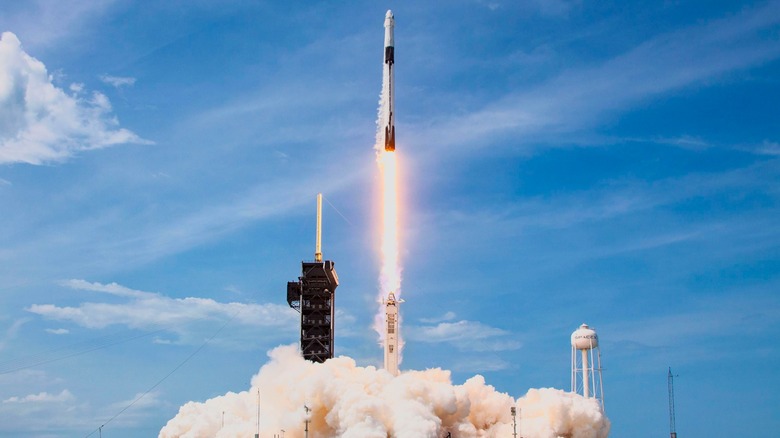
You can probably attribute Starlink's satellite launching spree to the company's attempts to keep up with its explosive growth. The company isn't planning to stop anytime soon, so it's probably going to need a lot more satellites.
As of writing, SpaceX and Starlink are functioning under an agreement with the U.S. Federal Communications Commission to launch a total of 12,000 satellites. However, Starlink has filed the paperwork needed for approval to launch an additional 30,000 satellites, which would bring the total up to 42,000. Of course, as previously stated, we know of 10 nonfunctioning Starlink satellites, and well over 1,500 have fallen out of orbit ever since Starlink started launching satellites, so it's unlikely all 42,000 would work at any given time or stay aloft for long.
We also have to mention that SpaceX is seeking approval to launch up to one million more satellites. Unlike Starlink's communications satellites, these orbiting installations would be AI data centers, which many people (including the CEO of NVIDIA Jensen Huang) think is a bad idea. More importantly, according to Space.com, the deputy executive director at the British Royal Astronomical Society, Robert Massey, believes that one million active satellites would destroy the night sky for everyone on Earth and make it almost impossible — or at least incredibly difficult — to observe distant stars with ground-based telescopes. This might be one milestone many people hope SpaceX never achieves.