

Apple Just Discontinued The Iconic Mac Pro - Here's Why
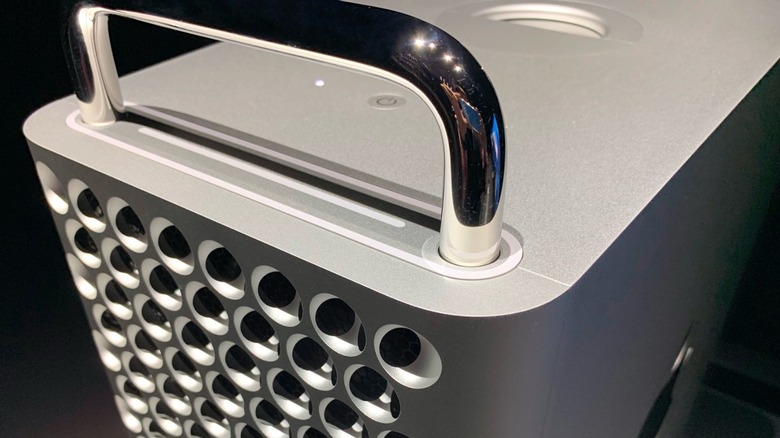
Apple has now discontinued the Mac Pro and the Pro Display XDR, seven years after introducing them at WWDC 2019 in San Jose, California. While the Pro Display XDR was replaced earlier this month by a new Studio Display XDR, Apple has just removed the Mac Pro from its stores. It's confirmed to 9to5Mac that it has no plans to offer future Mac Pro hardware.
Even though Apple didn't elaborate on why it discontinued the Mac Pro, several reasons are likely behind this decision. The computer has a high price point, lacks regular updates, and seemingly doesn't fit Apple's current lineup of Macs.
Since the Mac Pro's introduction, Apple offered few updates to this computer. It appealed to high-end customers in the pre-Apple Silicon era due to its flexibility and ecosystem compatibility, as it offered multiple PCIe slots, user-replaceable GPUs, and RAM upgrades to very high capacities. The M2 Ultra version introduced in 2023 continued to offer PCIe slots, but they couldn't be used for GPUs. Now, with the recent release of the M5 Max chip and rumors suggesting that a M5 Ultra Mac Studio is just around the corner, Apple decided to let go of the latest iteration of the Mac Pro.
The Mac Pro isn't compatible with the Apple Silicon era
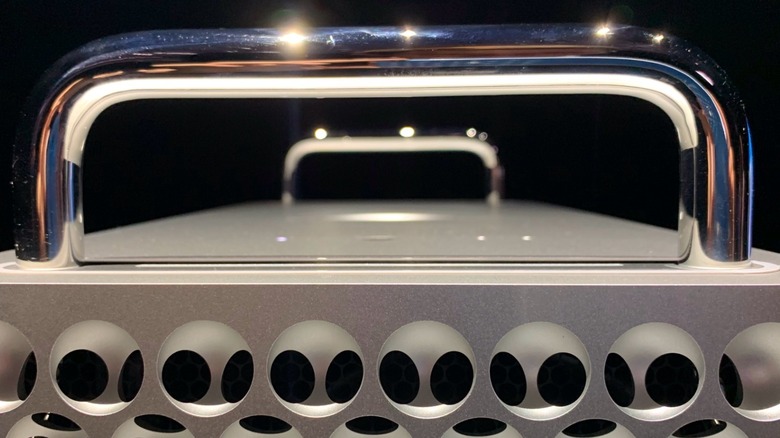
The Mac Pro introduction marked the last public appearance of Jony Ive with Apple. While this wasn't the last product he influenced before leaving the company and opening his own firm, LoveFrom, it's still a mark of an era that is no longer here.
With Mac Pro's starting price point of $5,999 in addition to $700 optional stainless steel wheels, the product didn't have reasons to exist in the Apple Silicon era. After all, many of the perks of the Intel version weren't available with Apple Silicon. With the introduction of the Mac Studio in 2022, it just became clear that Apple could make an incredibly powerful computer tower, which was double the size of a Mac mini, and for way cheaper. Besides that, when macOS Tahoe 26.2 introduced RDMA over Thunderbolt 5 to connect multiple Macs at once, this finally gave Apple users what they needed to replace the Mac Pro: the ability to scale performance.
In addition, Bloomberg's Mark Gurman previously reported that Apple had already decided to abandon the Mac Pro and would focus on the Mac Studio as the "present and future of Apple's professional desktop strategy."
Studio is the new Pro, and Apple is promoting it
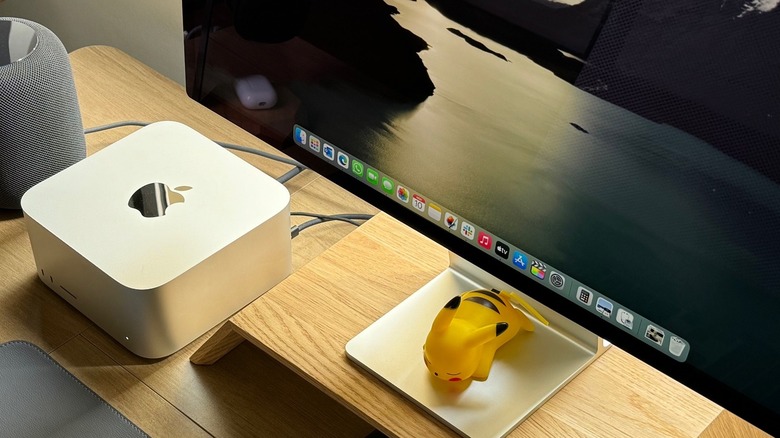
While Apple doesn't discuss most of its decisions publicly, the company gives hints on where it's going. That said, when it discontinued the Pro Display XDR and released the Studio Display XDR, it gave a clear sign that the "Studio" brand for Macs could actually mean "Pro." With the retirement of the Mac Pro, now the Mac Studio is Apple's most powerful computer. Soon enough, it will get even more powerful, as the company is expected to unveil the M5 Ultra chip by WWDC 2026.
Even though the Mac Studio will likely continue to feature the same design, the M5 Ultra will mark a huge milestone for this computer, as Apple changed how it develops these chips. For example, the M5 Pro and M5 Max have the same number of CPU cores, but the company scaled their GPU cores, memory bandwidth, and shader cores independently. With that, Apple can improve real-world performance without wasting power on unused CPU capacity, keeping thermals manageable while still delivering big gains where it actually matters.
Besides that, with other internal upgrades, Apple will just push its more demanding customers toward the new Mac Studio and Studio Display XDR, if they want the best the company can offer. While this change might not please some users, the company actually makes the Studio Display a better fit for more customers, instead of just targeting a niche audience with the Mac Pro and the Pro Display XDR.