

NASA Wants To Spend $20 Billion To Build A Permanent Moon Base
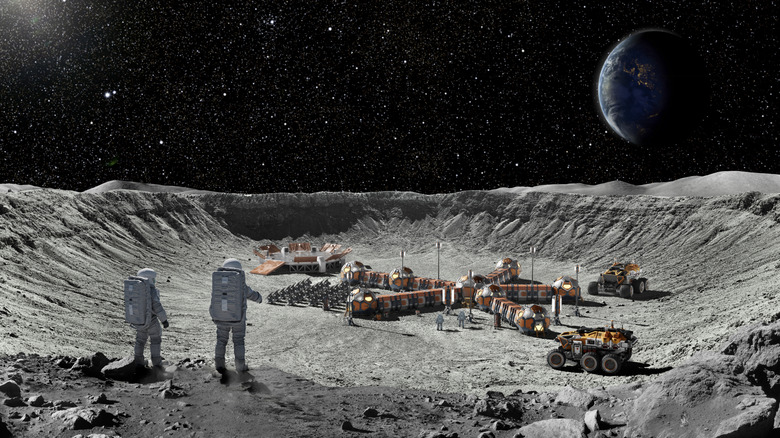
As part of the NASA "Ignition" event, the organization unveiled lofty plans to build a permanent base on the lunar surface to "establish an enduring presence" as well as "do the other things needed to ensure American leadership in space," as explained by current administrator Jared Isaacman. Despite some recent setbacks with the Artemis missions, it appears NASA is still full-speed ahead in establishing a presence on the moon. NASA's previously scheduled Artemis III moon landing was cancelled, or more realistically, pushed up with another interim mission — the actual moon landing will happen during Artemis IV.
But that hasn't stopped the NASA team from looking forward to future missions beyond, like Artemis V. That's where the phased approach to building a moon base has been seriously introduced, happening in three phases that will include: Phase one for building, testing and learning, Phase Two for establishing the early infrastructure, and Phase Three to achieve long-duration human presence on the moon. To build the base over the next seven years, NASA plans to spend over $20 billion. That's a hefty fee.
Mostly, Isaacman shared plans to work with commercial parties to achieve this overarching mission. They want "no fewer than two launch providers," with crewed landings planned every six months. Isaacman also pledges that "America will never again give up the moon."
What will NASA build with the $20 billion?
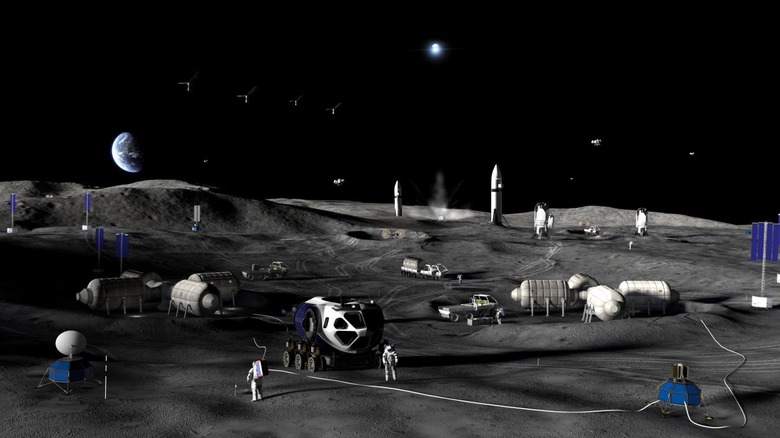
In a separate fact sheet and digital presentation available from NASA, we can see almost exactly how the moon base will be constructed. It'll eventually have living habitats, likely research facilities, pressurized rovers to move around the lunar surface, and nuclear power systems. Everything will be built near the moon's south pole, near the site where Artemis III was originally planned to land.
Starting with a "rapid series of robotic" and initially uncrewed missions, phase one will involve scouting out the location for the base. Phase two will be the start of early habitation, where solar and nuclear-based power stations are established, enhanced communications will be powered up, and any necessary cargo will be delivered — up to 60 tons. Finally, phase three is when NASA aims to establish a long-term human presence with semi-permanent habitations modules, additional power solutions, and extra supplies needed to thrive and survive.
Of course, leading up to that iconic mission, NASA still has Artemis II scheduled, which will be further supported by Artemis III, and eventually IV, the first landing in decades. If all goes according to plan, the Artemis IV and possibly Artemis V moon landings will happen in 2028. NASA is conducting a variety of experiments to help improve survivability on the moon. For example, a unique experiment may have revealed how we can use lunar soil to create oxygen, but so far, it's only been used in a simulated environment.