

The Reason Why EV Tires Wear Out So Much Faster Than Tires On Gas Cars
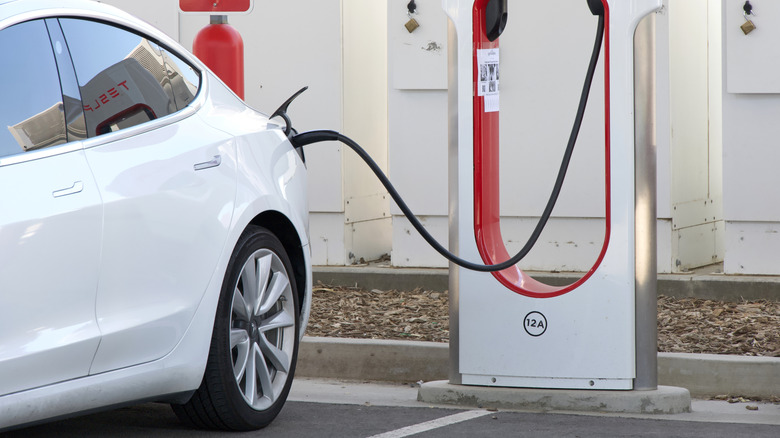
Electric vehicles continue to grow in popularity, especially as we see new EV battery tech that helps these vehicles challenge what traditional gas cars have to offer, with longer ranges and additional features. However, despite the advancements that many of these newer vehicles might have made, there's still one problem that plagues EV owners: tire wear. But why are EVs more prone to tires wearing out faster than regular gas vehicles? It turns out there are quite a few different factors at work here.
It's important to acknowledge just how much more quickly EVs can wear through tires. Scott Clark, a former Michelin executive, shared in 2021 that EVs tend to wear out their tires up to 20% faster than standard gas vehicles. Whether that exact percentage remains true over five years later is unclear; however, not much about how EVs work has changed drastically in that time period — they still have more instant torque than gas-powered cars, and often tend to weigh more. This all puts more pressure on the tires, which is what causes them to wear out more quickly.
There's also another factor to consider, too, and that is the fact that electric cars need to use tires made specifically for EVs. Michelin explains that EV tires are built to take advantage of "advanced techniques" and that this helps to provide a strong and high-performance spine for the tire, which the company refers to as a "tire carcass." Some of these tires even have different belt angles, which can help optimize the shape of the tire.
Weight and design make EV tires wear out quicker
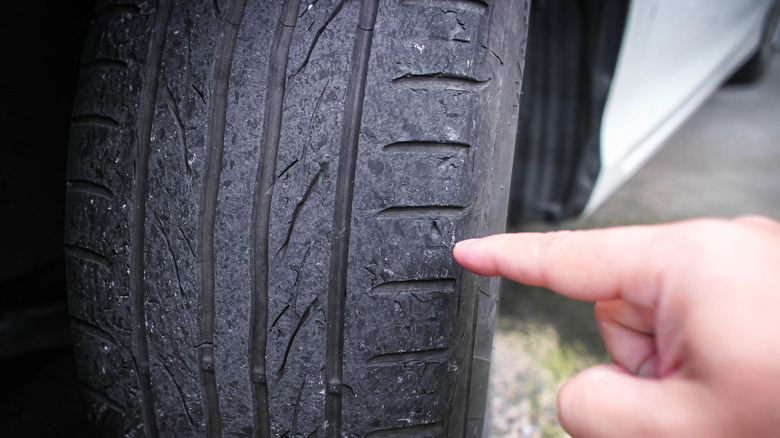
If you own an EV, then understanding why the tires wear out is key to finding ways to increase the longevity of your tires as a whole. As we noted above, vehicle weight and the amount of instant torque — which is essentially what provides the EV's increased acceleration from standstill to moving and its improved handling — are both key factors in why EV tires wear down like they do. This requires more friction during acceleration, which means that the tires need to provide more traction. Some EVs might even require special tires to help offset the cost of the vehicle's increased instant torque and weight.
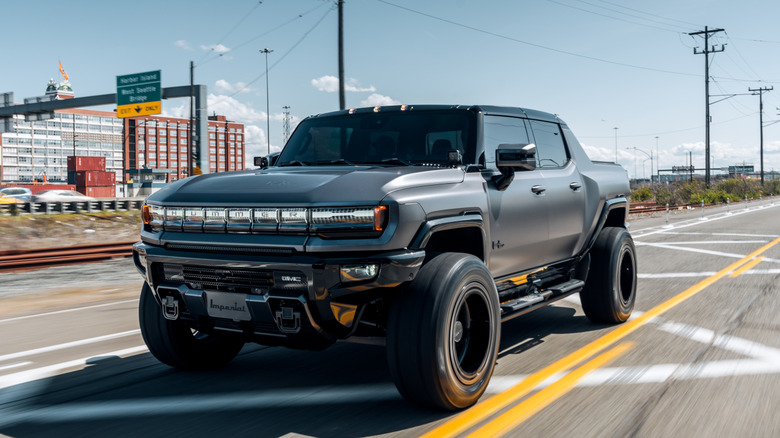
While there's not much that can be done to offset the cost that comes with instant torque — at least, not without drastically changing how EVs work — there are things you can do to counteract the weight. As it stands, some electric variations of popular vehicles can weigh upwards of 3,000 pounds more than their standard gas counterparts. A lot of this comes down to the expensive and heavy battery cells that are in the vehicle. As we see new developments in EV battery tech, those weights will undoubtedly shift. However, many of those developments still feel years away from actually reaching mainstream adoption.
There's also the fact that many EV tires are designed for reduced (or low) rolling resistance, which helps increase driving range and lower road noise. These tires often include stiffer sidewalls, treads that are narrower and lower in depth, as well as compound in the tread that is harder. The makeup of the tire, of course, can drastically affect how long the tires last, and less tread depth can lead to overall shorter tire life.
How to get more out of your EV tires
Michelin recommends that choosing tires that are specifically designed for the profile of electric vehicles can be one of the best ways to ensure your tires last as long as possible. Additionally, following simple maintenance routines such as rotating and aligning the tires on your vehicle can also help make sure your tires are prepared for your daily journeys, while also keeping your car running in optimal condition. And, of course, keeping an eye on tire pressure and ensuring that you're always driving on properly inflated tires — though many of these tips also apply to gas-powered vehicles, too.
Further, the company says that while taking advantage of the instant torque that EVs offer can be thrilling, it's best to minimize how often you're pressing down hard on the gas pedal. This helps reduce the amount of friction being put on the tires to take off quickly, thus giving them a bit more durability in the long run. Ultimately, one of the best ways to get more life out of your EV's tires will be preparing in advance by buying tires rated for longer lifespans. That also increases the average price of your EV's tires, and isn't always a foolproof plan, especially with the instant torque factored in, but it can at least give you some additional peace of mind.