

China's Hypersonic Wind Tunnel Leaves America In The Dust
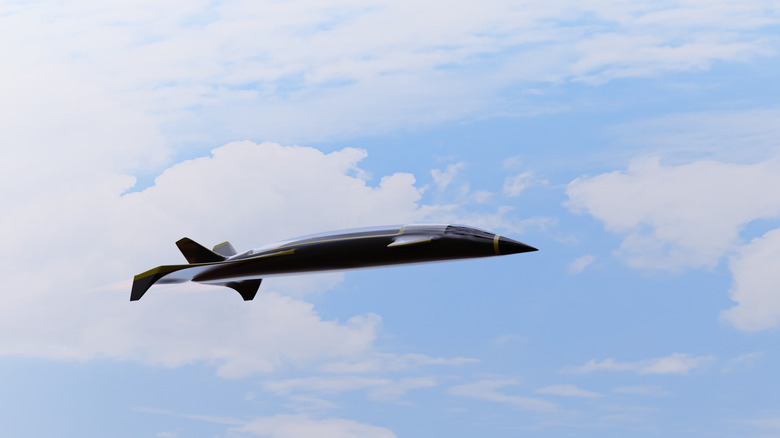
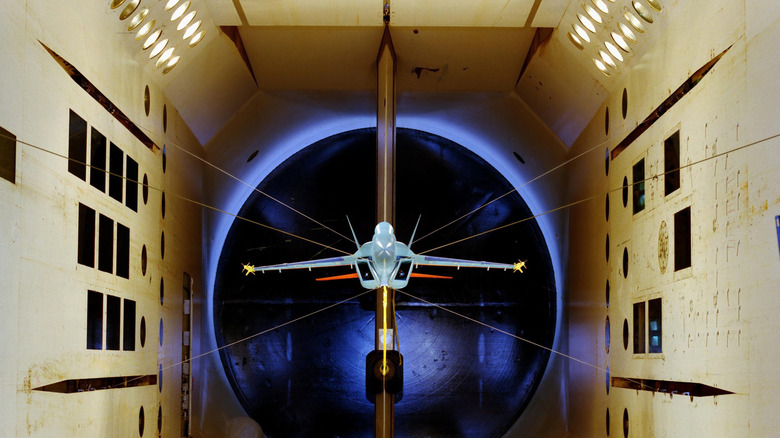
Since passing its final evaluations in May of 2023, China's JF-22 wind tunnel has been open for hypersonic tests, enabling the country to take advantage of its insane simulation abilities. While China isn't the only country to have built and begun using its own wind tunnel, the JF-22 has become pretty widely known around the world for being the world's fastest wind tunnel. The tunnel, which began construction in 2018, is 167 meters long and has a diameter of four meters. It is designed to simulate the environment in which a spacecraft re-enters Earth's atmosphere, which could allow China to accelerate the development of its various hypersonic flight systems (potentially including hypersonic missiles that could reach the U.S.) exponentially.
While impressive, the JF-22 is not the first wind tunnel in the world to be capable of insane speeds. Several others have been able to hit at least Mach 20 over the years. However, it does appear to be the first to be capable of simulating experiences up to Mach 30 — which puts it far above what is considered to be the United State's most advanced wind tunnel, LENS II, which can only reach Mach 7. Additionally, reports suggest that China's JF-22 can also run for an average of 130 milliseconds, while the LENS II reportedly only has a runtime of 30 milliseconds.
Putting America's tunnels in the wind
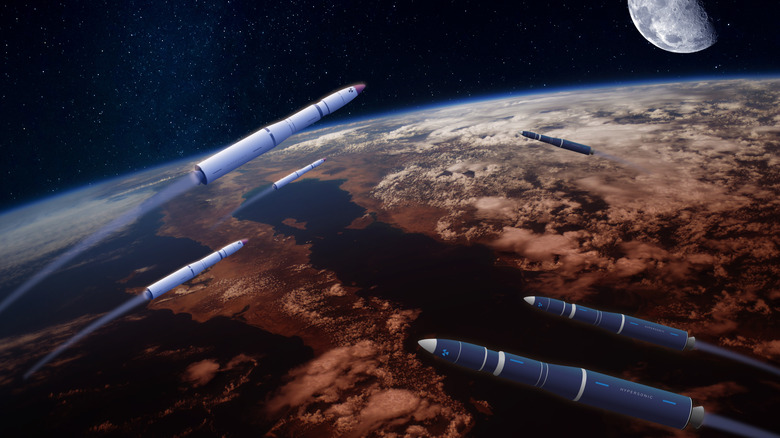
To help put all that into a bit more perspective, Mach 30 is essentially 30 times the speed of sound, or roughly 23,000 miles per hour. That's insanely fast. NASA's space shuttle program — which ran for nearly 30 years — would often reach speeds of close to Mach 25 when re-entering Earth's atmosphere. So, being able to simulate even higher than those speeds could indeed help China in its pursuit to create stronger, faster spacecraft designed for traveling across the final frontier of exploration.
However, what really helps set the tunnel in China apart from others, according to reports, is how it uses a unique chemical setup to trigger its hypersonic conditions. Instead of relying on the typical mechanical compressors seen in many other wind tunnels, reports say that China's JF-22 uses chemical explosions instead. Additionally, it's reportedly capable of generating up to 15 gigawatts of power. That is roughly 70% of the power capacity installed in Three Gorges Dam, which is the world's largest hydropower dam and is even believed by some to slow the Earth's rotation slightly. These claims have led to some claiming that China's wind tunnel is "20 to 30 years ahead" of western development (via South China Morning Post).
Will America build something better?
What's important to note here, though, is that many of America's wind tunnels are only designed to test Earth-based flight vehicles that need to reach hypersonic speeds. So, while they can be used to test spacecraft design, too, they aren't designed for the high speeds, at least based on all the publicly available information. Additionally, some are concerned about the state of the air chemistry that chemical explosions can cause, and how it might not be a direct representation of real flight.
There is, of course, a lot going on behind the scenes, and a lot isn't openly available to the public. We know that NASA did much of its early launch system testing through wind tunnels like the Unitary Plan Wind Tunnel, which is located at the NASA Ames Research Center. That tunnel was only capable of reaching Mach 0.2 to Mach 3.5. However, additional digital simulations were able to help bridge the gap in the knowledge and data needed to test the craft. Whether or not we'll ever see an American tunnel that can truly stand up to what China has achieved is hard to say, especially since it seems the U.S. Department of Defense Innovation Unit was discussing moving away from physical testing a few years ago. But, America will have to do something if it truly wants to face down the challenges associated with hypersonic jets that it is currently coming up against.