

Here's What Every Different Keyboard Switch Color Actually Means
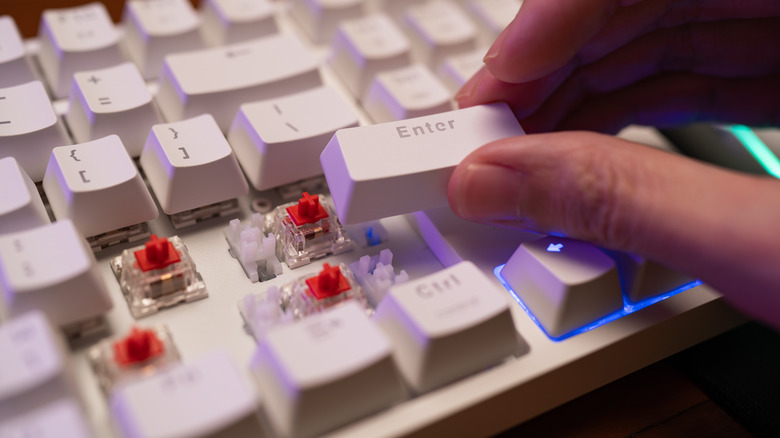
Mechanical keyboards are highly customizable, allowing you to tweak almost every aspect of the typing experience. It just depends on how deep you want to go. One of the things you can customize is the keyboard switches, the mechanisms that determine how keystrokes are registered when you press the keys. There are several types of switches, and it can be hard to choose which one is the right fit for you. The good thing is that they're color-coded, with each one having its own feel and sound.
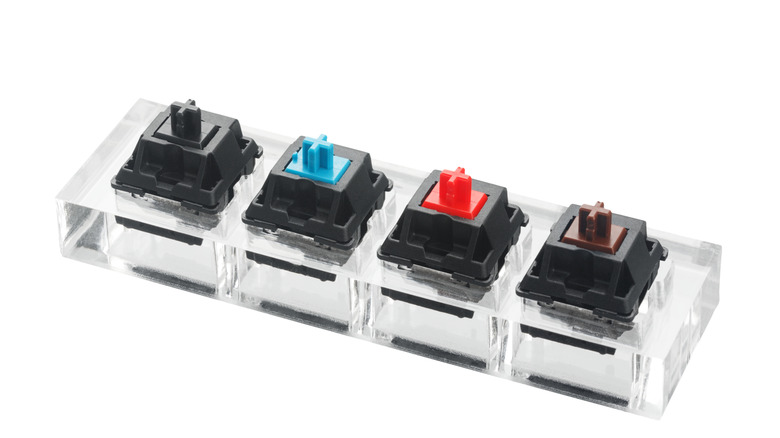
The most common keyboard colors are red, blue, brown, black, and yellow. Each color belongs to one of the three categories of keyboard switch types: linear, clicky, and tactile. Linear switches are smooth with no noticeable resistance (bump) or click at the point of actuation (where the computer recognizes the input). Clicky switches have both a click and a bump. Tactile switches have a bump but no click.
Once you get a good understanding of these, you'll be able to match every key color to the purpose you have in mind for the mechanical keyboard. One of the most popular uses for a mechanical keyboard is gaming, such as pairing the keyboard with a Steam Deck. Another is typing anything from notes and articles to code and data entry. But the best part is that you can mix and match switches to create a unique combination that matches your preferences. Mechanical keyboards are so popular that they've even found their way into the realm of fidget toys for tech enthusiasts.
Common keyboard switch colors explained
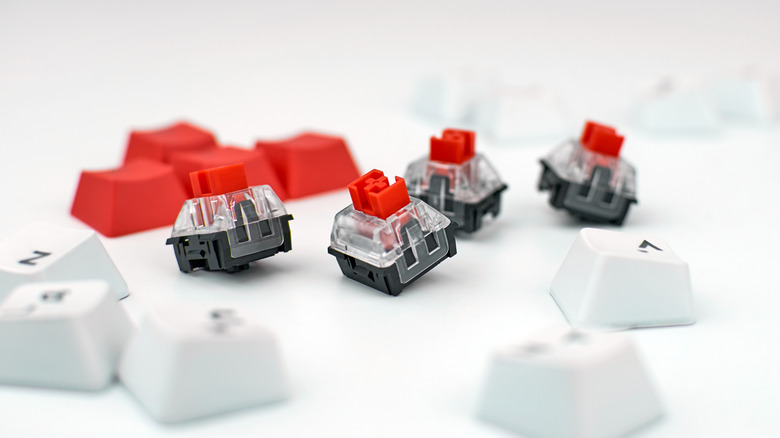
One keyboard switch color you'll encounter the most is red, which is a linear switch known for having a low actuation force of about 45 grams. This means you don't need to push it hard to register input or actuate. Other common switch colors are yellow and black, both of which are linear. A yellow switch has a moderate actuation force of about 50 grams, while a black switch has a high actuation force of about 60 grams. Red switches are popular among competitive gamers because they allow for quick activation and spamming of abilities. Black switches are generally preferred by typists because they offer more precision, and yellow switches sit somewhere in the middle.
Another well-known switch color is blue, which is the clicky kind. Gamers usually stay away from these because they have a higher actuation force of between 50 and 60 grams. They're a favorite among people who type a lot, such as writers, journalists, transcriptionists, and computer programmers, because they are highly precise. However, they aren't suitable for quiet spaces, as the clicks can be loud.
The last common color is brown, and it is a tactile switch with a moderate actuation force of between 45 and 55 grams. It can be used for both gaming and typing since it mixes speed with precision. It's also great for people who make a lot of mistakes when using red switches because the bump provides noticeable feedback, preventing them from easily activating a key or pushing it all the way down (bottoming out).
Less common keyboard switch colors
There are switches that are less common because they cater to very specific use cases. Take the silver switch, for example, it's linear and has a shorter stem. Because of this, it has a short travel distance, effectively lowering its actuation point and making keystrokes register faster than a red switch. It's very imprecise for typing, but good for competitive gamers who value speed over precision. Still, mechanical keyboards with silver switches are cool gadgets for any gaming setup that even casual players can use to enjoy button-mashing games.
Another less common color is the clear kind, and it's a tactile switch with a very high actuation force. It's specifically for typists who want a slower and more deliberate typing experience. When using a mechanical keyboard with these switches, you will really feel like you're typing because you need to put some power into pressing the keys. Finally, you have the rare green switches that appeal to people who want the extremely loud click of an old typewriter. They also have a higher actuation force than blue switches.