

Here Are TSA's Battery Restrictions For Your Carry-On Luggage
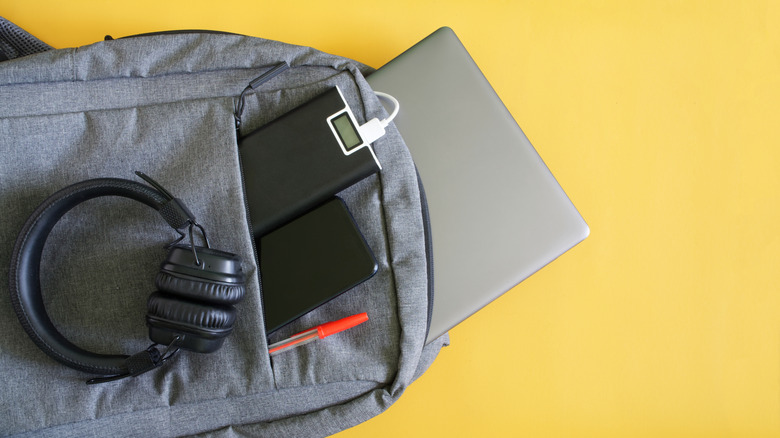
Many of us frequently travel with batteries in some form or another as part of our gadgets. So it's extremely important to be aware of what you can and can't put in your carry-on luggage for the flight. This is crucial for everyone's safety in the aircraft, as lithium batteries are at risk of something called thermal runaway, which can cause fire. The Federal Aviation Administration (FAA) and Transportation Security Administration (TSA) have clearly defined rules for electronics, including batteries, that you need to adhere to for smooth air travel. These are important because not following these rules and carrying red flag electronics can get you into trouble during security checks or while boarding your flight.
FAA regulations around batteries in carry-on luggage can be broadly divided into two categories: rules regarding spare or uninstalled lithium-ion or lithium-metal batteries, including power banks and phone cases with built-in batteries, and rules regarding gadgets with built-in batteries, such as your laptops, smartphones, and more. Here's everything important you need to know about carrying batteries on a flight.
Power banks, spares, and other uninstalled batteries
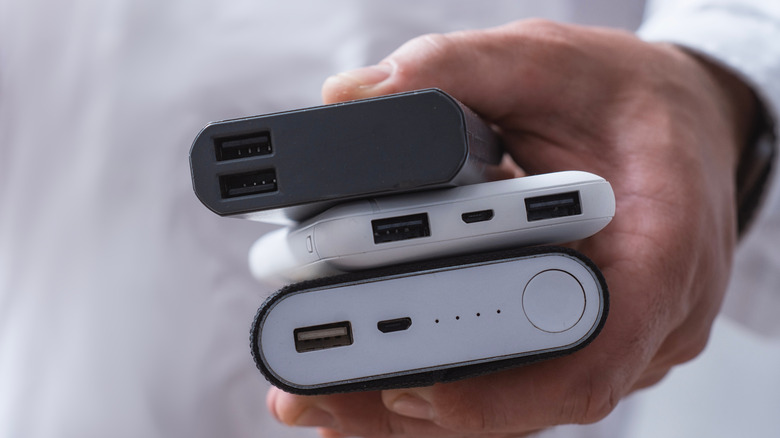
FAA rules are pretty clear when it comes to carrying batteries in your luggage. You can only carry spare (such as for a camera) or uninstalled batteries, including portable chargers for mobile devices, in your carry-on luggage. If you are asked to check in your carry-on at the boarding gate, you'll have to remove any spare batteries and carry them with you in the aircraft cabin.
Although there is no restriction on the number of batteries you can carry with individual capacities below 100 watt-hours, TSA does note that you need airline approval to carry any batteries of higher capacity. Even with approval, you can only carry two spare batteries with capacities ranging from 101Wh to 160Wh, which covers most consumer-grade battery products. It's important to remember that you can only carry batteries for personal use, and anything for sale or distribution, including samples, isn't allowed. Batteries bigger than 160Wh in capacity are also forbidden to carry.
If you aren't sure about the capacity of the battery you're carrying in watt-hours and only have the value in milliampere hours (mAh) or ampere hours (Ah), the FAA has an accurate calculator on its website to convert the values. Or, you can simply multiply the Ah value by the battery's voltage to get the capacity in Wh.
Gadgets with built-in batteries
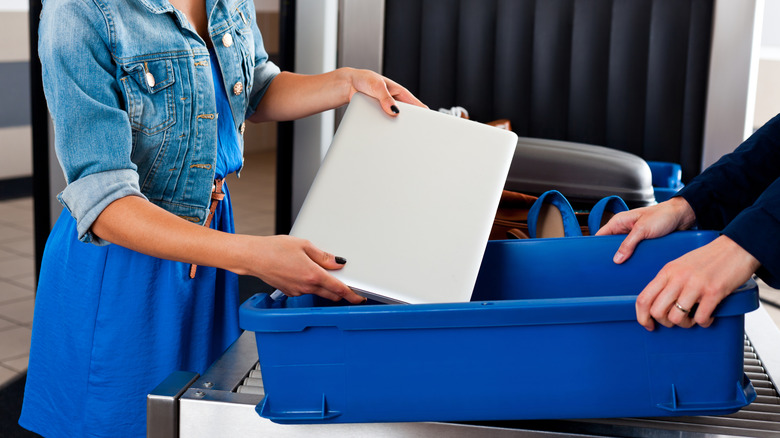
Any gadgets with a built-in battery, including your smartphone, tablet, laptop, and camera, should ideally be carried in your carry-on luggage, with any power bank and uninstalled batteries, says the FAA on its website. However, you are allowed to check in such gadgets as long as they are completely turned off and cannot be turned back on unintentionally. If there are any gadgets that are capable of producing extreme heat, the FAA recommends removing the battery to avoid any mishaps before checking in your luggage. More importantly, you can't check in your electronic cigarettes and vaping devices, and both should be carried on your person or in the carry-on, after removing their battery and packing them properly.
The capacity and quantity restrictions for batteries in checked-in luggage are the same as those for carry-on luggage. So, you can carry any number of gadgets with a built-in battery, granted all are for your personal use and have a capacity under 100Wh. If you have gadgets with batteries between 101Wh and 160Wh, you will need airline approval, and nothing beyond these capacities is allowed, even in checked-in luggage.