

3 Reasons Why The Mac Pro Failed
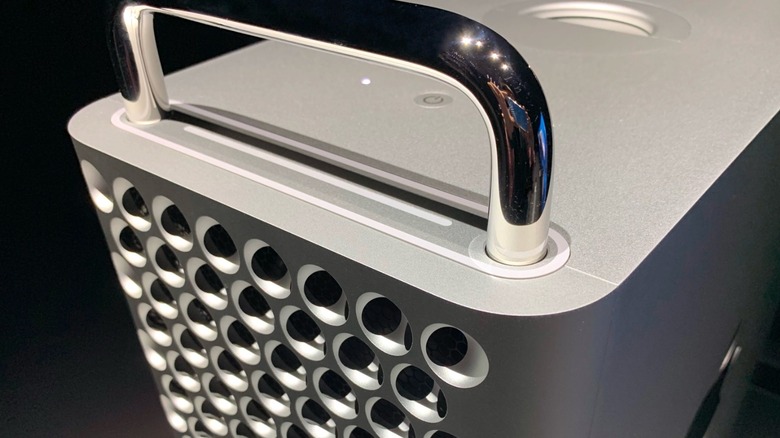
In March, Apple announced what most of us saw coming for years, the end of the Mac Pro. Without a public statement or a post on its Newsroom, the company just confirmed to 9to5Mac that the Mac Pro was no longer available for purchase and there was no plan for additional hardware in the future–finally putting an end to a controversial lineup first introduced in 2006, when the company was still transitioning from PowerPC to Intel. Still, the main reasons why this product failed are that it was too expensive and it wasn't made for the Apple Silicon era, where Apple was able to make everything thinner, faster, and a lot more energy efficient.
Interestingly enough, the Mac Pro saw several ups and downs throughout its life. It is one of the few products for which Apple has apologized publicly, claiming the infamous "trash can" design (available from 2013 to 2019) wasn't ideal to upgrade the product. After that, Apple released the updated "cheese grater" version, which resembled the original model a lot more and was also way more versatile.
The last iteration of the Mac Pro, which featured the same design when Apple transitioned this computer from Intel to Apple Silicon, was a machine built for a very specific niche. While it should've been future-proof, its lifespan was unexpectedly too short. Here's every reason why the Mac Pro failed, despite being an Apple staple for years.
Too expensive
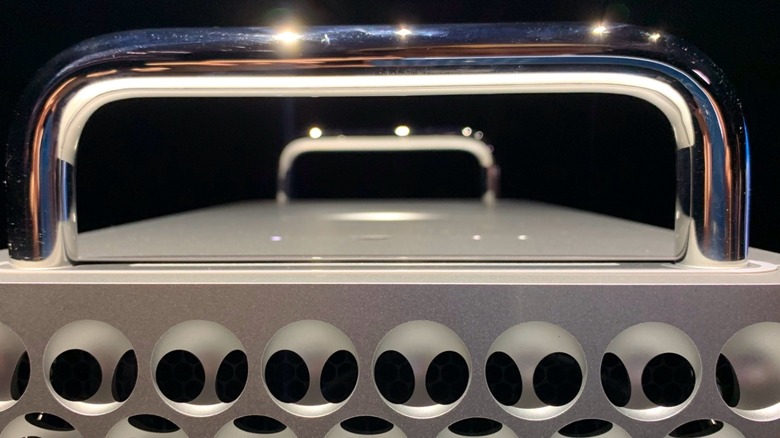
The new Mac Pro was unveiled during the WWDC 2019 keynote in San Jose, California. This event also marked the last time Jony Ive and Tim Cook appeared together in a product launch. At the time, this product had the "cheese grater" look which resembled Jony Ive's style. Apart from being visually pleasing thanks to all the aluminum and stainless steel construction, the holes in the Mac Pro made enough room for proper airflow.
This unique design, which had premium specs, also came at a big price. This device started at $5,999 with a 3.5GHz Xeon W processor, 32GB of RAM, a Radeon Pro 580X with 8GB of GDDR5 memory, and only 256GB SSD storage. A fully specced-out version would be available for $52,199, while you could also pay extra for $400 stainless steel wheels.
Four years later, the company introduced the last product in its transition from Intel, the M2 Ultra Mac Pro. While its starting price rose to $6,999, its maximum price got way "lower" as it would go up to $12,999 with the M2 Ultra chip, 8TB of SSD storage, and 192GB of RAM, in addition to eight Thunderbolt ports and six PCI slots for modular expansions. The stainless steel wheels also got more expensive and were sold for $700. For contrast, the Mac Studio, which only lacked PCI slots, was a fraction of the price with the same M2 Ultra chip.
Not made for the Apple Silicon era
As mentioned before, the Mac Pro was the last Mac to transition to Apple Silicon, and it's interesting to see how much it lost modularity during that process. After all, the M2 Ultra has unified graphics and memory, which means a lot of internal space from the Intel model was just cut, giving it a more "empty" look. While Apple added eight Thunderbolt 4 ports, up from four Thunderbolt 3 ones with the previous model, the only reason to buy this new Mac Pro was PCIe support, as you could add fiber channel cards, fiber networking cards, video and audio I/O cards, storage cards, and Ethernet cards. However, you couldn't change CPU, GPU, or memory.
In other words, while Intel Mac Pro users could have up to 1.5TB of memory, the limit for the new model was "just" 192GB. While Apple claimed the M2 Ultra was up to three times faster than the top-of-the-line Intel Mac Pro and up to seven times faster than the base configuration, it was evident that the product wasn't designed with Apple Silicon in mind.
Apple made an even better replacement
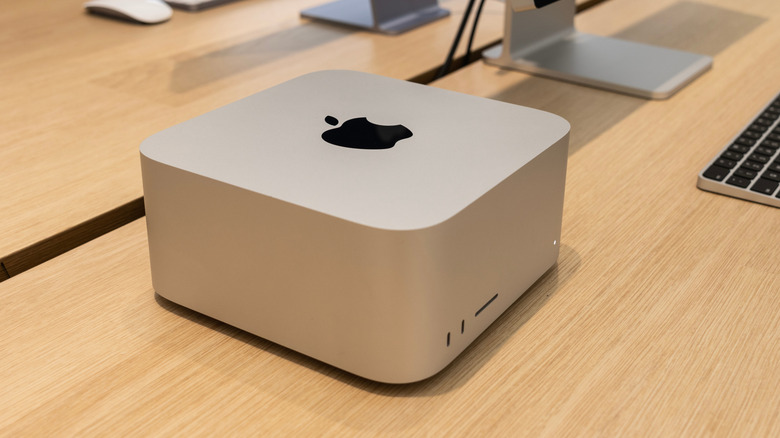
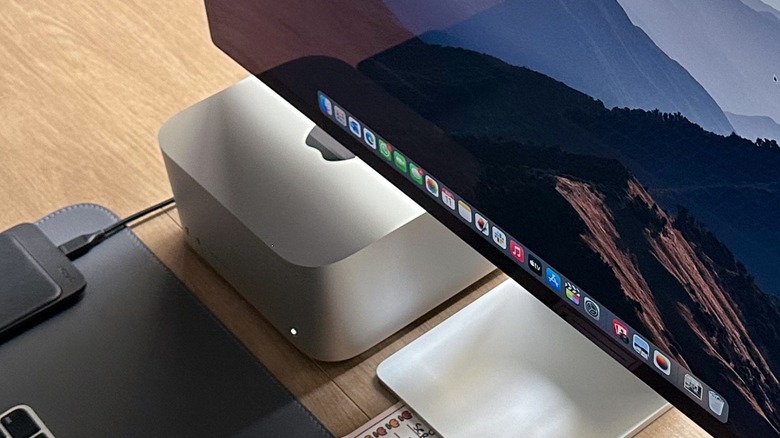
Last but not least, another big reason why the Mac Pro failed is because Apple introduced its true replacement in 2022, the Mac Studio. This device looks similar to a bigger Mac mini, and it represents how powerful a tiny tower can actually be. What was first pitched as a middle ground between the Mac mini and the Mac Pro, suddenly became Apple's most powerful machine. First powered by the M1 Max and M1 Ultra processors, the Mac Studio can now be customized with the M3 Ultra or M4 Max chips.
Even though Apple recently halted the 512GB memory option, most likely due to the global RAM shortage, there are rumors that at the upcoming WWDC, the company will unveil new M5 Max and M5 Ultra options, making this already "Pro" device even more powerful.
Combining this updated (both internally and externally) Mac with the cluster feature introduced with macOS Tahoe 26.2, users can get crazy fast speeds without paying the premium price of the Mac Pro. Besides that, Apple discontinued a variety of products from its lineup, including the Pro Display XDR and replaced it with a new Studio Display XDR. It shows that "Pro" for Apple now means "Studio," even if some really advanced features get left behind. More importantly, however, is that the company moves from a product very few could buy, to one that it's actually feasible not only for demanding customers, but really pro ones as well.