

Samsung Galaxy Watches Finally Have A Feature That Apple Has Had For A While
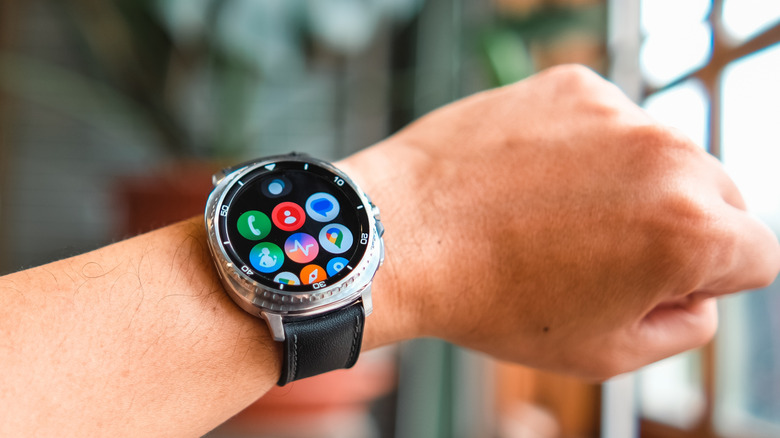
If you're a Samsung Galaxy Watch loyalist and wouldn't buy products from competitors like Apple, the company has some good news for you. While Samsung's Galaxy smartwatches and Apple's alternatives typically go toe-to-toe on several fronts, sometimes the Cupertino giant has the upper hand over its South Korean competitor. For example, even though both the Samsung Galaxy Watch and Apple Watch have health sensors for ECG and body temperature, Apple's smartwatches in the U.S. had an advantage over Samsung in blood pressure monitoring until now.
Apple introduced hypertension notifications on several models of the Apple Watch in 2025 by leveraging the existing heart rate. Now, Samsung smartwatches in the U.S. are finally getting a blood pressure monitoring feature a few months after Apple rolled out its version. The feature arrives seven years after the South Korean tech company first revealed plans to include blood pressure monitoring on its smartwatches.
Interestingly, Samsung Galaxy Watch users have had the feature in the company's home country for roughly six years since it was launched in June 2020. For the U.S. market, the company had to wait for approval from the U.S. Food and Drug Administration (FDA) before it could make the feature available on its Galaxy smartwatches.
How Samsung's blood pressure monitoring feature works
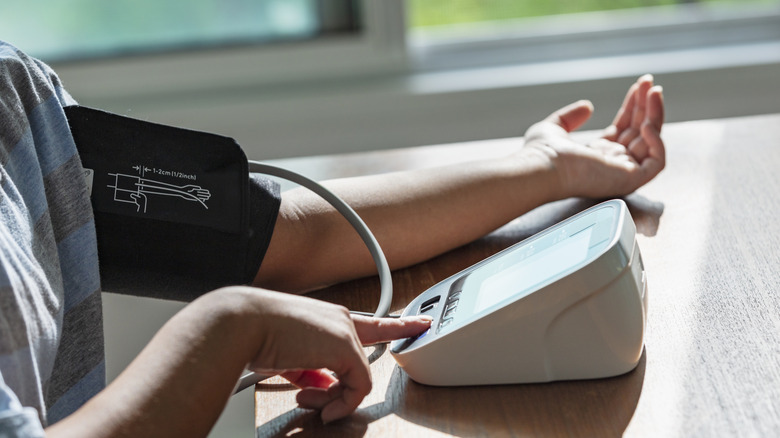
Samsung's blood pressure monitoring feature uses internal heart rate monitoring sensors available on the Galaxy Watch. These sensors are capable of measuring both the systolic and diastolic blood pressure levels in addition to your heart rate. However, unlike Apple's blood pressure monitoring feature, Samsung's feature comes with a twist. Before all of these measurements can happen in the background, the company requires you to use an upper arm cuff that is sold separately to calibrate your watch.
Additionally, Samsung requires you to recalibrate every 28 days to ensure that the blood pressure measurements are accurate. This periodic recalibration has also been a requirement for users in South Korea, where Samsung launched the feature a few years ago. That said, Apple too requires users who receive the hypertension notification to manually provide seven days of external blood pressure data.
But despite this requirement, which might come across as inconvenient for some, Samsung is making it clear that the feature doesn't make the Galaxy Watch a medical device. Samsung says that the feature "is not intended to prevent or diagnose high blood pressure." It's simply a useful smartwatch feature that can help you lead a healthier life.
What you'll need before you can use the feature
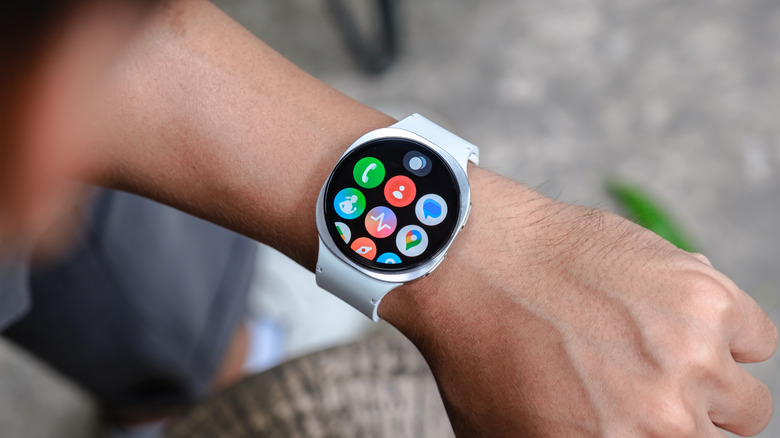
Samsung's blood pressure monitoring feature is a welcome addition to its smartwatches, but unfortunately, not everyone will have a chance to use it because of the requirements. First, the feature isn't available on all of the company's watches. According to Samsung, it's exclusive to the Galaxy Watch 4 series and later models as long as Watch OS 4.0 is installed.
Another key requirement that you'll need to meet, even if you have an eligible watch, is to get Samsung's Health Monitor app, which is only available to Galaxy phones running Android version 12 and newer. The app is available in Samsung's Galaxy Store, and you can download it on both your watch and your Galaxy smartphone.
Similar to Apple's implementation where you need to enable the Hypertension notification manually, you'll need to hop into Samsung's Health Monitor app to enable it by yourself. Finally, as previously stated, you'll need to get a traditional blood pressure cuff to calibrate your watch once every 28 days for accurate measurements.