

Amazon-Style Marketplaces Are Changing How Military Drones Reach The Battlefield
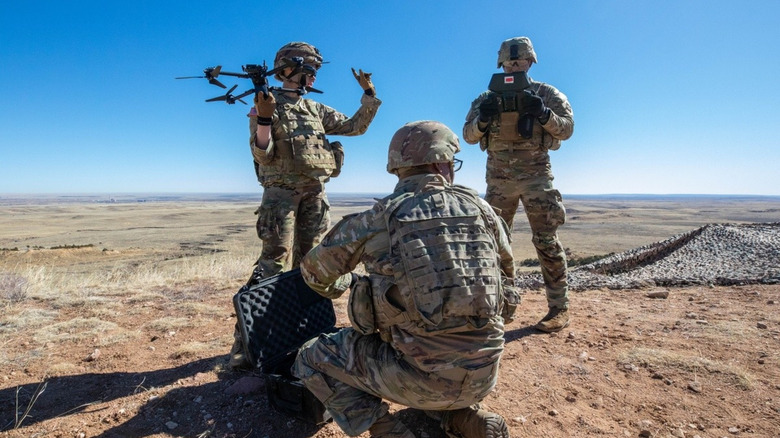
From presenting a novel threat to aircraft carriers to warping the economics behind traditional defense systems, drone warfare has substantially changed the calculus of the world's battlefields. Deployed to devastating effect in Ukraine, Iran, Lebanon, and Palestine, drones have revolutionized the scale, scope, and shape of modern conflicts. As booms in artificial intelligence continue to transform militaries around the world, global powers must get creative in deploying technology that can keep pace with the far-reaching capabilities of drones.
Given the changing texture of the Ukraine war — in which hundreds of drones volley back and forth between adversaries every day — speed, adaptability, and scale are of paramount concern. As retired General David Petraeus indicated in an interview at the 2026 New Orleans Book Festival, much of modern warfare is a numbers game; he emphasized that the future of warfare will entail "Ukraine producing 7 million drones per year," in contrast to its current rate of 4 million per year (via Bloomberg). This illustrates a major consideration in procurement. As it stands, traditional procurement processes can't meet drone deployment demand at scale. However, we're now seeing the launch of innovative e-commerce platforms on which soldiers can browse and order drones. These online marketplaces increase the speed at which frontline operators procure aerial drone systems.
The U.S. Army created one such system in the form of the Unmanned Aircraft Systems Marketplace, an Amazon-like platform on which U.S. military units, foreign allies, and other government partners can compare and order drones. The program comes on the heels of similar advances in Ukraine's military procurement systems, including two recently created government-made marketplaces on which frontline battalions can conveniently order drones and ammunition. While technological advancements may grab headlines, it's these kinds of streamlined procurement processes that may be the real key to winning the ever-changing drone wars.
The Unmanned Aircraft Systems Marketplace
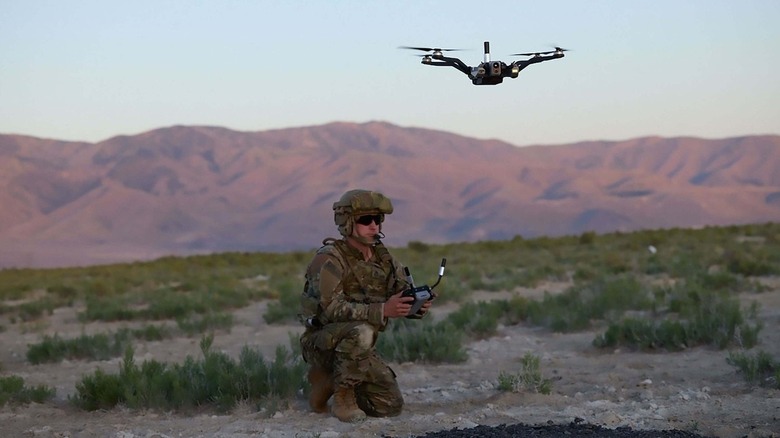
For the United States, the need for a drone marketplace was glaring. However, the Department of Defense's traditional procurement procedures are long, costly, and covered in bureaucratic red tape. According to the U.S. Government Accountability Office, the DOD takes an average of 12 years to deliver the first iteration of one weapons system. And while a more measured approach can be useful, being overly bureaucratic can also create gaping inefficiencies, particularly given the rate at which modern weapons and defense systems are changing.
In March 2026, however, the government launched the Unmanned Aircraft Systems Marketplace, a "one-stop shop" digital marketplace for the U.S. military and its partners to procure unmanned aircraft systems (UAS), per a press release by U.S. Army Public Affairs. The byproduct of a partnership between the Army's Enterprise Cloud Management Agency (ECMA) and Amazon Web Services (AWS), the platform allows visitors to directly compare drone systems. It even allows users to leave direct feedback, presumably similar to how Amazon reviews work.
As U.S. Army Acquisition Executive Brent G. Ingraham stated in the press release announcing the platform, "The UAS Marketplace is a prime example of how the Army is transforming its acquisition processes to be more agile, competitive and effective." According to Ingraham, the shop will allow the Army to tap into a "wider range of industrial innovators," primarily by "lowering the barriers to entry" for companies looking to market UAS solutions to the U.S. military. Other military officials have praised the system, as well; according to Colonel Danielle Medaglia, the Project Manager for the Army's UAS procurement efforts, "By fostering competition and innovation, we are ensuring that Soldiers have access to the most advanced technologies to meet their mission requirements. This strategy is about delivering capability at scale and at speed."
The Ukrainian procurement model
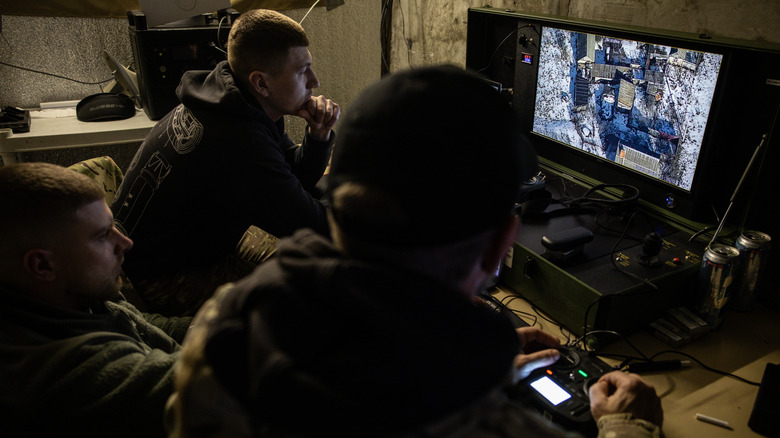
Much of the U.S.'s burgeoning drone program is influenced by lessons learned from Ukraine's conflict with Russia, in which drones have grown from being a relatively nascent tool to inflicting the majority of the casualties in the war. Spurring this development has been a commitment to experimentation and adaptability; while Ukraine has fought with converted consumer drones, it increasingly depends on domestically manufactured military drones to ward off hundreds of daily attacks.
To keep up with daily military advancements, soldiers had to start delivering the latest drone technology directly to the battlefield in real time. According to a New York Times report, the end result was a pair of online marketplaces that allow soldiers to peruse drones, gauge inventory levels, and order new systems to the battlefront. Used by 130 brigades as of November 2025, these programs allow commanders to order equipment directly from manufacturers using their brigade's credits. With this system, they can expect to receive new operation-ready equipment in 5 to 10 days. The system is even gamified, with brigades being able to earn tokens to purchase drone systems after successful operations — arguably a fitting circumstance, considering that some Ukrainian drones are actually powered by game controllers.
One marketplace launched in April 2025, Brave1 Market, features hundreds of models across a host of manufacturers. Brave1 itself is a joint initiative of several Ukrainian ministries designed to unify private companies, researchers, investors, and other interested parties in the development of military tech to support Ukraine. Following its success, NATO partnered with Brave1 to create the UNITE-Brave NATO development program, aimed at creating joint projects between Ukrainian defense manufacturers and NATO member countries. In July 2025, the Ukrainian government launched a second, smaller marketplace called DOT-Chain. Operated by the Ministry of Defence of Ukraine, the digital platform allows commanders to select from over 150 drone models and ammunition across 30 manufacturers.