

5 Of The Cheapest EVs You Can Buy New In 2026
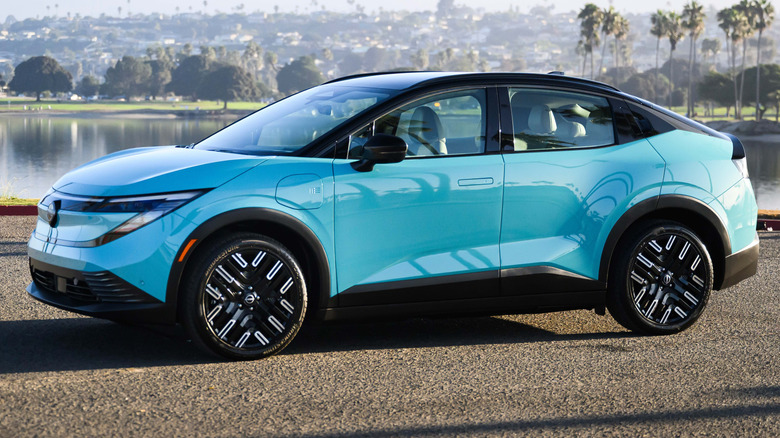
Electric vehicles (EVs) have been on a rollercoaster ride of adoption in the U.S. for the last several years. In 2021, General Motors said it would be carbon neutral by 2040 and Ford boasted of plans for up to 50% of its Stateside sales to be of the EV variety by 2030. But plans change and as of 2026, the global auto industry — including Ford and GM — has written down in the neighborhood of $70 billion due to difficulties with EV adoption.
In fact, the 2025 Hyundai Kona Electric would have made this rundown of the cheapest EVs currently for sale had the Korean automaker not paused its production for 2026. Needless to say, electric vehicles are having a tough go of it lately, but that doesn't mean fans of this gas-free form of transportation are without options. Like, say, the Lucid Air Sapphire. Here is an EV that makes 1,234 horsepower, goes 0 to 60 mph in 2.1 seconds, and costs $250,000.
If that kind of sticker seems high, the good news is there are plenty of far cheaper EVs on the market. In fact, we've pulled together five models that range in price from a high of about $36,000 down to less than $29,000. Here they are, ordered from most to least expensive — and in all cases, the prices shown reflect the base model inclusive of destination charges.
Subaru Uncharted: $36,445
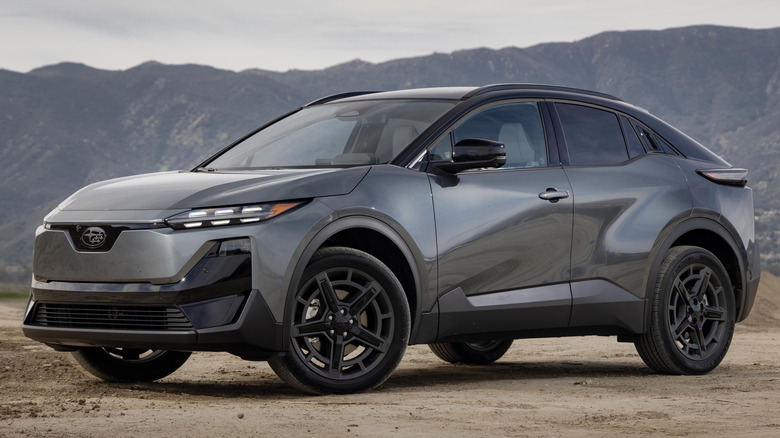
With the all-new Uncharted subcompact EV, the Subaru-Toyota electrified tie-up that began with the Solterra-bZ4X twins expands to the smaller Uncharted and Toyota CH-R. But Toyota's little EV starts $2,000 beyond the Uncharted, mainly because it is the rare Subaru that doesn't come standard with AWD. Instead, the base Premium model shaves cost by going the FWD route. It comes with a 75-kWh battery pack good for 308 miles of driving range and makes 221 horsepower.
Like many of its modern competitors, the Uncharted features a North American Charging Standard (NACS) port that means it can be charged at a Tesla Supercharger station. Do so, and you can take the battery from a 10% to 80% charge in 28 minutes according to Subaru. These entry-level Uncharteds come with 18-inch alloy wheels, rain-sensing windshield wipers, and dual rear spoilers for a bit of personality. Inside, buyers will find a 14-inch infotainment touchscreen with wireless Apple CarPlay and Android Auto, heated front seats, and dual-zone automatic climate control.
Rear legroom is on the small side at 32 inches, but maximum cargo space — with the back seats folded down — is relatively roomy at 60 cubic feet. Subaru's EyeSight suite of advanced driver-assistance aids (ADAS) brings adaptive cruise control (ACC), forward collision mitigation (FCM), and a lane-keeping system (LKS) to every Uncharted, and Active Cornering Assist can brake the inside front wheel automatically to improve handling in curves.
Toyota bZ: $36,350
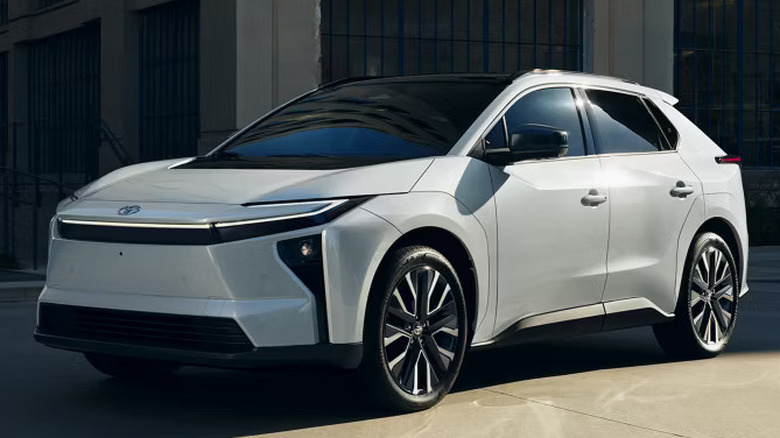
Formerly known as the bZ4X, Toyota has dropped the 4X and renamed its largest EV the bZ for 2026. Styling has been freshened up and more range is on the menu as well, with the base XLE variant offering 235 miles on a full charge of its 58-kWh battery pack. However, for an extra $3,000, buyers can upgrade to the XLE Plus and its 75-kWh pack that is rated for 314 miles of driving range.
In either case, a NACS charging port is standard and can fill up the battery from 10% to 80% in 30 minutes using DC Fast Charging. Toyota (and Subaru) is leading the way on infotainment touchscreen sizing as evidenced by the 14-inch unit in the bZ. Standard tech includes wireless smartphone mirroring, a 7-inch digital instrument panel, dual wireless phone charging pads, and a 3-year trial to Remote Connect. That latter connectivity system enables remote control of vehicle features like the door locks and engine start using Toyota's app.
It also comes with Digital Key capability, which allows owners to share their car keys digitally. Like every EV on this list, the 2026 bZ has two rows of seating. With both upright, cargo space measures 28 cubic feet, but you can fold down the back row to open up 57 cubes. Rear legroom is somewhat better than the Subaru Uncharted at 35 inches, and every new bZ comes with alloy wheels, LED exterior lighting, heated front seats, and a heated steering wheel.
Fiat 500e: $32,495
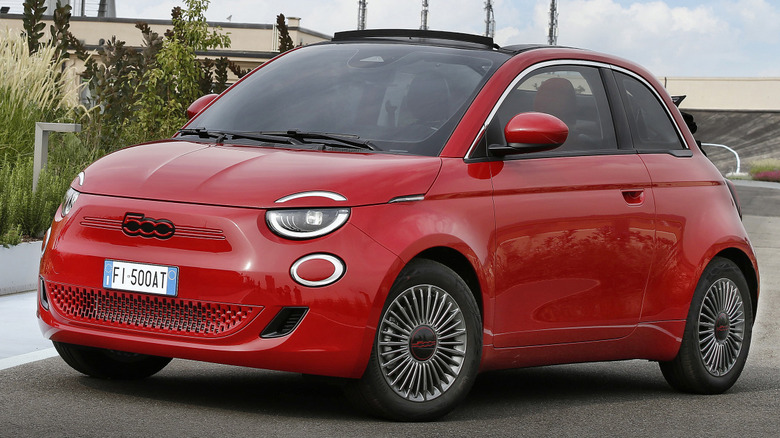
Fiat's electric 500 is a car of compromises. It's cheap, but is only available in select parts of the country — as in, there were only 86 for sale nationwide as of this writing. And if you did want one in the lowest price possible, you had better like the color red, as that is the only paint finish available for $32,495. Fortunately, it's for a good cause, representing the Italian automaker's ongoing work with the global health organization (RED).
One of the EVs with the worst range in 2026, the little 500e offers a fairly paltry 153 miles, though Fiat notes that number spikes to 162 with optional summer tires. But you can optimize this range using Sherpa Mode, which turns down the powertrain responsiveness and turns off the climate control to keep a lid on energy expenditures. The 500e is a 2-door only, and if you plan to transport adults in the back seat, be aware that legroom comes in at just 29 inches.
As you might expect, cargo space is also unimpressive in this crowd of modern EVs at not quite eight cubic feet. But what the 500e lacks in space and range, it makes up for in tiny size and huge personality. Fiat markets the electrified 500 as a city car and one can only imagine how easy it would be to park this car in crowded urban settings. And just look at the thing. The diamond-cut 17-inch alloys fill out the wheel wells perfectly, while tight front and rear overhangs give it a measure of sportiness, and there's no denying that red paint job is eye-catching.
Nissan Leaf: $31,535
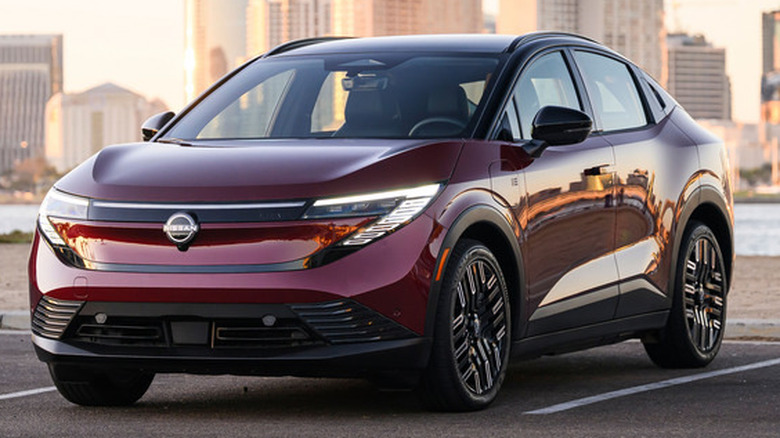
In 2010, the Nissan Leaf debuted as the first mass-market EV with gawky lines and a range well under 100 miles. 15 years later, the third-generation Leaf is here with quite a few upgrades, while joining the list of EVs that stand out for reliability. For one thing, it's nearly $5,000 cheaper than Toyota's bZ, but offers 303 miles of range in base S+ trim — 68 more than the bZ for those keeping score.
The Leaf has shed its funky duckling styling in favor of a more modern crossover look that pulls on the old 300ZX sports car for its taillight design. Base models make 214 hp and come with a 75-kWh battery pack that can be charged from 10% to 80% in 35 minutes using a Level 3 charger. Unlike so many new EVs that have gone exclusively to the NACS port, the Nissan Leaf offers that setup on one side and a J1772 charging port on the other. Cargo space is similar to the Chevy Bolt, with 20 cubic feet of space behind the second row and 56 when those seats are folded flat.
Perhaps to keep the price down, Nissan fits the entry-level Leaf with steel wheels and hubcaps, but it does come with an acoustic laminated windshield to keep cabin noise down and a pair of 12.3-inch digital displays for the gauge cluster and infotainment interface. Nissan's bundle of ADAS, dubbed Safety Shield 360, adds FCM, LKS, blind-spot monitoring with rear cross-traffic alert, and ProPILOT Assist which blends ACC with active lane centering.
Chevy Bolt: $28,995
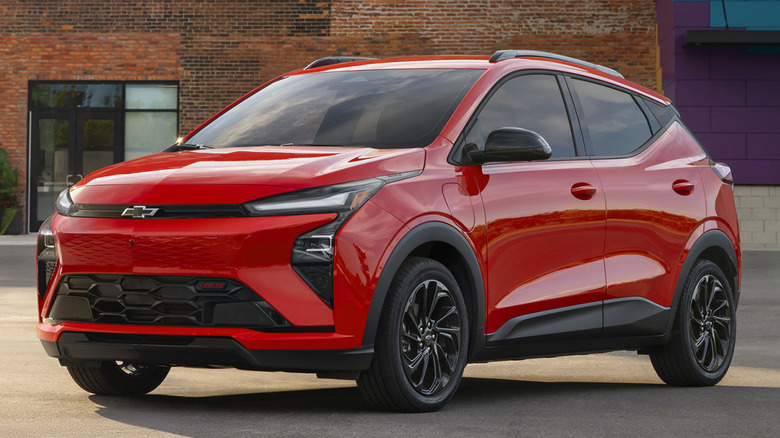
After a 4-year hiatus from the scene, Chevy's Bolt is back and as cheap as they come. The base LT version undercuts the Nissan Leaf by about $2,500, but still offers a competitive 262-mile driving range from its 65-kWh battery pack. Technically, 2027 is the first model year of the new Bolt, but it is currently for sale, so we're including it here. This subcompact hatchback matches the Leaf for maximum cargo space, and thanks to its smaller battery and NACS compatibility, it can do a 10% to 80% charge in 26 minutes.
A standout feature is the Bolt's vehicle-to-home power (V2H) capability. Owners with the GM Energy Home system can use the Bolt's V2H system to power their household in the event of an outage. Nods to cheapness include the urethane steering wheel, but every Bolt does come with alloy wheels, heated side mirrors, and automatic climate control.
39 inches of rear legroom is the highest among this competitive set, but be aware that GM has moved away from Apple CarPlay and Android Auto, so the 11.3-inch infotainment system comes with Google Built-In instead. A full complement of ADAS is included, like ACC, FCM, and LKS, along with GM's Safety Alert Seat that uses directional vibrations in the driver-seat cushion to alert drivers of potential accidents. If you're interested, act fast, as this cheapest of EVs will be discontinued after just 18 months of production.