

Every Apple Product That Uses An OLED Display
Apple is known for using some of the best displays on the market. Whether the company goes for a basic LCD panel or a premium micro-OLED display, its products always have vibrant, balanced colors. These days, most of the company's products feature an OLED display, ranging from all the iPhone models to the iPad Pro, the Apple Watch, and Apple Vision Pro.
However, in the coming months and years, the company is expected to make an even more profound change, as Macs are expected to start getting OLED displays, first with an upcoming redesigned MacBook Pro later this year, and eventually with the MacBook Air in a few years. There are also rumors that the iPad mini and the iPad Air could also switch to OLED panels in the coming years, as this technology will keep getting more mainstream.
Still, the company continues to use different displays for different products, as LCD and miniLED are among other popular choices by the company. For example, the recently released Studio Display XDR uses a miniLED panel, which is the same technology available on the current MacBook Pro. Most iPad models, the MacBook Air and Neo, and the Studio Display also still feature an LCD display. That said, this is every Apple product that uses an OLED panel, as the company continues to bet on this technology.
All current iPhone models
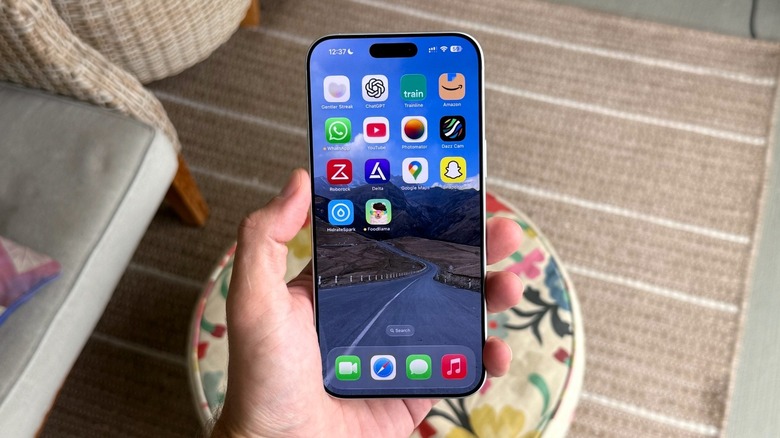
Apple started to transition its iPhone models from LCD to OLED with the iPhone X, its first device with an OLED panel. At the time, the company was celebrating the tenth anniversary of the original iPhone with a one-of-a-kind product, which featured a completely new design, new technologies, like the Face ID authentication system, and, also very importantly, a bigger 5.8-inch OLED display with a comfortable form-factor.
By 2020, the company released the iPhone 12, marking the first time all of Apple's flagship phones would feature an OLED display, as before that, the iPhone XR and iPhone 11 had an LCD panel. Still, for years, the company kept one iPhone with the previous technology, the iPhone SE. However, early last year, the company phased out the iPhone SE in favor of the iPhone 16e; this device, which integrated the iPhone 16 lineup, shared one important feature: An OLED display. With that, since early 2025, all iPhone models feature an OLED display.
Another important thing is that Apple also continues to improve the OLED panels available on its devices, as the entire iPhone 17 lineup, including the iPhone Air, features ProMotion technology, meaning they have a variable refresh rate from 1 to 120Hz. For years, this has been a Pro feature that Apple was able to incorporate across its flagship models. Still, there are no rumors about this technology making its way into the "e" lineup for the foreseeable future.
M5 iPad Pro
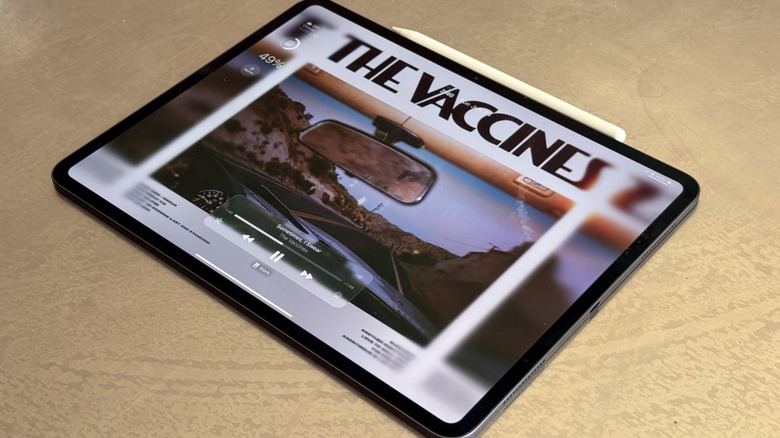
Apple currently sells only one iPad with an OLED display, the iPad Pro. This technology first became available with the redesigned M4 version, which, among other features, received a very thin design, the M4 chip (it was the first Apple product with this processor), and brand new accessories, like the Apple Pencil Pro and the Magic Keyboard. However, the most important highlight is the sixth-generation OLED panel with dual-stack tandem. While the name doesn't mean much to most of us, this was a breakthrough technology. After all, a regular OLED panel is good for phones, but not when you add it to a 13-inch panel due to the limit of brightness on screens. With two OLED layers, Apple was able to make the display much brighter without wearing out faster.
Besides that, the biggest improvement of the tandem OLED technology over the previous miniLED was that pixels couldn't be completely turned off, which would result in some blooming instead of a full black experience. With this tech, Apple was able to keep the high brightness of the miniLED while also giving true blacks and higher contrast for users.
With the M5 iPad Pro, Apple used the same technology, and for the upcoming MacBook Pro, the company is expected to offer an even better OLED display, which will be an evolution over the one available on the iPad Pro, with more layers, bringing higher brightness with higher efficiency and longer lifespan.
All Apple Watch models
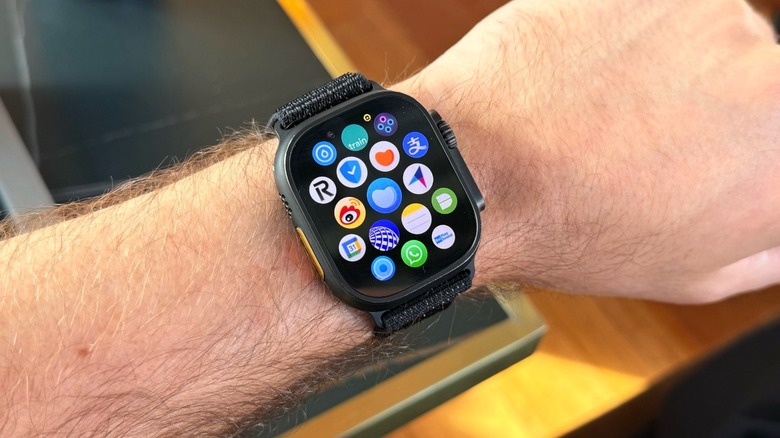
Here's a product that was born with an OLED display. Apple's first product with this technology was the Apple Watch, originally released in 2015. From day one, all Apple's smartwatches featured an OLED display, whether it's the regular model, the SE, or the Ultra version. The reason why Apple chose OLED for the Apple Watch is that watches have tiny batteries, and the display can be really draining. With this panel, Apple could turn individual pixels off, which uses significantly less power than an LCD.
Starting with the Apple Watch Series 5, Apple ramped up the experience of having its watches by adding Low Temperature Polycrystalline Oxide (LTPO) technology to the OLED display, meaning the OLED could dim down to very low refresh rates and brightness while keeping pixels selectively active. This is why this was the generation Apple introduced Always-On Display. This technology remained exclusive to the regular and Ultra models until 2025, when Apple introduced the Apple Watch SE 3.
Besides that, Apple was able to continue to increase the brightness of the Apple Watch display, making bezels thinner, and maintaining the same "all-day" battery life, even with the smartwatch getting more powerful and adding more sensors, showing that the technology continued to evolve since the original Apple Watch was released more than ten years ago.
Apple Vision Pro
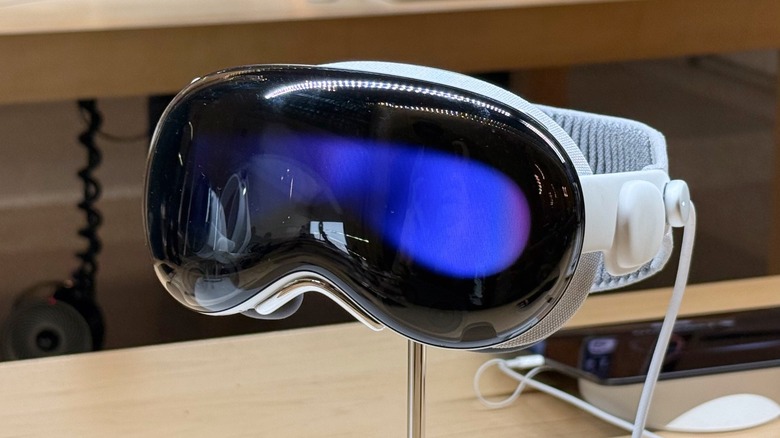
The Apple Vision Pro marked the first time Apple entered a new market category since the Apple Watch. This innovative mixed reality product is already on its second iteration with an M5 chip, and since day one, this device has featured two micro-OLED displays, which are a variation of the regular OLED panel. With about 23 million pixels total, Apple delivers the quality of a 4K TV per eye on Apple Vision Pro.
What makes this device unique is that the OLED is fabricated on a silicon backplane, which makes pixel size extremely small, and pixel density unusually high to make experiencing the Vision Pro not as if you were looking at a display, but as if you were looking through a pair of glasses.
The system runs at 90-100Hz in the original model, and up to 120Hz on the newer M5 version. It offers a wide gamut of color and features a full optical stack with custom lenses, so it doesn't get perceived as just a panel to create this experience of having virtual objects in a real-world environment. Even though there are still questions regarding the ability of this device to eventually get mainstream, as it's too expensive, heavy, and has a low app availability, this is one of the most recent Apple products to get an OLED panel.