

NASA's Artemis II Crew Found A Colorful Surprise On The Moon
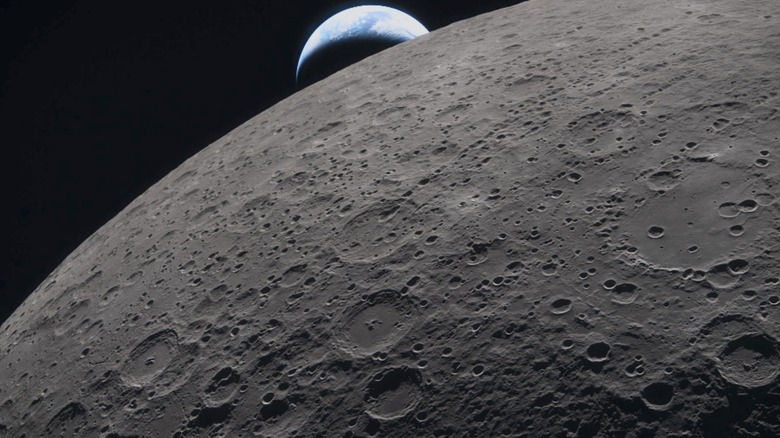
On April 1, NASA used the Space Launch System rocket to launch the Orion spacecraft. Its mission: Spend 10 days in orbit, fly around the moon, take pictures, do some science, and then splash down safely. NASA hopes this mission can eventually lead to a lunar colony, but for now, the astronauts have made a startling discovery. It turns out the moon isn't as drab grey as we thought.
While the Artemis II mission is one of many firsts for NASA, it's also an excuse to photograph the far side of the moon — an area we almost never see because the moon rotates as fast as it orbits — with modern technology. The pictures recently came back, and they reveal, as Joel Kearns, Deputy Associate Administrator for Exploration at NASA, told CBS News, "a lot of color on the moon." These colors were even visible to the astronauts' naked eyes.
Now, the pictures don't exactly reveal a dazzling display akin to Vincent van Gogh's "The Starry Night" painting, but it's still a wider range of shades than we've come to expect from the moon. What's so special about these colors? According to Kearns, they could indicate the presence of surface-level chemicals or minerals. Add technology that can turn lunar soil into oxygen, and NASA might have found all the ingredients necessary to set up a permanent lunar base on the far side of the moon.
The Artemis II Crew photographed a rainbow's worth of information
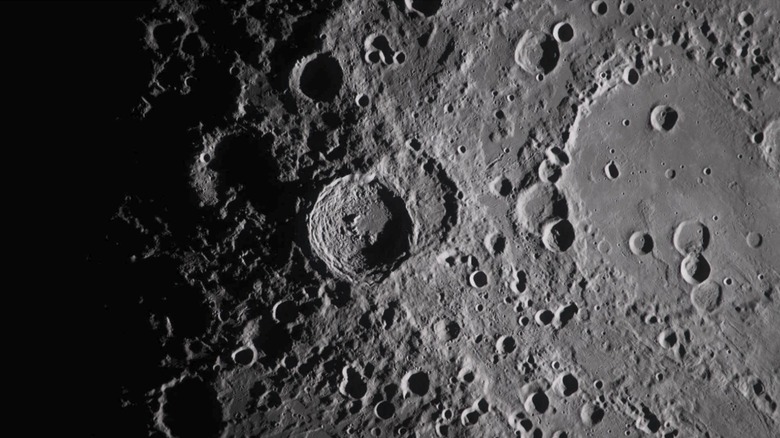
While the colors are a major takeaway of the mission and its photographs, they aren't the only information on the minds of NASA scientists. After all, the moon is more than just a clump of gray regolith.
To the untrained eye, many of the pictures the Artemis II team sent back consist of pockmarked lunar surface. But NASA scientists recognized the formations for what they were: surface fractures, impact craters, and the remnants of lava flow. NASA representatives believe this information could help researchers map out a more accurate timeline of the moon's geological evolution.
NASA wants the Artemis II mission to be the first of many future journeys to the moon, which may or may not result in an eventual lunar colony. Since the images provide a highly detailed map of the topography, they will help shape future missions. The Artemis II pictures could help determine where to set up shop, not just for a permanent presence on the moon but potentially for waystations that let Mars-bound travelers rest and resupply. Perhaps Elon Musk was right to shift SpaceX's focus to the moon.