

4 Cheap Phone Carriers That Use T-Mobile's Network
Finding a new network carrier can be frustrating. Not only do you want a carrier that can deliver good service in your area, but you also want to go with someone who offers reasonable prices, too. While many of the larger networks offer prepaid plans, there are also providers called MVNOs (mobile virtual network operators), which often undercut traditional prepaid plans with even more affordable options.
There are three big carriers in the U.S.: Verizon, AT&T, and T-Mobile. While all three have their perks, T-Mobile has improved quite a bit over the past few years by launching new features and even earning the title of "Undefeated Network Champ" in a 2024 Ookla report, thanks to its data speeds and reliability. But what do you do if you don't want to pay the typical carrier prices that T-Mobile offers? Well, you turn to one of the MVNOs. These companies pay to lease network space from the larger carriers, making them one of the cheapest ways to access the bigger networks without paying full price.
It's important to note that when compiling this list, we really wanted to focus on cheaper, affordable providers. As such, all of the options outlined here offer plans that can start as low as $35 – $40 a month. Sometimes these prices might require some other factors to be met — such as enabling autopay, bringing your own device, or even paying several months ahead — but they should all work out to be much cheaper than if you got your service through T-Mobile itself.
Metro by T-Mobile
Metro by T-Mobile probably isn't all that unexpected. After all, the company actually has T-Mobile's name in it, as it is one of T-Mobile's direct offerings for prepaid customers. Part of what makes Metro really stand out as a solid carrier option is its five-year price guarantee. That means that the price you agree to when you kick up your account should remain the same price throughout the next half a decade. Considering how often people complain about wireless carriers raising prices and adding other fees, this is a really nice perk to take advantage of.
Metro offers a few different plans that are cheap, too, with a bring-your-own-phone plan starting at just $30 a month with autopay enabled. That $30 gets you unlimited 5G data, unlimited talk and text, as well as 10 GB of hotspot data. And, because Metro is technically part of T-Mobile, you'll also get access to T-Mobile Tuesdays, which offer discounts and other perks for T-Mobile customers in the T-Life app.
There are other options if you want to get a device through Metro, like the web-exclusive $40 a month plan that gives you unlimited 5G data, talk, and texting, as well as T-Mobile Tuesdays. You can also save even more if you pay for the six-month unlimited plan, which will come out to a $120 charge up-front, which breaks down to $20 a month overall. And generally, users seem to think the service is worth it if you have good coverage in your area.
Google Fi
Another solid carrier that offers T-Mobile service without full-carrier pricing is Google Fi. The service used to offer multiple carriers' support, utilizing both T-Mobile and U.S. Cellular, but that changed in 2023. Now, it relies solely on T-Mobile to power the network it passes on to its customers, and it does so with some very impressive pricing options. While Google FI's main plan runs for $65 for one line, the real star of the show is Fi's Unlimited Essentials plan.
This gives you 30 GB of high-speed data, unlimited talk and text, as well as full free connectivity for smartwatches (one of Fi's biggest perks for smartwatch lovers). If you don't think you'll use that much data, and want a chance to save even more money, then you can always take advantage of the Flexible Fi plan, which runs for $20 a month, and then $10 for each gigabyte of data that you use. This is ideal for those who don't use a lot of data or just remain on Wi-Fi all the time.
What makes Google Fi a nice contender here is the fact that it offers so many affordable options. The company also runs new deals often, allowing you to get substantial discounts on your monthly price, though you do have to catch them at the right time to take full advantage. And, even though it tends to cater more toward Android phones, Google Fi can also support the iPhone 17 Pro; you'll just need to change a few settings on the device itself.
US Mobile
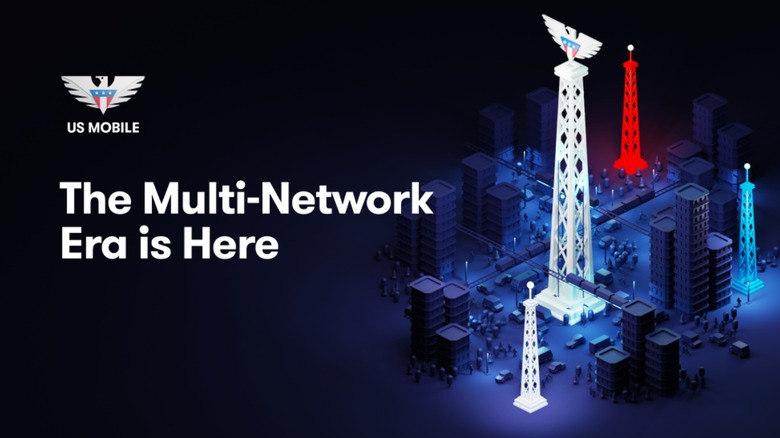
Users looking to move to a cheaper T-Mobile carrier can check out U.S. Mobile. This carrier supports three different networks across its plans, including T-Mobile, Verizon, and AT&T, which should hopefully alleviate any problem areas you might have with T-Mobile's overall coverage. The kicker is that it doesn't automatically switch, so you'll need to do some sleuthing of your own to really find the best signal and take advantage of it.
Luckily, if you already know T-Mobile has good service in your area, then you can just select the appropriate U.S. Mobile network and then enjoy your cheaper, but still great, network coverage. Where U.S. Mobile really shines is its affordable pricing. The company's Unlimited Starter plan is just $25 a month with taxes and includes unlimited high-speed data, talking and texting, as well as 20 GB of hotspot data for your device.
With this plan, though, any network transfers will cost $2 a pop, though you can always add the Multi-Network add-on for $10 and still keep your bill under $40 a month. You can also save even more if you buy your plan annually, with the Unlimited Starter averaging out to under $25 a month for the first year, though that does come with a higher up-front cost.
Mint Mobile
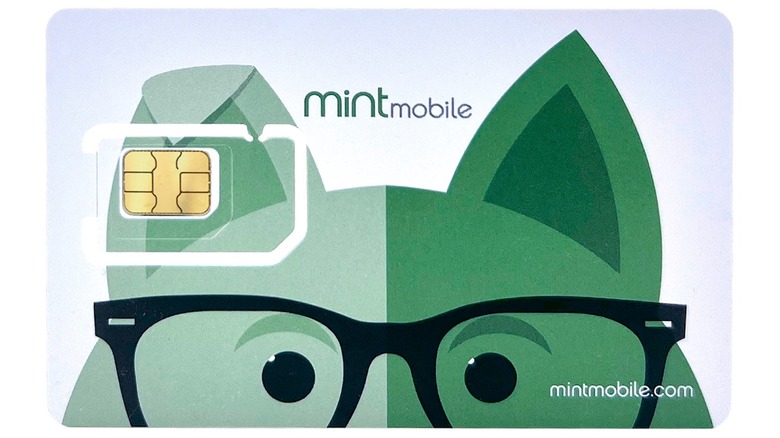
Mint used to be a standalone company, but has since been picked up by T-Mobile, making it the second MVNO that the company operates directly. Because T-Mobile owns Mint, it offers some of the best opportunities to get access to the Uncarrier's network, just like Metro does. However, unlike Metro, Mint operates solely based on paying ahead for your service. This means higher up-front costs, but ultimately should average out to better savings over the course of your service agreement.
It's this design that makes Mint one of the best cheap phone plans out there. As of this writing, Mint offers a few different options for plans, including a three-month, six-month, and 12-month service agreement. The exact cost of the service will vary depending on what data package you go with, but they range from 5 GB a month to unlimited data, with the most expensive plans averaging out between $30 and $35 a month ($90 to $360 up front depending on the service agreement you make).
This is a great option for users who want to save money on their phone service and don't mind paying in advance. Since you're paying in advance, you also get to ensure your price doesn't go up for the duration of your service, which can be really nice for people who want to take one more monthly bill out of the equation.
How we chose the carriers we wanted to highlight

When we sat down to start looking at cheaper carriers that offer T-Mobile service, we had two primary factors we wanted to consider. First, the service had to offer a plan that averaged out to under $40 a month. That's because we wanted to really hone in on the service providers that offer good service for an affordable price.
Additionally, we wanted to make sure we highlighted carrier options that rely almost entirely — or at least heavily — on T-Mobile, and not just carriers that sometimes utilize their towers for roaming or extra coverage. That's why we ultimately decided to highlight the options above, as they all (with the exception of US Mobile) only utilize T-Mobile network coverage for their services. We did not look at customer reviews when compiling this list, as we wanted to focus solely on services that offer good perks for a low price.