

Are Kindles Actually Better For Your Eyes Than Phone Screens? Here's What Science Says
We may receive a commission on purchases made from links.
Although some prefer paper books, e-readers offer undeniable benefits to bibliophiles. Saving space is a big one. A 16 GB Kindle Paperwhite can store thousands of books while taking up less physical space than virtually any physical volume. E-readers also frequently boast annotation tools and other additional features that may enhance the overall reading experience. However, some argue that a Kindle has become an unnecessary device. Given that the Kindle app and other e-reader apps now let users read books on their smartphones, does it make sense to invest in a separate gadget for reading? Yes, because research indicates that reading on a Kindle or similar e-reader may be easier on your eyes than reading on a typical smartphone LCD or OLED screen.
Most smartphones have LCD or OLED screens. You might have noticed that trying to read text on such screens can be difficult in certain conditions, such as outside on a sunny day. E-readers are different. Although some have LCD screens, many use a proprietary technology called E Ink to display content. Unlike OLED smartphone and tablet displays, which are essentially just thousands of nearly microscopic lights that form images together, E Ink uses small microcapsules to display something closer to actual ink on a screen. In addition, LCD and OLED displays are emissive, meaning they directly emit light from their screens. An E Ink display works by reflecting ambient light. This can affect both readability and comfort.
Research shows E Ink e-readers cause less visual fatigue than most tablet and smartphone screens
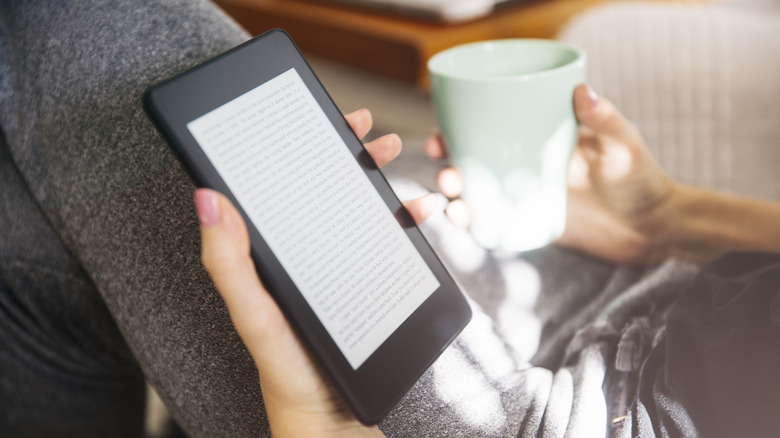
Researchers have found that reading from an E Ink display may cause less eye strain than reading from a tablet or smartphone's emissive screen. According to a paper in PLoS One, subjects reading from an LCD screen displayed more signs of visual fatigue than those who read from e-readers with E Ink screens. The study measured visual fatigue using both an objective scale (measuring blinks per second) and a subjective scale (the Visual Fatigue Scale).
Interestingly, researchers also found that subjects demonstrated little difference in visual fatigue symptoms or experiences when they read from either E Ink e-readers or actual paper. On the other hand, a paper in the academic journal Ophthalmology and Therapy indicates that digital eye strain is something the experts are still learning about. Researchers still recommend limiting screen time to protect your vision.
That said, current research suggests that reading text from an e-reader using E Ink display technology is better for your eye health than reading from an LCD or OLED screen. That's not to say there's no reason to read physical books as well. More research may need to be done before anyone can definitively say E Ink is just as eye-friendly as paper.