

Why Home Printers Still Feel So Bad In 2026
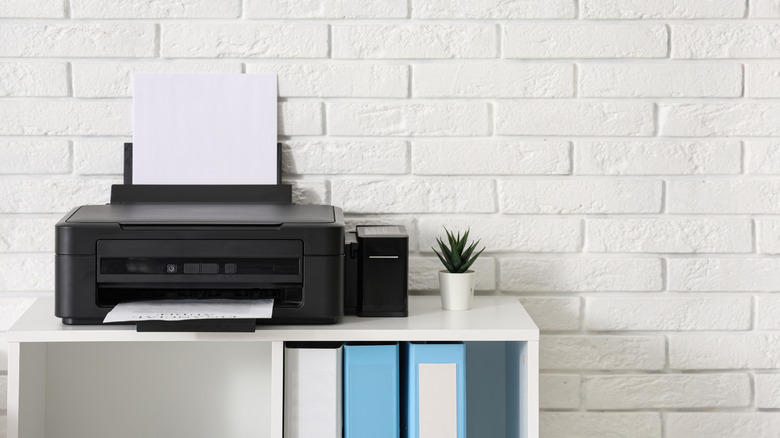
Despite all the improvements in technology over the last couple of decades, printers are one of the devices that haven't advanced in the true sense. To many, they have simply gone from bad to worse. Even in 2026, finding a reliable, reasonably-priced printer that works seamlessly remains a challenge. A quick search and you will come across hundreds of users complaining about printers. Whether it's low-quality prints, paper jams, print head issues, or the never-ending connectivity errors, you always seem to run into one printer problem or another.
There are several reasons why printers remain unreliable. First, the manufacturers often sell printers at a loss, and they hope to make a profit through recurring sales of cartridges. That's why many printers don't support third-party cartridges. But even if we were to look beyond costs, usability is another major concern. Very few people have never faced issues with their printers. The rest spend their time battling issues every couple of weeks. Some manufacturers also design printers that break after a few years, forcing users to upgrade.
While this may translate into higher profits for manufacturers, it's also driving users away from printers. Printer sales have dropped in recent years. Evolving workflows that don't revolve around physical copies are a major reason for this. But we can't ignore the fact that years of anguish have also made users wary of buying printers. Many gave up on them a long time ago.
Higher costs and software issues are key concerns

The convenience of printing at home often leads to higher costs, since ink and toner can be really expensive. And with printers sometimes featuring automatic print head cleaning, you can lose some amount of ink even without printing anything. We get it: the process is necessary for optimal performance of inkjet printers. But given the high costs involved, it feels like an added (and unnecessary) expense. Then there are printers that sometimes incorrectly estimate ink levels and stop printing even when a decent quantity is still left.
When printer manufacturers came up with subscription-based models, where you are charged for the number of pages you print and the company does the upkeep, it seemed like things might improve. But that model had its own problems. For instance, some printers that shipped with a subscription plan, like the HP All-In, need constant internet connectivity to work. Ideally, printers don't require internet access for basic use. Wireless printers connect to the network, and wired ones simply use a cable. Apart from that, when you pay per page, it doesn't take into account the actual ink consumption. Whether it's a simple print or a full-color photo, you are generally charged the same.
Software issues are another major concern. From the tricky initial setup to frequent connectivity-related problems, the list is never-ending. Printer drivers can also be a challenge for many, particularly after updating or upgrading the operating system. Ideally, it's something the OS should automatically handle, but often, you end up doing manual installs and troubleshooting.
Is a printer still worth it in 2026?
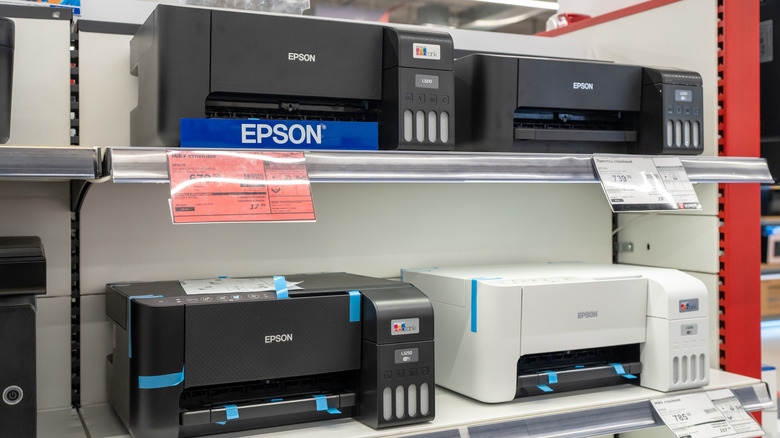
Despite all the frustration surrounding printers, it may not be a bad idea to own one today, at least in certain situations. Printing is still critical to many, whether for printing last-minute documents, flight tickets, or school and college projects. It all comes down to the printer you are buying. If you intend to use it only occasionally, inkjet printers might not be a good choice, given how the ink dries up and clogs the nozzles over time, affecting the printer's lifespan. Laser printers work out better in that regard, since they use toner instead of liquid ink, and the per-page printing cost is also comparatively lower. On the other hand, inkjet printers are more affordable upfront and seamlessly print graphic-heavy copies.
But if your workflow doesn't involve printing, there's probably no need to get a printer at all. If there's a print shop nearby, you can always visit it when needed. This way, you not only save money upfront and in the long run, but also save yourself from the frustration of dealing with a device that shouldn't be this bad in the first place. Keep in mind, printers are complex pieces of equipment with a lot of moving parts, and issues are likely to appear over time. With the right purchase, you can perhaps minimize the inconvenience, but eliminating that frustration altogether still feels out of reach. For that, manufacturers will have to prioritize usability, repairability, and transparency, which may drive up costs even further.