

The Danger With Trying To Retrieve A Phone That Falls Between Plane Seats
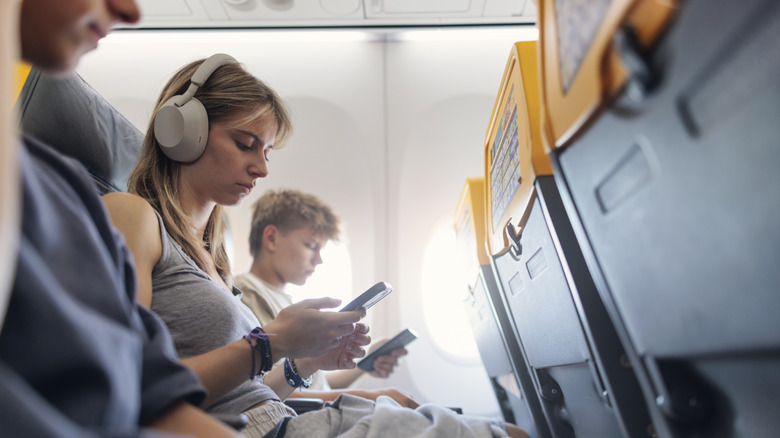
Most airlines will warn passengers not to attempt to retrieve their phone if it falls between seats, or any other battery-powered gadget travelers can bring on board, well before take-off. The carrier's infotainment system or the flight attendants will advise passengers to inform a member of the crew in the event a gadget like an iPhone 17 Pro falls between seats. Trying to grab the handset might not seem like a big deal, especially if you've witnessed the fall and know exactly where it is. However, airlines have good reasons to instruct passengers to avoid picking up a lost device themselves, and one of them is related to the safety of everyone on board: Fire.
Phones wedged between seats can be damaged by the complex machinery that powers the seat, which can lead to the battery catching fire following a thermal runaway event. If a phone drops between the cushions of your couch, you'd be tempted to reach for it. You may move the cushions to make more room. The same reflex may kick in once the phone falls between the seats of the airplane. You may want to move the seat to extract the device. But the seat is more complex than a living room couch. Its components may break the handset or other small electronic devices powered by batteries, and cause a fire on board.
That's the main reason airlines will instruct passengers to refrain from retrieving the device on their own. There's a secondary motive to consider here. A person trying to dislodge their phone may accidentally hurt themselves while doing so.
Why are thermal runaway events dangerous?
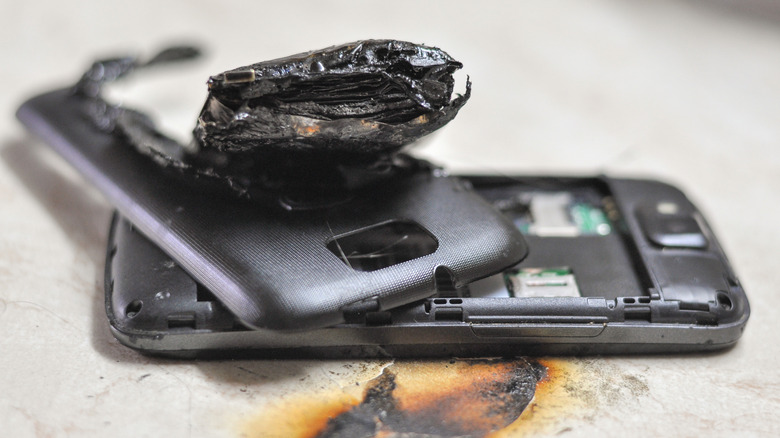
The term "thermal runaway" is often used to describe a fire involving a battery, whether it's powering a smartphone or an electric vehicle (EV). When a battery malfunctions, whether due to internal or external factors, it overheats. In turn, that heat further damages the battery, which generates additional heat. A thermal runaway event can cause a fire and the ejection of chemicals from the battery. Put differently, thermal runaways are self-sustaining, high-energy events that can lead to prolonged fires. For example, an electric car battery fire may require thousands of gallons of water to be extinguished. The EV battery can reignite even after the firefighters manage to control the chemical reaction.
A smartphone battery isn't as large as an electric vehicle battery pack, but the chemistry of lithium-ion batteries is similar. If the battery is damaged, either because of an internal fault or physical damage, like an airplane seat bending and potentially cracking the phone and the battery in it, a thermal runaway event can occur during the flight and lead to a fire that can have fatal consequences. It's not just smartphones blocked between seats that passengers should avoid retrieving on their own. Other small electronics, including tablets, gaming consoles, laptops, and power banks, can also lead to thermal runaway events in case of accidental damage.
Thermal runaways are also the reason why the Federal Aviation Administration (FAA) and airlines advise travelers to pack battery-powered devices in carry-on bags. Electronics put into checked bags are not supervised, and a fire in the cargo hold of an airline is even riskier.
What should you do?
To reduce the risk of having your handset drop between seats, you should consider keeping it in a bag or a zipped pocket. You may also want to use a lanyard so the phone is always attached to you. Even so, accidents can happen. You may drop the handset between seats despite your best efforts. If you saw the handset fall between seats (or lost it), you should inform a cabin crew member.
You may advise other people not to start digging through the seat for their lost phone. According to FAA data cited by Afar, 106 events have occurred in nearly 20 years, between March 2006 and February 2026, where phone batteries experienced thermal runaway events. This included either becoming extremely hot, releasing smoke, or catching fire. However, 21 of those happened in 2025. As most people boarding flights own iPhones or Android devices, the risk of handsets becoming stuck increases.
IATA warns users not to move their seats once they determine a phone has fallen. In addition to being trained to retrieve a phone lost between seats, the crew members are also trained to inspect a device and determine whether its integrity has been compromised. They'll look for signs of thermal runaway. The phone may start to swell and release smoke. It may be hot to the touch. They have cabin procedures in place to reduce the risk of fire, like cooling the handset and placing it in containers, including watertight bags to cool down the phone and prevent a fire. If the situation demands it, the pilot may advise an emergency landing. According to Reader's Digest, a United Express flight had to divert to San Antonio from its original trip to Houston as a lithium-ion battery began to smoke.