

4 Common Battery Charging Myths You Should Stop Believing
In the age of smartphones, wearables, laptops, and electric vehicles, our lives rely heavily on the power of batteries. More specifically, lithium-ion batteries. Over the years, we've seen major advancements to battery tech, including entirely new types of batteries popping up thanks to things like breakthroughs in sodium-ion battery research.
Despite that, though, many questions remain about batteries and how to get the most out of them. In fact, battery life has become one of the most important features to look for when buying a new phone, especially if you live an active lifestyle where you're away from charging areas often.
Like any staple piece of tech we rely on every day, people have come to have some preconceived notions about batteries, how to use them, and what's best for them. While it certainly is possible to charge your phone the wrong way, and some of these ideas about batteries are grounded in truth — like the fact that high temperatures can lead to battery damage — others are more like myths that people continue to believe because they've always heard them.
New batteries need to be charged to 100% before first use
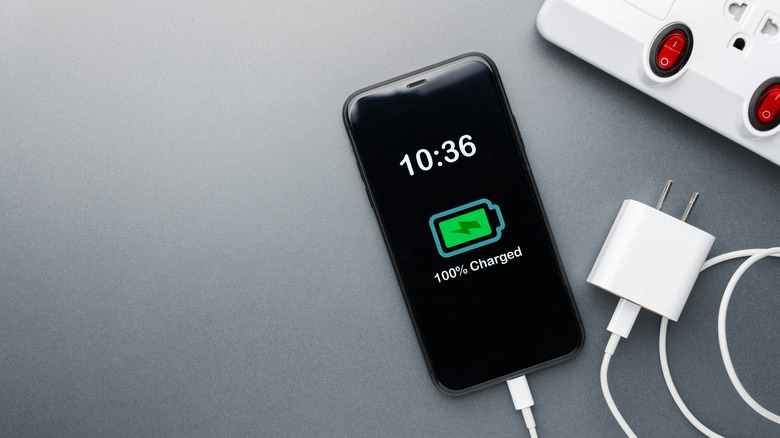
This myth is one originally grounded in truth, as it first began popping up as an instruction for new electronic owners back when nickel-cadmium (Ni-Cd) batteries were still the norm. The reason that this myth continues to exist today is because of how deeply it became ingrained in electronic users, and there's a good explanation for that.
Previously used nickel-cadmium batteries suffered from what's referred to as a "memory effect." This basically meant that over time, recharging a Ni-Cd battery to a lower capacity could cause the battery to "remember" that capacity, making it the new amount of charge that the battery could hold. Most of this came down to the way that the chemicals within the battery contents crystalize over time. This meant that if you repeatedly used a Ni-Cd battery to, say, 30% and then charged it up to 75%, the battery's chemical makeup would remember it because it would crystallize, thus leading to a reduced overall capacity.
Thankfully, this isn't really an issue anymore, thanks to advancements made with lithium-ion batteries. They have a different chemistry than nickel-cadmium batteries, so their performance isn't affected by those partial charge cycles in the same way. Because of this, you don't need to worry about charging your new smartphone up to 100% before using it, though it'll certainly save you from having to rush to find a charger later on.
Charging your phone to 100% will damage your battery
Over the years, we've seen new features like charging limits, which help to stop your phone from charging past a certain threshold — usually something like 80% of the battery's full charge. The reason these features have taken off so much is because they're supposed to help limit the wear and tear on your battery, as many believe that charging your phone to 100% will diminish charging capacity overall.
This is another myth that appears to tie back to the older nickel-cadmium batteries of the past, as the memory effect could also come into play if you charged your battery to 100% too often. This was less of an issue if you completely discharged the battery, but it's still an issue that popped up with those older battery types. Again, lithium-ions are a completely different chemical make-up, which has allowed for this to not be as much of an issue.
Yes, it's still considered bad to charge your phone to 100% and leave it on the charger, as this leads to what's called a trickle charge — in which your phone slowly uses power then recharges it. This causes increased heat and stress on the battery overall, which can lead to additional wear and tear over time. This is why we've seen features like optimized charging on the iPhones, which determines when you typically wake up and charges your phone the last 20% just before your alarms go off.
You should completely discharge your battery before charging

This is another myth that can be tied back to the days of nickel-cadmium batteries. As we mentioned before, the memory effect came into play quite a bit with these older batteries, making it important that you always completely discharge a battery and then fully charge it back to 100% to avoid having less capacity.
This is not the same with lithium-ion batteries like those found in smartphones and other electronics today. In fact, the opposite is actually true. That's because the biggest sign of wear and tear on a battery is the reduction of its charging cycles — when the battery's capacity has been completely used up. This is important, because all batteries are rated with an expected number of charge cycles before the battery begins to degrade past the point of its peak performance. The Galaxy S25 Ultra, for example, is rated for around 2,000 charge cycles, according to the European Product Registry for Energy Labeling. However, these expected charge cycles don't mean the battery will be useless after that, it just means the capacity is expected to drop to around 80%.
This all ties into why you shouldn't completely discharge your battery before plugging it in, and that's because every charge from 0% to 100% is a cycle. However, if you charge your phone from 20% to 80%, you're essentially using only half a charge cycle, as you aren't completely discharging and then recharging it. This means your battery capacity should ultimately last longer, as it'll take you longer to run down your expected cycles.
You have to use the official charger from the brand that made your phone
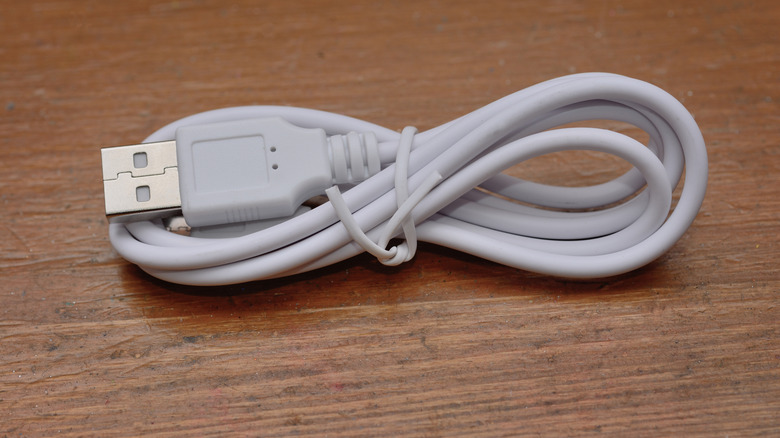
If you've ever read the instructions that come with your device, then you may have noticed some phrasing that essentially says you should only use official chargers made by the device's manufacturer. The reason for this is because, for instance, if you're using a Google Pixel 10, and you only use the charger that Google offers, then you're ensuring your charger has the correct power specifications that the device is rated to accept. That means you don't have to worry about the charger delivering too much voltage, as that can cause damage to the battery.
However, the myth that you have to use an official charger isn't wholly true. While third-party chargers can be a waste of money, and the official charger is inherently safer because it's already designed for your device, you can use other chargers. Using a third-party charger just requires a few extra steps to ensure you aren't setting yourself up to damage your battery in some way.
As mentioned, pay attention to the supported voltage of the device you're charging and the charger you plan to use. Pushing too high of voltage into a battery that can't support it can cause internal damage. Additionally, the fast-charging protocol used for charging is also important, if we're talking about smart devices or those designed to be charged quickly. Different protocols will lead to slower charging overall, as the charger and device cannot properly communicate during the power transfer. You may need to do some research to ensure these ratings line up, but once you have, you'll have a much easier charging experience, and ensure you're charging your batteries safely.