

The Safety Mistake Most People Make When Storing Used Batteries
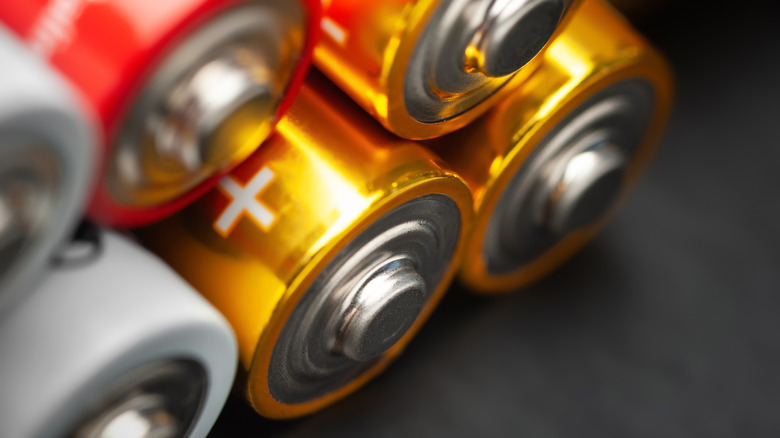
Replacing the batteries on a TV remote is something we all have to do at some point. But simply removing the dead AA duo and tossing them in the waste bin is a serious safety risk. This is because lithium-ion cells and other types of batteries often have a small amount of residual energy left over. Should a used battery's terminal come in contact with a metal surface or another battery, a chemical reaction may occur. The term "ignite" is only viewed favorably when the ignition was expected; in this context, that's very much not the case.
Used batteries can short-circuit and generate heat when stored in a confined space like a trash bag or junk drawer. And once a reaction occurs, that leftover energy could end up causing a battery-triggered fire. We should also mention that it doesn't take much to cause this; something as simple as coins rubbing against terminals or the end of a screwdriver is all it takes to potentially set off a short. Fortunately, there's an easy step you can do to prevent this: Tape the terminals.
Storing used batteries is about isolation
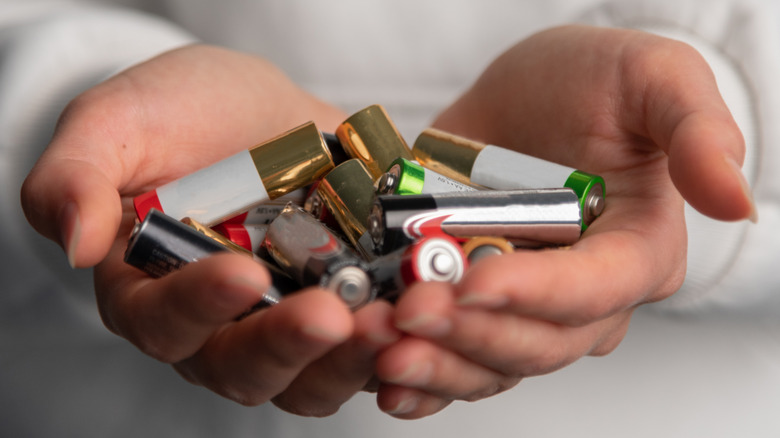
Used batteries should be recycled at a proper e-waste facility when you're done with them. But in the meantime, storing them safely is important, and the name of the game is isolation. Covering battery terminals with clear household tape is one of the best things you can do to prevent cells from interacting with each other. Make sure to cover all exposed metal parts of the battery, and be mindful about the different types of batteries, as 9-volt batteries have two terminals at the same end, while AAs have terminals at both ends.
It's recommended to store used batteries in a non-metallic container, like a glass jar, and one that is not airtight. You should also keep your used batteries in a dry, cool place away from heat sources. Taping used batteries and keeping them safely stowed until e-waste day is the kind of habit worth getting into. Not only does this protect you and yours in the interim, but it also makes the batteries safer to handle for waste management personnel.