

Don't Make This Mistake When Buying A Monitor Or TV In 2026
We may receive a commission on purchases made from links.
Modern TVs and monitors have one key feature you wouldn't typically pay much attention to in the past, but it's become a necessity in 2026 and beyond. That's the screen refresh rate. In a nutshell, a screen's refresh rate refers to the number of times a display draws a new image per second, measured in Hertz (Hz). You've probably seen that number being thrown around in monitor and TV spec sheets, with some claiming 120 Hz while others boasting higher figures. As a matter of fact, the refresh rate isn't just buried in the spec sheets these days. It's marketed as one of the headline features on monitors and TVs that feature higher figures than the standard.
For context, the standard refresh rate you'll find on even the most basic monitors and TVs is 60 Hz, which was also found on older cathode ray tubes. However, newer models offer much more than that, such as 120 Hz, 144 Hz, 165 Hz, and even higher. While 60 Hz is fine for the majority of people for watching movies or doing some light office work, we advise that you avoid buying a monitor or TV with this refresh rate in 2026 and beyond, because you'll be making a big mistake. Regardless of whether you're buying from a major smart TV brand or monitor manufacturer, you shouldn't compromise on the refresh rate because you'll be missing out on some benefits.
A high refresh rate on monitors and TVs enhances your experience
While most people will do just fine with a 60 Hz panel, there's a reason why high refresh rates have become one of the key selling points for both TV and monitor manufacturers. These high refresh rates do come in handy in various scenarios — and it might be something that you can also benefit from in your work or some other activities. If you plan to play games on your monitor or TV, for instance, prioritizing a high refresh rate on top of other features will be vital to giving you a competitive edge against opponents who use one with the standard 60 Hz.
For example, a high refresh rate panel will lower the input lag, helping games feel more responsive. Additionally, high refresh rates also reduce screen tearing and minimize the amount of persistence blur that you see, thus offering a smooth gaming experience. Even if you aren't a gamer, high refresh rates can also be beneficial in some professional lines of work. Take video editors and people who deal with motion graphics, for example. For these kinds of professionals, a high refresh rate can help reduce eye strain during the long periods that they're buried in their work. If you're a sports fanatic who loves watching live sports, a high refresh rate display is also advantageous, as it will make the action feel much smoother.
You won't save a lot if you skip high refresh rate monitors and TVs
Now that you understand the advantages of getting a high refresh monitor or TV, you might think that sacrificing this feature by going for models with 60 Hz might be the smart move if you're on a budget, as it could save you a good chunk of cash. However, that's not true because even 144 Hz monitors and TVs are not more expensive than their 60 Hz counterparts.
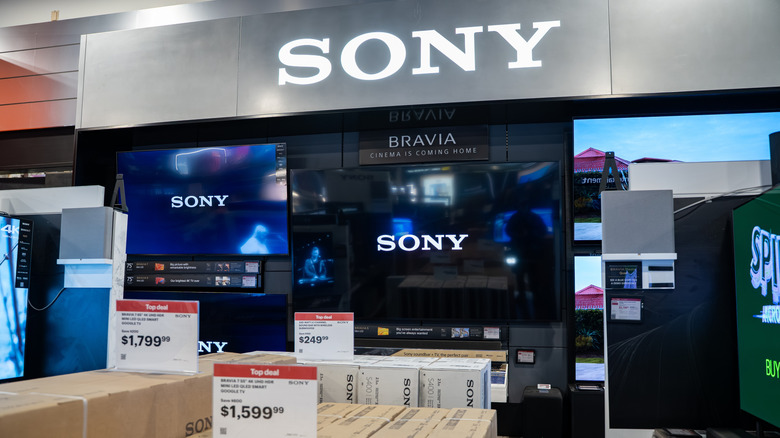
For monitors with 1080p or 1440p resolution, you might even find a 60 Hz and a 144 Hz monitor going at roughly the same price. Since TVs tend to be cheaper than monitors, you can buy a set like Sony's 55-inch 4K BRAVIA 2 that comes with the standard 60 Hz refresh rate for $600. However, the smart move is to get an alternative, such as the TCL 55-inch T7, which costs the same amount of money and has a higher 120 Hz refresh rate.
Generally, high refresh rate TVs and monitors might be a bit more expensive than ones with 60 Hz, but you can also buy wisely by utilizing frugal shopping tips to minimize that difference as much as possible. To sum it up, unless you're doing light office work or simply watching movies and TV shows on your TV or monitor, don't make the mistake of buying one with a 60 Hz refresh rate.