

Your Old Amazon Fire Stick Might Be Involved In This New Lawsuit - Here's Why
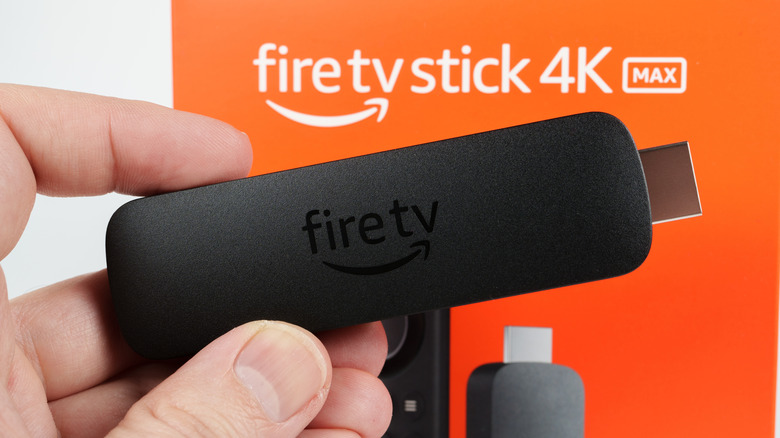
Whether it's true or not, there's a common perception that tech companies intentionally worsen older products to incentivize upgrades. Amazon has been accused by a recent class action lawsuit of using this practice to push its latest Fire TV Sticks, a line of streaming media players that users plug directly into their televisions. Filed in a Los Angeles Superior Court, the complaint claims that the tech giant limited critical software updates for its Fire TV Sticks to render them "nearly inoperable." The two versions that are subject to the lawsuit include the first- and second-generation devices, which were released in 2014 and 2016, respectively. Incidentally, the suit was filed roughly two weeks before Amazon announced a new generation of Fire TV Sticks.
The accusation underscores a controversial practice known as "software tethering," in which companies weaponize updates to control or limit device functionality. In recent years, consumer protection groups like Consumer Reports and the Public Interest Research Group (PIRG) have petitioned the Federal Trade Commission to limit the practice. As Lucas Rockett Gutterman, an initiative director at the PIRG, stated in a 2024 press release on the subject, "manufacturers increasingly use software to lock us into only using our tech in ways that just-so-happen to generate the most profits for them. If we want to stop the tech industry from pushing us into replacing products that still work, we need to stand up for consumers' right to get what we've paid for in the age of connected devices."
Amazon has been accused of violating the customer covenant
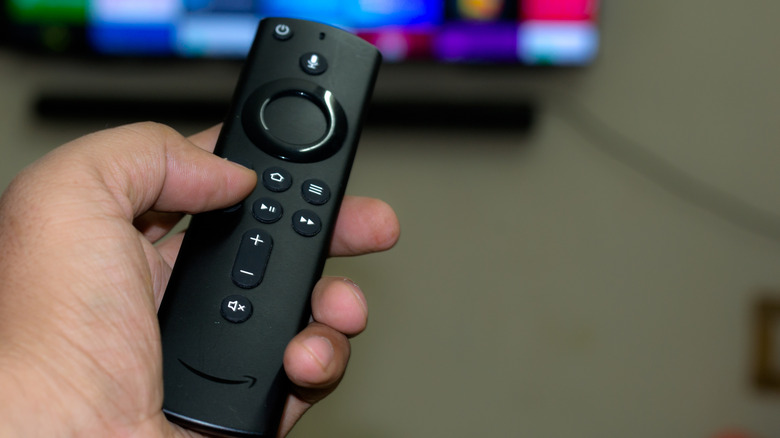
The lawsuit filed by plaintiff Bill Merewhuader argues that Amazon used "unfair" business practices by stymieing essential updates that prevented customers' devices from functioning as intended. In particular, it alleges that the blocked updates stopped Amazon's first- and second-generation Fire sticks from delivering "instant" content, violating FTC regulations stating that customers should "generally expect that the devices they buy will work and keep working."
Furthermore, the lawsuit alleges that Amazon deceived customers by omitting that it could brick devices. The complaint argues that "by removing core software functionality long before the useful life of the hardware had expired," Amazon undercut its own marketing of the device's "instant" connectivity. The use of the word "instant" is particularly critical, the lawsuit claims, as software tethering practices slowed the device, breaking away from its marketing materials. As such, Merewhuader claims Amazon violated "the implied covenant of good faith" the company struck with its customers, who may have been unaware that the tech giant could arbitrarily reduce the functionality of its products.
A similar discussion could surround Amazon's recent announcement concerning older Kindle models. According to the Seattle conglomerate, the company confirmed in April 2026 that it would cease its support of Kindle models released before 2012 on May 20, 2026. Some customers were frustrated by the announcement, as e-readers typically don't require burdensome, complicated software to maintain. According to Ugo Vallauri, co-director of the Restart Project, the move could affect roughly 2 million devices and create 624 tons of e-waste (via BBC). However, these devices will retain their current libraries, which is why old and unsupported Kindles might be seen as a bargain in 2026.
Software tethering and the increasing burden of e-waste
Amazon isn't the only tech giant accused of abusing software tethering practices. In an eerily similar case, another April lawsuit alleges that Google pressured users into purchasing new Nest smart thermostats by cutting software updates to its first- and second-generation devices, making it impossible to access Wi-Fi-enabled smart functions. The Mountain View company faced similar allegations in 2016, when it controversially killed the popular smart home hub Revolv less than two years after purchasing the startup. Other companies, like Spotify, Peloton, and OralB, have also been accused of the practice.
These cases raise serious concerns about software-dependent devices that require companies to maintain functionality. Increasingly, the utility of electronic devices is dependent on the whims of the company that produced it. As Justin Brookman, a former FTC official who serves as the director of technology policy at Consumer Reports, describes it, "too often, consumers are left with devices that stop functioning because companies decide to end support [with] little to no warning." Although developers argue that these shorter lifespans are the unfortunate byproducts of increasingly advanced functionality, the death-by-a-thousand-cuts approach is an exhausting, costly byproduct of innovation.
According to the United Nations, global electronic waste is expected to reach 82 million tons by 2030. Addressing the issue will require systematic changes from regulators, manufacturers and customers alike. Consumer protection groups have worked to stem the tides of tethered electronics. At the very least, addressing software tethering may alleviate customers' frustrations while impeding the endless barrage of consumer electronics filling our landfills. Until that happens, the best approach for consumers might simply be to find new and interesting uses for old and outdated electronics.