

How Often Should You Grease Your 3D Printer?
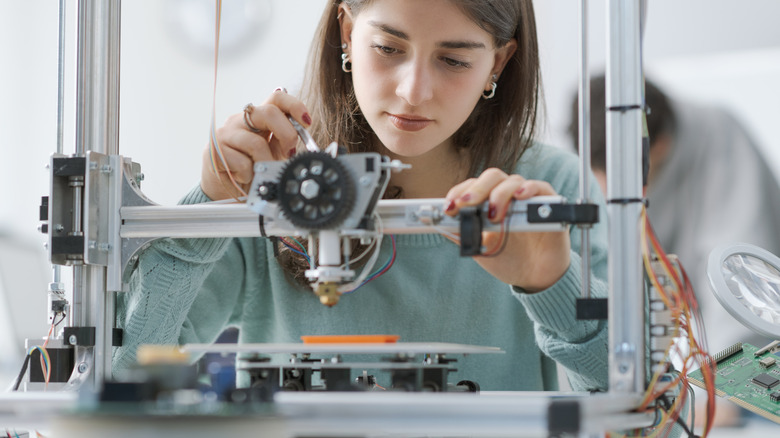
3D printers require regular maintenance to stay in tip-top shape. Yes, that means you should be cleaning your 3D printer if you don't already. The printing bed needs to be wiped down with mild soap and water to remove residues and other leftovers. Meanwhile, the extruder or nozzle — the piece that ejects the filament — also needs to be cleaned to prevent dry materials from sticking to it, ruining future prints. But another step of regular maintenance is to grease various components, or rather, lubricate the rails, rods, screws, and gears.
The reason why is fairly straightforward. Many of the parts in a 3D printer are made of metal, and metal-on-metal contact can increase friction, resistance, and, sometimes, heat buildup. Ultimately, that friction can impact the print quality of anything you're making and may even result in a project failure. Proper lubrication can also extend your printer's longevity.
There is no definitive timeline for greasing a 3D printer. Some recommend doing it weekly; others recommend doing it monthly, but it is necessary. If you're printing more often, daily, for instance, you're likely going to need to lubricate more often. The best way to test is to run your finger along the greased components, like the rods. If your finger comes away clean, free from residues or solids, you don't need to lubricate. If you notice contaminants like dust, grime, dirt or other visible particles, lubrication is sorely needed.
How do you grease or lubricate a 3D printer?
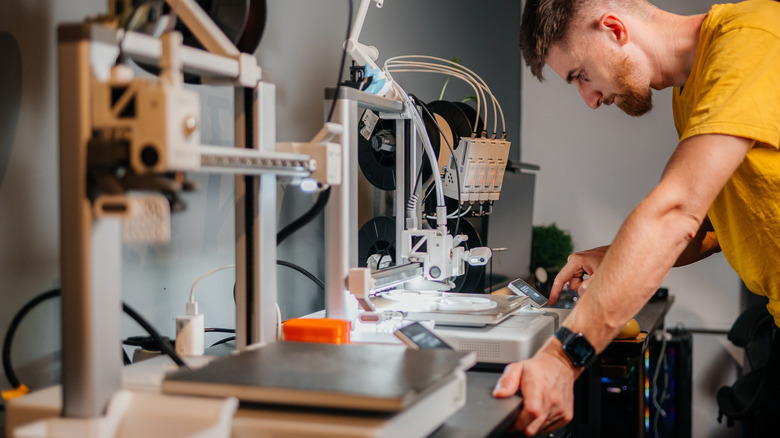
Keeping your printer clean and its parts lubricated is one of the 3 major 3D printing rules that every 3D printer owner or DIYer needs to know. But how? The simple answer is to power down the printer and apply lubricant to the affected parts, making sure to work it into all the nooks, crannies, and crevices. Of course, you want to clean those parts beforehand by wiping them down, like the z-axis rod. Removing solid particles, such as dust and other debris, will prevent damage to printer components and help keep the rest of the machine clean.
There are multiple types of lubricants for a 3D printer, including white lithium-based greases and oils for gears, super-lubricant for general use, PTFE-based lubricants for lead screws and rails, or synthetic lubricants for general use. Most options tend to have a thick viscosity and are easier to work with, like true grease or gels. Before you lube up your machine, be sure to double-check which lubricants are necessary or compatible with the components of your 3D printer. Avoid using WD-40 and silicone-based lubricants.
The parts of a 3D printer that need lubrication are the rails and rods, the lead screws, bearings and gears (if any), and the extruder assembly. Doing this between projects is important to keeping the machine efficient and print-ready. It's also one of the biggest cons of buying a used 3D printer, since you may end up with a machine that wasn't maintained well or properly lubricated in the past. At least when buying new, you know how well it's been maintained between uses.